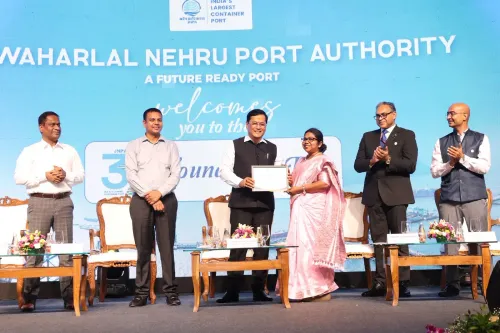
Sonowal Hails 12 Years of India's Maritime Transformation
Synopsis
Union Minister Sarbananda Sonowal on 25 June 2026 marked 12 years of maritime transformation in India, highlighting the Sagarmala programme's role in modernising ports and reviving the country's oceanic legacy as India positions itself as a global maritime powerhouse.
Key Takeaways
Union Minister Sarbananda Sonowal on 25 June 2026 described India's maritime sector transformation over the past 12 years as 'phenomenal'.
The Sagarmala Programme , launched in 2015 , is the flagship scheme driving port modernisation along India's 7,500-km coastline .
Sonowal framed the maritime push as reclaiming India's ' 5,000-year-old oceanic legacy ', connecting current policy to deep historical identity.
The Ministry of Ports, Shipping and Waterways has aligned port development with multimodal logistics, industrial corridors and the Maritime India Vision 2047 framework.
Key stakeholders include port developers, shipping companies and coastal state governments , all of whom are central to Sagarmala's implementation.
Policy watchers will track remaining Sagarmala project rollouts and new maritime targets expected in the next Union Budget or parliamentary session.
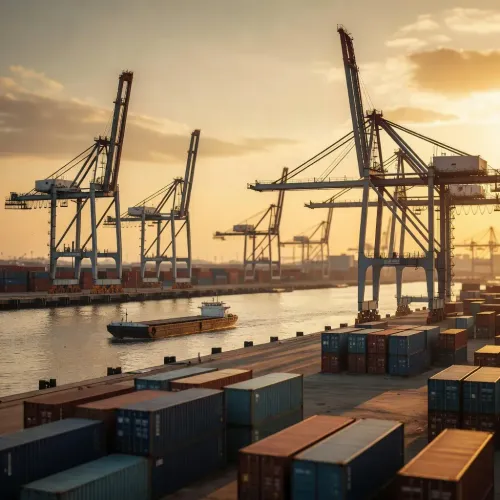
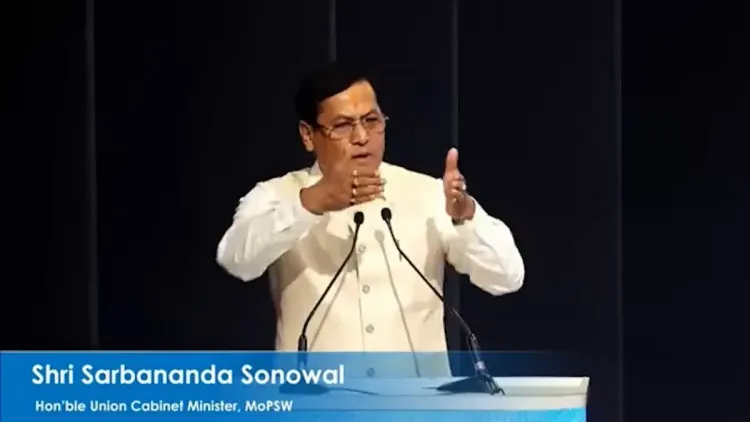
Union Minister of Ports, Shipping and Waterways Sarbananda Sonowal on Thursday, 25 June 2026, declared that India's maritime sector has undergone a 'phenomenal transformation' over the past 12 years, crediting flagship programmes such as Sagarmala with reviving the country's centuries-old oceanic heritage and positioning it as an emerging global maritime powerhouse.
Context
In his post, Minister Sonowal wrote: 'In the last 12 years, India's maritime sector has undergone a phenomenal transformation. Once considered unthinkable, programmes like Sagarmala are reclaiming India's 5,000-year-old oceanic legacy, as we emerge as a global maritime powerhouse.' The statement frames the current maritime push not merely as infrastructure policy but as a civilisational reclamation — invoking India's deep historical ties to oceanic trade dating back millennia.
The 12-year window cited by Sonowal points to the period beginning around 2014, when the National Democratic Alliance government took office and began treating maritime infrastructure as a central economic lever. The framing positions port-led development as a sustained, multi-term national project rather than a single-budget initiative.
Policy Backdrop
The Sagarmala Programme was formally launched in 2015 with the aim of unlocking the economic potential of India's 7,500-kilometre coastline through port modernisation, coastal economic zones and improved hinterland connectivity. The scheme sought to reduce logistics costs, boost coastal shipping and catalyse industrialisation in port-adjacent regions.
Since its inception, Sagarmala has sought to integrate port upgrades with broader national infrastructure priorities, including multimodal logistics parks, industrial corridors and inland waterways development — all overseen by the Ministry of Ports, Shipping and Waterways. The ministry has also articulated longer-horizon ambitions through the Maritime India Vision 2047 framework, which seeks to raise India's share in global maritime trade significantly by the centenary of Independence.
Port-led development has been consistently woven into successive Union Budgets and infrastructure spending cycles, reflecting a bipartisan recognition that India's coastline is an underutilised economic asset. Coastal shipping, seen as a fuel-efficient and cost-effective alternative to road freight, has been a particular focus area for the ministry.
Stakeholders and Impact
Port developers, shipping companies and coastal state governments are the primary stakeholders in the Sagarmala ecosystem. For coastal states — particularly those with major port cities — the programme represents a direct channel for central infrastructure investment and employment generation in logistics, shipbuilding and allied services.
Shipping companies and cargo operators stand to benefit from reduced turnaround times and improved port connectivity, while smaller coastal communities have been targeted through the programme's fisheries and tourism infrastructure components. The minister's emphasis on India emerging as a 'global maritime powerhouse' signals continued policy ambition to attract international shipping traffic and foreign investment in port infrastructure.
What's Next
Attention will now turn to the rollout status of remaining Sagarmala projects and any new targets under the Maritime India Vision 2047 framework that may be announced in the upcoming Union Budget or parliamentary session. With the minister publicly marking a 12-year milestone, the statement is likely a precursor to a broader government communication exercise around maritime achievements and future targets.
As India seeks to deepen its role in global supply chains — particularly amid ongoing shifts in international trade routes — the pace of port capacity expansion and the integration of coastal shipping with the national logistics grid will be closely watched by industry and policymakers alike.
Point of View
Framing maritime infrastructure as one of its signature achievements. By anchoring the claim in India's '5,000-year oceanic legacy', the messaging transcends routine policy communication and enters the register of civilisational nationalism, a recurring motif in the current government's infrastructure narrative. The Sagarmala reference is strategically placed: it is the one scheme most directly associated with the ministry's identity and is far enough along in implementation to point to tangible outcomes. With Maritime India Vision 2047 still unfolding, this statement likely signals an upcoming push to consolidate the maritime story ahead of the next electoral and budgetary cycle.
NationPress
24 Sept 2026
Frequently Asked Questions
What is the Sagarmala Programme in India?
The Sagarmala Programme is a port-led development initiative launched by the Indian government in 2015 to modernise ports, promote coastal shipping and drive industrialisation along India's 7,500-kilometre coastline.
What did Sarbananda Sonowal say about India's maritime sector?
On 25 June 2026, Union Minister Sarbananda Sonowal stated that India's maritime sector has undergone a 'phenomenal transformation' in the last 12 years, crediting the Sagarmala programme with reclaiming India's 5,000-year-old oceanic legacy.
What is Maritime India Vision 2047?
Maritime India Vision 2047 is a long-term policy framework by the Ministry of Ports, Shipping and Waterways that aims to significantly raise India's share in global maritime trade by the centenary of Indian Independence in 2047.
How long is India's coastline?
India has a coastline of approximately 7,500 kilometres, which the Sagarmala Programme seeks to leverage for port modernisation, coastal economic zones and improved logistics connectivity.
Who is Sarbananda Sonowal?
Sarbananda Sonowal is the Union Minister of Ports, Shipping and Waterways, a senior BJP leader and former Chief Minister of Assam who has overseen India's maritime infrastructure push since taking charge of the ministry.