Sonowal: India's Maritime Sector Delivering Global Results

Synopsis
Union Minister Sarbananda Sonowal on 17 June 2026 declared India's maritime sector is delivering global results under PM Modi's decade of reforms, citing advances in ports and seafarer empowerment as part of the BJP's #12YearsOfSeva campaign.
Key Takeaways
Union Minister Sarbananda Sonowal on 17 June 2026 stated India's maritime sector has moved from untapped potential to delivering global results.
The post was tagged under #12YearsOfSeva , the BJP's campaign marking twelve years of the Modi government .
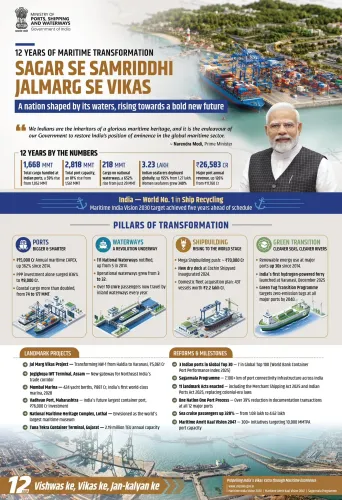
The Sagarmala Project , launched in March 2015 , underpins the port-led development strategy Sonowal references.
The Major Port Authorities Act 2021 replaced a 1963 law, granting greater autonomy to India's 12 major ports .
Maritime India Vision 2030 provides the overarching roadmap for capacity expansion and ease of doing business in shipping.
Key stakeholders include Indian seafarers , major port trusts, and exporters who benefit from improved port efficiency and logistics competitiveness.
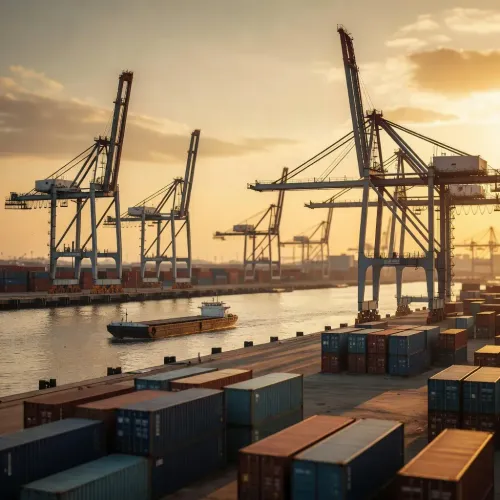
Union Minister of Ports, Shipping and Waterways Sarbananda Sonowal on Wednesday, 17 June 2026 highlighted India's maritime transformation, asserting that the sector has moved from untapped potential to delivering global results and reclaiming its centuries-old seafaring heritage under a decade of reforms led by Prime Minister Narendra Modi.
Context
Sonowal's post, tagged under the ruling party's #12YearsOfSeva campaign marking twelve years of the Modi government, frames maritime progress as a centrepiece of the administration's infrastructure legacy. He cited advances ranging from 'world-class ports to empowered seafarers' and pointed to 'enhanced global rankings' as evidence of a decade of 'decisive reforms and focused execution.'
The statement arrives as the BJP is consolidating its governance narrative ahead of the campaign milestone, with infrastructure ministries highlighting sectoral achievements across transport, logistics, and connectivity.
Policy Backdrop
The maritime push Sonowal references has its roots in several landmark policy interventions since 2014. The Sagarmala Project, launched in March 2015, was designed to unlock port-led economic development along India's coastline, covering port modernisation, coastal shipping, and port-linked industrialisation.
The Maritime India Vision 2030, released in 2021, laid out a comprehensive roadmap targeting capacity expansion and improved ease of doing business across the shipping sector. In the same year, the Major Port Authorities Act 2021 replaced a decades-old 1963 legislation, granting greater operational and financial autonomy to India's 12 major ports.
Together, these measures represent a systematic effort to modernise port governance, simplify procedures, and expand seafarer training capacity — all positioned within the broader logistics competitiveness agenda that also encompasses dedicated freight corridors and multimodal logistics parks.
Stakeholders and Impact
Indian seafarers, one of the world's largest communities of maritime professionals, stand among the primary beneficiaries cited in the minister's framing. Improved training infrastructure and regulatory simplification have been recurring themes in ministry communications around seafarer welfare and global employment prospects.
Major port trusts and exporters are also key stakeholders, as port efficiency directly affects turnaround times, logistics costs, and trade competitiveness. The government's references to 'enhanced global rankings' align with broader indices measuring port performance and logistics ease, though specific post-2023 ranking figures cited in current ministry communications remain to be independently verified.
The invocation of India's 'centuries-old maritime heritage' is a recurring element of the policy narrative, drawing a line between contemporary reforms and India's historical role as a dominant Indian Ocean trading civilisation — a framing that resonates with both cultural pride and strategic messaging around the Indo-Pacific.
What's Next
Observers will watch for the release of updated national logistics or port performance indices that would give concrete shape to the rankings improvement Sonowal references. Parliamentary consideration of new coastal shipping or shipbuilding policy amendments is also on the horizon as the ministry looks to deepen the reform agenda beyond port infrastructure into vessel manufacturing and inland waterways.
With the #12YearsOfSeva campaign in full swing, further ministerial communications cataloguing sectoral achievements across infrastructure verticals are expected in the coming days.
Point of View
Positioning the Ports and Shipping ministry as a tangible delivery arm of the Modi government's infrastructure promise. By invoking both global rankings and civilisational heritage, the minister blends technocratic achievement with cultural resonance — a dual register that has become standard in the government's infrastructure communications. The reference to 'empowered seafarers' signals an attempt to give the macro-policy story a human face, broadening its appeal beyond industry stakeholders. Taken together, the messaging reflects the government's broader strategy of converting incremental policy gains into a consolidated governance brand ahead of electoral cycles.
NationPress
16 Sept 2026
Frequently Asked Questions
What has India achieved in the maritime sector under PM Modi?
The Modi government has pursued systematic port modernisation since 2014 through initiatives including the Sagarmala Project (2015), Maritime India Vision 2030, and the Major Port Authorities Act 2021, which together aim to expand port capacity, improve logistics efficiency, and empower Indian seafarers.
What is the Sagarmala Project?
The Sagarmala Project is a central government scheme launched in March 2015 to drive port-led economic development in India, covering port modernisation, coastal shipping promotion, and port-linked industrialisation along the country's coastline.
What is the Major Port Authorities Act 2021?
The Major Port Authorities Act 2021 replaced the Major Port Trusts Act of 1963 and granted greater operational and financial autonomy to India's 12 major ports, modernising their governance framework.
What is Maritime India Vision 2030?
Maritime India Vision 2030 is a comprehensive policy roadmap released in 2021 that targets capacity expansion, ease of doing business in shipping, and overall competitiveness of India's maritime sector through 2030.
What is #12YearsOfSeva?
#12YearsOfSeva is a BJP campaign hashtag marking twelve years of the Narendra Modi government, under which ministers and party leaders have been highlighting sectoral achievements across infrastructure, governance, and social welfare.