Sonowal: India Becoming Global Maritime Superpower

Synopsis
Union Minister Sarbananda Sonowal declared on June 8, 2026, that India is building a global maritime superpower, citing 12 years of Modi government policy including the Sagarmala Project, the National Waterways Act 2016, and Maritime India Vision 2030 as transformative milestones.
Key Takeaways
Union Minister Sarbananda Sonowal stated on June 8, 2026 , that India is becoming a global maritime superpower under PM Narendra Modi .
The Sagarmala Project , launched in 2015 , underpins port-led industrialisation and coastal shipping development.
The National Waterways Act, 2016 , declared 111 rivers and canals as national waterways.
Maritime India Vision 2030 sets quantitative targets for port capacity, shipbuilding, and waterway use by decade's end.
The maritime agenda is integrated into the PM Gati Shakti multimodal connectivity framework.
Sonowal's remarks were made in connection with a full interview aired on Sansad TV .
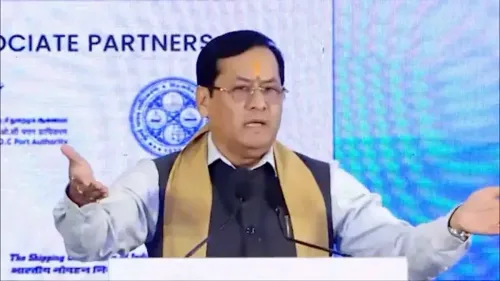
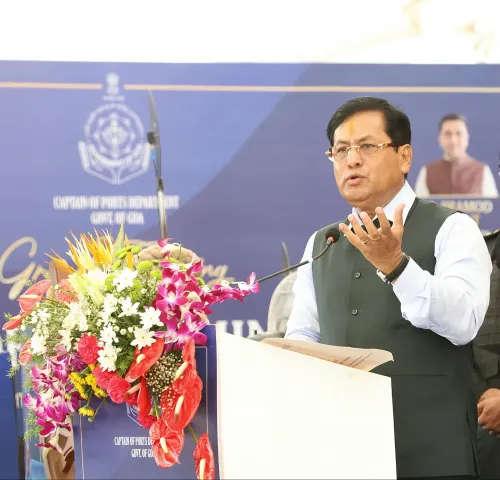
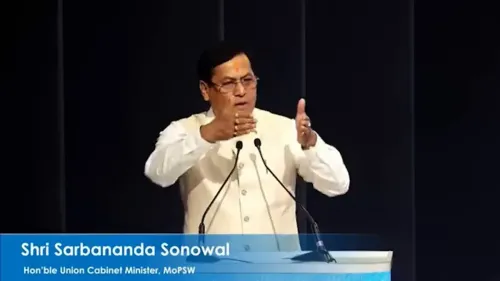
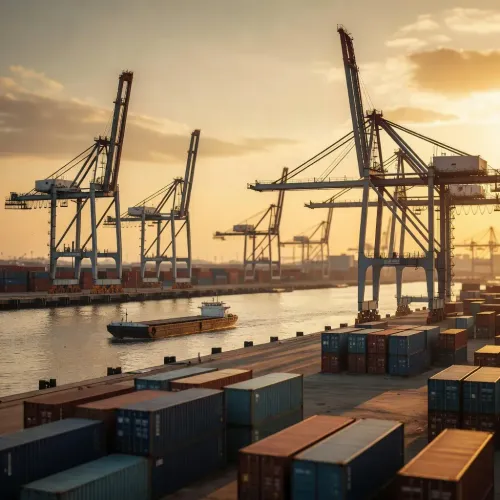
Union Minister of Ports, Shipping and Waterways Sarbananda Sonowal said on Monday, June 8, 2026, that India is on course to become a global maritime superpower, crediting the last 12 years of policy focus under Prime Minister Narendra Modi for reversing decades of neglect of the country's waterway potential.
Sharing a link to his full interview on Sansad TV, Sonowal wrote: 'For decades, India's maritime potential was overlooked. But the last 12 years have completely changed the story. Today, led by Hon'ble PM Shri Narendra Modi ji, we are unlocking the true power of our waterways to build a global Maritime Superpower.'
Context
Sonowal has held the Ports, Shipping and Waterways portfolio since July 2021, overseeing a ministry that sits at the intersection of trade logistics, coastal development, and strategic infrastructure. His post on June 8 is tied to a televised interview on the parliamentary broadcast channel, in which he elaborated on the government's maritime agenda.
The minister's framing — that a long period of neglect has been reversed — reflects a consistent BJP government narrative positioning the post-2014 period as a structural break from earlier administrations on infrastructure investment.
Policy Backdrop
The current maritime push rests on several legislative and programmatic pillars. The Sagarmala Project, launched in 2015, set out to modernise ports, promote coastal shipping, and reduce logistics costs through port-led industrialisation. The National Waterways Act, 2016, declared 111 rivers and canals as national waterways, creating a statutory framework for inland water transport development.
The Jal Marg Vikas Project on the Ganga — National Waterway-1 — was initiated in 2014-15 with World Bank assistance to develop commercial navigation on the river. These initiatives were consolidated under Maritime India Vision 2030, a roadmap released in 2021 that sets quantitative targets for port capacity, shipbuilding, and waterway utilisation by the end of the decade.
The maritime agenda also connects to the broader PM Gati Shakti multimodal connectivity framework, which treats ports and inland waterways as integral nodes in a national logistics network designed to lower freight costs and improve supply-chain efficiency.
Stakeholders and Impact
Port operators, shipping companies, and inland waterway users stand to gain most directly from the expansion of maritime infrastructure. Coastal states with significant port capacity — including Gujarat, Maharashtra, Tamil Nadu, Andhra Pradesh, and Odisha — are central to realising the Vision 2030 targets, as are riverine states along National Waterway-1 in the Ganga basin.
Beyond domestic logistics, the push carries a strategic dimension. Strengthening India's port infrastructure and maritime capability is seen as reinforcing the country's position in the Indo-Pacific, where competition for influence over sea lanes and port access has intensified in recent years.
What's Next
The immediate focus will be on the rollout of specific capacity targets outlined in Maritime India Vision 2030, with the 2026-27 Union Budget cycle a key marker for fresh allocations to port modernisation and waterway development. Sonowal's Sansad TV interview is expected to detail the ministry's current project pipeline, though the specifics of that interview could not be independently verified at the time of publication.
As India seeks to position itself as a global maritime hub, the pace of project completion — particularly on inland waterways where commercial traffic remains limited — will be the clearest test of whether the policy ambition translates into measurable economic outcomes.
Point of View
The minister is making a cumulative governance argument ahead of what is likely a detailed policy interview. The maritime sector is strategically useful for this narrative because it combines visible physical infrastructure — ports, waterways, ships — with a geopolitical dimension through India's Indo-Pacific positioning. The real test, however, will be whether Vision 2030 targets on inland waterway cargo volumes and port turnaround times are met on schedule, since those numbers will either validate or complicate the superpower framing.
NationPress
23 Oct 2026
Frequently Asked Questions
What is India's Maritime India Vision 2030?
Maritime India Vision 2030 is a government roadmap released in 2021 that sets targets for port capacity, shipbuilding, and inland waterway utilisation by 2030, forming the centrepiece of India's ambition to become a global maritime hub.
What is the Sagarmala Project?
The Sagarmala Project, launched in 2015, is a port-led development programme aimed at modernising India's ports, promoting coastal shipping, and reducing logistics costs through industrial clusters near ports.
How many national waterways does India have?
The National Waterways Act, 2016, declared 111 rivers and canals as national waterways, significantly expanding the statutory framework for inland water transport development.
What is Sarbananda Sonowal's role in the Modi government?
Sarbananda Sonowal has served as Union Minister of Ports, Shipping and Waterways since July 2021; he previously served as Chief Minister of Assam and is a senior BJP leader.
What is the Jal Marg Vikas Project?
The Jal Marg Vikas Project is a World Bank-assisted initiative launched in 2014-15 to develop commercial navigation on the Ganga, designated as National Waterway-1.