Sonowal Flags India's Maritime Rise on World Maritime Day
Synopsis
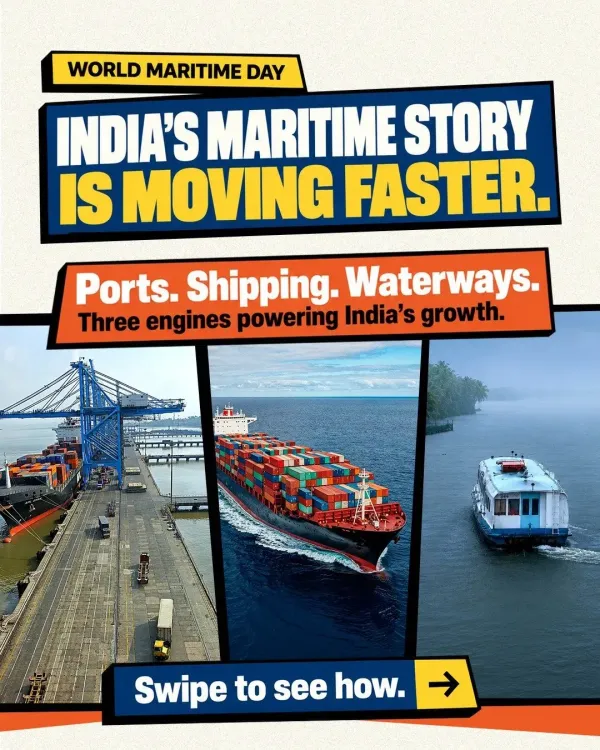
On World Maritime Day 2026, Ports Minister Sarbananda Sonowal spotlighted India's accelerating maritime growth — faster ports, expanding global shipping and revived inland waterways — citing PM Modi's vision and over a decade of Sagarmala-led port development.
Key Takeaways
World Maritime Day, September 24, 2026 : Minister Sonowal used the IMO observance to highlight India's maritime progress under PM Modi.
The Sagarmala Project , launched in 2015 , remains the cornerstone of India's port-led development and coastal connectivity strategy.
The National Waterways Act 2016 declared 111 inland waterways as national waterways, enabling cargo and passenger movement.
The Jal Marg Vikas Project on the Ganga , initiated in 2014-15 , was the first large-scale test of India's inland water transport ambition.
Maritime India Vision 2030 frames the next phase — targeting port capacity, shipbuilding and blue-economy growth simultaneously.
Lowering India's high logistics costs through multimodal transport — coastal shipping plus inland waterways — remains the central strategic objective.
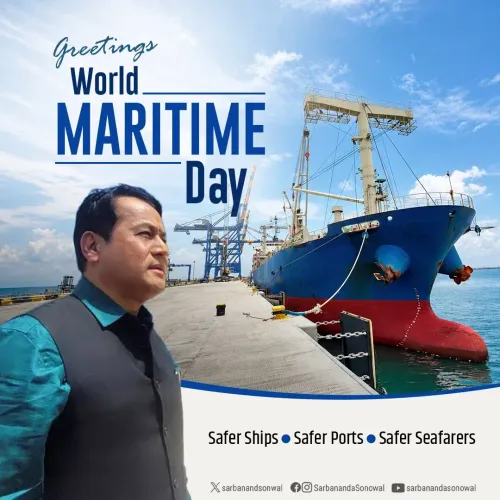
India's ports, shipping lanes and inland rivers are all moving in the same direction — forward. On World Maritime Day, Thursday, September 24, 2026, Union Minister of Ports, Shipping and Waterways Sarbananda Sonowal took to X to declare that India's maritime growth story deserves the global spotlight, crediting the vision of Prime Minister Narendra Modi for the momentum.
What World Maritime Day means for India's trade ambitions
World Maritime Day — observed annually by the International Maritime Organisation (IMO) — is typically a moment for declarations. But for India in 2026, there is a policy architecture to point to. The Sagarmala Project, launched in 2015, set the template: modernise ports, develop coastal economic zones and stitch them into a wider logistics network. Over a decade on, that blueprint has expanded into the broader Maritime India Vision 2030, targeting port capacity, shipbuilding and blue-economy growth simultaneously.
Sonowal's post, striking a celebratory note, highlighted three pillars — faster ports, global shipping expansion and the revival of inland waterways. The last of these has been a quiet but consequential policy push. The National Waterways Act of 2016 declared 111 inland waterways as national waterways, opening them to cargo and passenger movement. The Jal Marg Vikas Project, initiated on the Ganga as early as 2014-15, gave that ambition its first large-scale test bed.
The logistics logic behind the push
The strategic case is straightforward. India's logistics costs — historically high as a share of GDP — have long been a drag on export competitiveness. Road and rail carry the bulk of freight, but coastal shipping and inland waterways offer a cheaper, lower-carbon alternative for bulk cargo. Every tonne moved by water rather than truck chips away at that cost disadvantage. That is the multimodal bet the current administration has placed, and the Sagarmala project's port-led development corridor is its centrepiece.
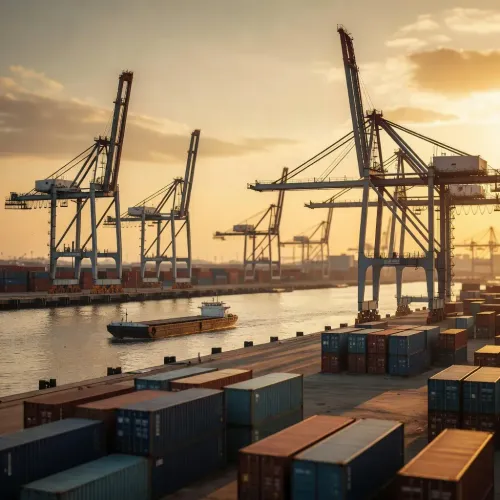
Public-private partnerships have been central to port capacity expansion, with major terminals at Jawaharlal Nehru Port, Mundra, Paradip and others drawing private investment alongside government capex. The minister's World Maritime Day message serves as both a progress marker and a signal to global shipping majors watching India's rise as a transhipment and manufacturing hub.
What the Maritime India Vision 2030 still needs to deliver
Sonowal's optimism lands against a backdrop of real benchmarks still to be cleared. Progress on new port projects under Maritime India Vision 2030, further national waterway notifications, and the pace of private investment in shipbuilding will determine whether the next decade matches the ambition of the last. The inland waterways network, in particular, remains under-utilised outside the Ganga corridor — connecting it meaningfully to road and rail interchanges is the next frontier.
One day a year, the global maritime community pauses to take stock. India's minister used that pause not for ceremony alone, but to stake a claim: the country's seas, ports and rivers are no longer a neglected growth lever — they are the story.
Point of View
So foregrounding it signals confidence in measurable on-ground progress. Whether the celebration matches the delivery will be tested by how quickly the 111 declared national waterways translate into active freight corridors beyond the Ganga.
NationPress
24 Sept 2026
Frequently Asked Questions
What is World Maritime Day and why does India observe it?
World Maritime Day is an annual observance by the International Maritime Organisation (IMO) that highlights the importance of the maritime sector to global trade and safety. India, as a major maritime nation with a vast coastline and growing port capacity, uses the day to spotlight its shipping and waterways policy milestones.
What is the Sagarmala Project?
The Sagarmala Project is a port-led development initiative launched by the Indian government in 2015. It aims to modernise major and minor ports, develop coastal economic zones, and improve connectivity between ports and their hinterlands through road, rail and waterway links.
How many inland waterways does India have under the National Waterways Act?
The National Waterways Act of 2016 declared 111 waterways across India as national waterways, significantly expanding the scope for cargo and passenger transport on rivers and canals beyond the original handful of declared national waterways.
What is the Jal Marg Vikas Project?
The Jal Marg Vikas Project is a government initiative on the River Ganga (National Waterway 1) to develop infrastructure for inland water transport, including navigation locks, jetties and terminals. It was initiated in 2014-15 as the flagship test of India's inland waterways ambition.
What is Maritime India Vision 2030?
Maritime India Vision 2030 is the central government's long-term blueprint for the maritime sector, covering port capacity expansion, shipbuilding, cruise tourism and the blue economy. It builds on the foundation laid by the Sagarmala Project and sets targets for India to become a leading global maritime nation by 2030.