Sonowal marks 12 years of Modi govt with infra milestones
Synopsis
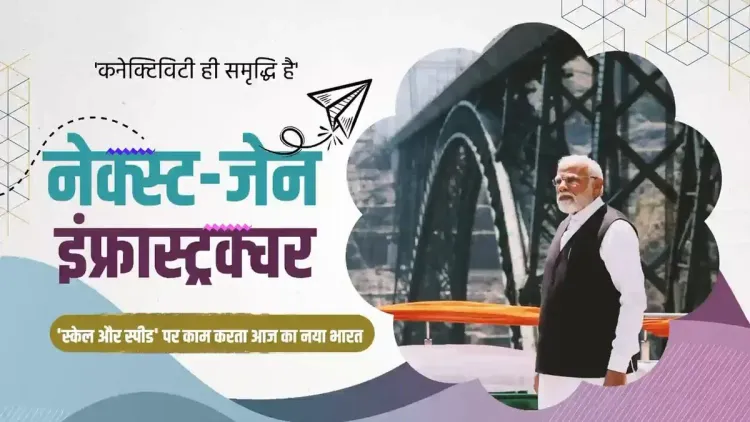
Union Ports Minister Sarbananda Sonowal on 16 June 2026 credited PM Modi's 12-year tenure with doubling port capacity and building the world's second-largest road network, framing the infra push as the foundation for Viksit Bharat by 2047.
Key Takeaways
Sarbananda Sonowal posted on 16 June 2026 marking 12 years of the Modi government , citing a 'monumental infra revolution.' The government claims port capacity has been doubled since 2014, underpinned by the Sagarmala Project launched in 2015 .
Bharatmala Pariyojana , approved in 2017 , targets 83,677 km of national highways and expressways to build what the government calls the world's second-largest road network.
The PM Gati Shakti National Master Plan ( 2021 ) integrates port, road, and rail planning to lower logistics costs and attract manufacturing investment.
All programmes are now framed under the Viksit Bharat @2047 vision, which identifies physical infrastructure as a core growth pillar.
Updated Maritime India Vision 2030 reports and annual highway construction targets will be the next benchmarks for assessing delivery.
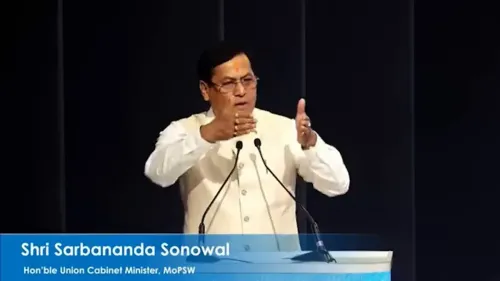
Union Minister of Ports, Shipping and Waterways Sarbananda Sonowal on Tuesday, 16 June 2026 credited Prime Minister Narendra Modi's twelve years in office with triggering a 'monumental infra revolution' that he says has doubled port capacity and built the world's second-largest road network.
Context
Sonowal's post, tagged #12YearsOfNayaBharatNirman, marks the completion of 12 years since the Modi government assumed office in May 2014. The minister argues that the 'speed and scale' of infrastructure expansion over this period are 'changing lives and laying the foundation for a Viksit Bharat' — the government's official vision for a developed India by 2047.
The post singles out two headline achievements: a doubling of port capacity and the construction of what the government describes as the world's second-largest road network. Both claims reflect the central government's long-standing messaging that physical connectivity is the primary driver of economic transformation.
Policy Backdrop
The infrastructure push Sonowal references rests on a sequence of flagship programmes. The Sagarmala Project, launched in 2015, was designed to modernise existing ports and raise India's total port handling capacity from roughly 1,500 million tonnes to over 3,000 million tonnes by the mid-2020s. The scheme also targets port-led industrialisation along India's coastline, with coastal states and port authorities as primary stakeholders.
On the road side, the Bharatmala Pariyojana, approved in 2017, envisages the construction of 83,677 km of national highways and expressways, including economic corridors and border connectivity routes. Both programmes were subsequently integrated under the PM Gati Shakti National Master Plan, launched in 2021, which seeks to synchronise multimodal infrastructure planning across ministries to reduce logistics costs and attract manufacturing investment.
The Ministry of Ports, Shipping and Waterways, which Sonowal has headed since 2021, sits at the intersection of these programmes, overseeing port capacity targets, shipping policy, and the development of inland waterways as part of the broader connectivity grid.
Stakeholders and Impact
The beneficiaries of the infrastructure expansion span multiple sectors. Port authorities and coastal states gain from modernised berths and increased cargo throughput, while logistics firms and highway contractors are direct participants in the construction and operation of new corridors. The government's stated goal is to lower India's logistics cost as a share of GDP, which has historically been higher than in peer economies, thereby improving the competitiveness of Indian exports.
The Viksit Bharat @2047 framework, under which these investments are now positioned, identifies physical infrastructure as a core growth pillar. Successive budget cycles since 2020 have seen capital expenditure on infrastructure rise sharply, with the central government using public investment to crowd in private participation across ports, roads, and rail.
What's Next
The government's infrastructure narrative will face scrutiny as updated implementation reports for the Maritime India Vision 2030 and annual national highway construction targets are published. Analysts and parliamentary committees are expected to assess whether capacity additions have translated into commensurate reductions in logistics costs and measurable gains in export competitiveness. The pace of private investment alongside public spending will be a key indicator of whether the 'foundation for Viksit Bharat' is taking hold in practice.
Point of View
Designed to consolidate the party's ownership of the infrastructure narrative ahead of state electoral cycles. By anchoring the message in two tangible metrics — port capacity and road network size — the minister is translating large programme names into voter-legible outcomes. The framing under 'Viksit Bharat' is significant: it extends the political timeline to 2047, giving the government a long runway to claim credit for ongoing investments regardless of near-term delivery gaps. The post also signals that the Ports Ministry sees itself as a central, not peripheral, actor in the broader development story — a positioning that matters as the ministry seeks continued budgetary priority in future Union Budgets.
NationPress
19 Sept 2026
Frequently Asked Questions
What is the Sagarmala Project and how has it expanded India's port capacity?
The Sagarmala Project is a port-led development programme launched in 2015 to modernise existing ports and build new ones along India's coastline. It aimed to raise total port handling capacity from roughly 1,500 million tonnes to over 3,000 million tonnes by the mid-2020s, effectively doubling throughput capacity.
What is Bharatmala Pariyojana and how large is India's road network?
Bharatmala Pariyojana is a national highway and expressway programme approved in 2017 targeting 83,677 km of new roads including economic corridors and border highways. The Modi government claims this expansion has given India the world's second-largest road network, though independent verification of the global ranking relies on the latest international data.
What is Viksit Bharat and how does infrastructure connect to it?
Viksit Bharat @2047 is the central government's official vision to make India a developed economy by the centenary of its independence. Physical infrastructure — ports, roads, railways, and inland waterways — is identified as a core growth pillar because lower logistics costs are seen as essential to boosting manufacturing and exports.
What is PM Gati Shakti and why was it launched?
The PM Gati Shakti National Master Plan was launched in 2021 to integrate multimodal infrastructure planning across central ministries and state governments. Its goal is to eliminate siloed project approvals, reduce logistics costs, and ensure that ports, highways, railways, and industrial corridors are built in a coordinated sequence.
What is Sarbananda Sonowal's role in India's ports and shipping sector?
Sarbananda Sonowal has served as Union Minister of Ports, Shipping and Waterways since 2021 . He oversees port capacity expansion under the Sagarmala Project, shipping policy, and the development of inland waterways, and is a senior BJP leader and former Chief Minister of Assam.