White House Claims Trump Delivering on Border, Crime Pledges
Synopsis
The White House declared on 4 November 2026 that President Trump has fulfilled pledges on border security and crime reduction, reviving the 'Promises Made, Promises Kept' slogan — though key statistical claims await official DHS and FBI verification.
Key Takeaways
The White House posted on 4 November 2026 claiming President Trump has delivered on border security and crime reduction promises.
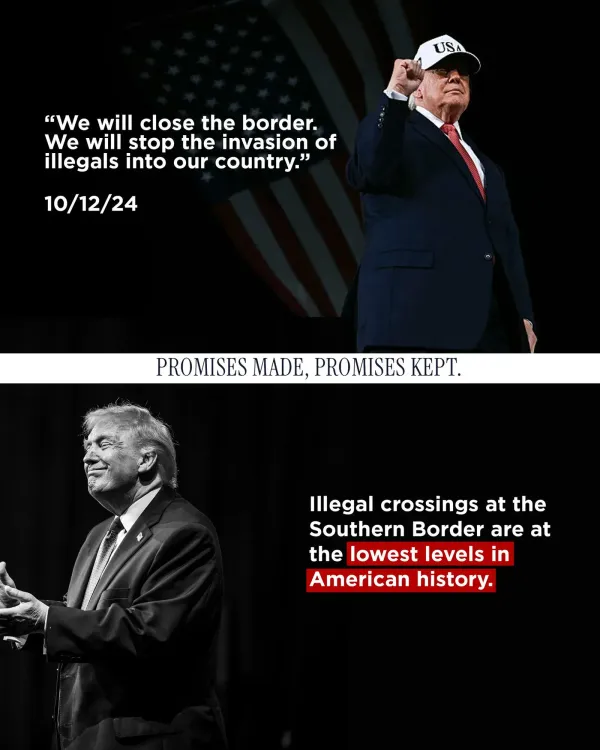
The post uses the phrase 'PROMISES MADE, PROMISES KEPT,' a slogan central to Trump's political brand since his 2016 campaign.
Specific claims of a 'historic drop in crime' and a 'secure border' have not yet been independently verified by current DHS or FBI data releases.
Trump's first-term ( 2017–2021 ) executive orders on border enforcement and criminal non-citizen removals form the stated policy foundation for these claims.
Upcoming federal statistical releases will be the key benchmark for evaluating the administration's assertions.
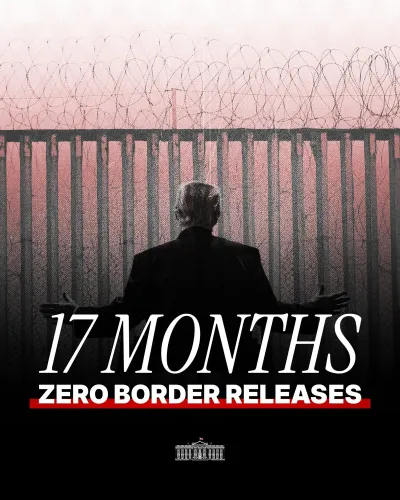
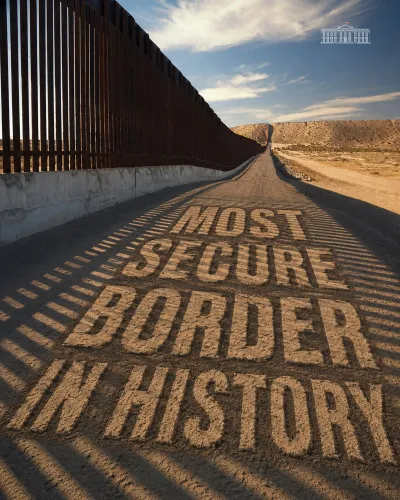
Framing two of its most charged political commitments as now fulfilled, the White House declared on Wednesday, 4 November 2026 that President Donald Trump has delivered on promises of a secure border and a 'historic drop in crime' — asserting, in its own words, that he is 'making America SAFE again.'
The 'Promises Made, Promises Kept' playbook returns
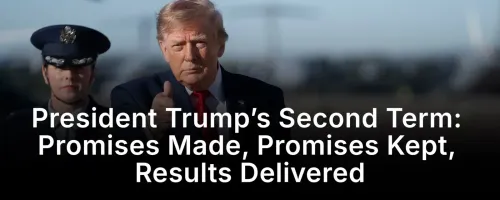
The post's headline phrase — 'PROMISES MADE, PROMISES KEPT' — is a deliberate callback to a slogan that has anchored Trump-era political communication since his first term. Deploying it now signals that the administration intends the message as a progress report, not merely a talking point. The White House linked two specific pillars: border security and reduced crime — both central to Trump's political identity since his 2016 campaign.
During his first term (2017–2021), Trump signed executive orders expanding detention capacity, prioritising the removal of criminal non-citizens, and pressing forward with border infrastructure. Those moves formed the policy lineage that the administration now points to as proof of delivery.
What the administration is claiming — and what remains unverified
The White House specifically cites 'a secure border' and 'a historic drop in crime' as measurable outcomes. Neither claim, as of the time of this post, has been independently corroborated by current Department of Homeland Security or FBI statistical releases — both agencies are expected to publish updated border-encounter and national crime-rate data that would either substantiate or challenge the framing.
The pattern of declarative social-media language linking administration actions to security metrics is consistent with how the White House has communicated on these themes across both terms — presenting contested data as settled fact before independent verification is complete.
Why border and crime messaging still commands the political centre
For Indian audiences tracking US domestic politics, the administration's law-and-order framing carries weight beyond rhetoric: immigration enforcement policy directly affects Indian-American communities, visa processing timelines, and the broader diplomatic atmosphere between Washington and New Delhi. A hardened enforcement posture at the border has historically shaped H-1B adjudication sentiment, interior enforcement priorities, and the political appetite for comprehensive immigration reform.
The claim of a 'historic drop in crime,' if validated by forthcoming FBI data, would represent a genuinely significant domestic achievement. If the numbers do not hold, the post itself becomes the story — a reminder that in the age of real-time fact-checking, governing by declaration carries its own political risk.
The next DHS and FBI statistical releases will be the definitive scorecards against which this post is judged.
Point of View
Promises Kept,' the administration is consciously building a 2026 political narrative around performance, not just rhetoric. The timing ahead of key DHS and FBI data releases is strategically significant: if the numbers hold, the post looks prescient; if they don't, it becomes a liability. For observers of US-India relations, any tightening of the law-and-order frame in Washington has downstream consequences for immigration policy and bilateral diplomatic optics.
NationPress
4 Nov 2026
Frequently Asked Questions
What did the White House claim about Trump's border and crime record in November 2026?
The White House posted on 4 November 2026 asserting that President Trump has secured the border and achieved a 'historic drop in crime,' framing these as fulfilled campaign promises under the slogan 'Promises Made, Promises Kept.'
Has Trump's claim of a historic drop in crime been verified?
As of the post date, the specific claim of a 'historic drop in crime' has not been independently verified. Upcoming FBI and DHS statistical releases are expected to provide the official data against which this assertion will be measured.
What were Trump's border security executive orders during his first term?
During his first term (2017–2021), President Trump signed executive orders that expanded immigration detention capacity, prioritised the removal of criminal non-citizens, and pushed for border wall construction — forming the policy foundation the administration now cites as evidence of delivery.
How does Trump's law-and-order messaging affect Indian Americans and US-India relations?
A stricter enforcement posture at the US border has historically influenced H-1B visa adjudication sentiment, interior enforcement priorities for Indian nationals, and the broader political climate around immigration reform — all of which have direct implications for Indian-American communities and US-India diplomatic ties.
What does 'Promises Made, Promises Kept' mean in Trump's political messaging?
'Promises Made, Promises Kept' is a recurring slogan in Trump's political communications, used since his first term to claim that campaign commitments — especially on border security, crime, and immigration — have been fulfilled by specific policy actions.