White House Claims Trump Kept Law-and-Order Promises Across America
Synopsis
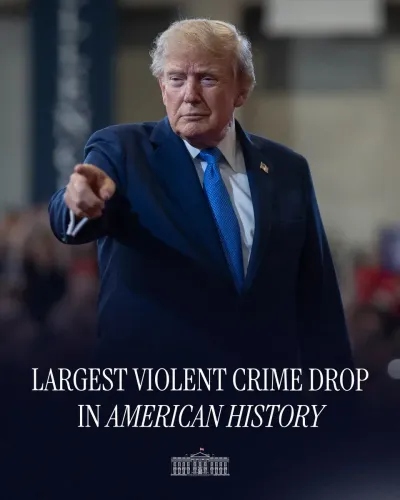
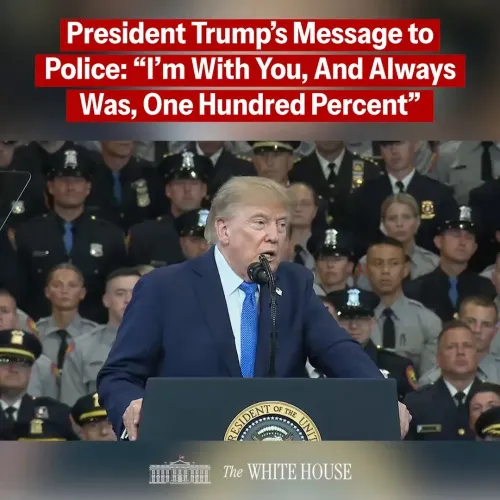
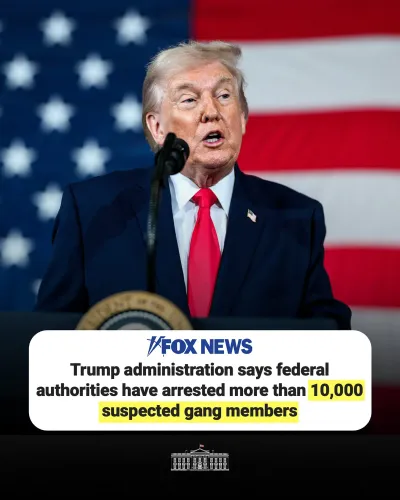
The White House declared on November 3, 2026, that President Donald J. Trump fulfilled his law-and-order pledges — backing police, driving down crime, and restoring urban beauty — with Washington, D.C. cited as a flagship example of the administration's results.
Key Takeaways
The White House posted on November 3, 2026 , claiming Trump delivered on law-and-order campaign promises.
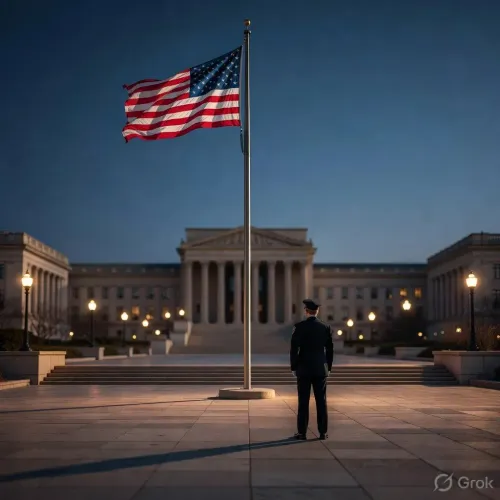
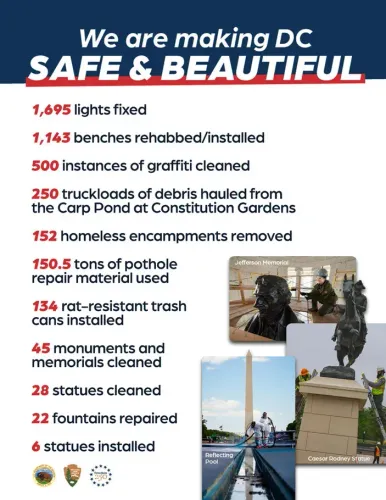
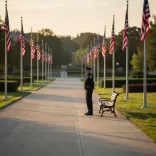
Washington, D.C. was specifically cited as a city made 'safe and beautiful again' under Trump's tenure.
The post invoked the 'PROMISES MADE.
PROMISES KEPT.' slogan — a deliberate rhetorical signature of Trump campaign messaging.
Trump's first term produced the Executive Order on Safe Policing for Safe Communities ( June 2020 ) and Operation Legend , both central to the administration's law-and-order legacy.
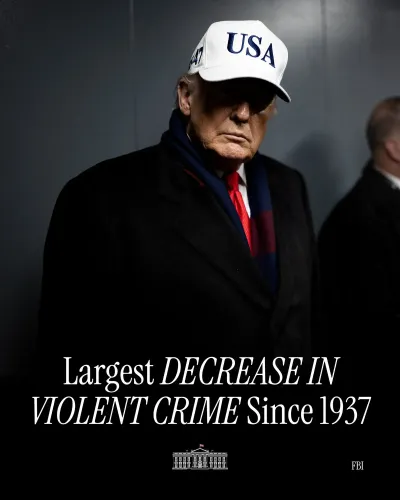
The White House post makes no reference to specific crime statistics; independent verification of 2025-2026 data remains pending.
Upcoming FBI Uniform Crime Reporting releases and DOJ grant announcements will be key factual tests of these claims.
A crisp, confident declaration from the executive residence — the White House posted on Tuesday, November 3, 2026, that President Donald J. Trump has delivered on his signature law-and-order campaign pledges, pointing to police support, falling crime, and the restored appearance of American cities, with Washington, D.C. held up as Exhibit A.
The 'Promises Made, Promises Kept' framing — what it signals
The phrase 'PROMISES MADE. PROMISES KEPT.' is not incidental. It is a deliberate rhetorical callback to the central contract Trump offered voters across multiple election cycles — that a federal administration willing to visibly back police and intervene in high-crime cities could reverse what his campaigns described as urban decay. By invoking that slogan now, the White House is presenting governance outcomes as a closed loop: pledge made, pledge redeemed.
The framing puts Washington, D.C. front and centre. The capital has historically occupied an unusual political space — a city governed partly at the federal level, making it a direct canvas on which any administration can demonstrate or showcase urban-policy intent. Conditions in D.C. have featured repeatedly in White House messaging as a proxy for the broader national urban picture.
Trump's law-and-order policy lineage
The policy architecture underpinning this claim stretches back to Trump's first term. In June 2020, the administration issued the Executive Order on Safe Policing for Safe Communities, which tied federal grant funding to police department compliance with certain use-of-force standards while simultaneously pushing back on 'defund the police' movements. Around the same period, Operation Legend deployed federal law-enforcement agents to several high-crime American cities, framing the intervention as a direct federal response to surging homicide numbers.
Both initiatives were central to the administration's argument that federal support — rather than municipal reform pressure — was the correct lever for reducing violent crime. That argument is now being restated as a verdict, not a proposal.
What the data picture looks like — and what remains unverified
Crime trends in the United States have historically followed complex, multi-decade cycles shaped by demographics, economics, policing strategies, and social conditions — factors that rarely bend to a single administration's policy agenda in isolation. The White House post does not cite specific statistics, and independently verified crime data for 2025-2026 is not available to confirm or contest the claim at this time.
The FBI's Uniform Crime Reporting programme remains the authoritative national benchmark. Any forthcoming release from the Department of Justice on police hiring grants or crime-rate updates will be closely watched as a factual anchor for these assertions.
Point of View
With Washington, D.C. as the most politically potent symbol available. By tying visible police support to measurable urban improvement, the administration is pre-empting any rival narrative ahead of an anticipated news cycle around crime data. The 'PROMISES MADE. PROMISES KEPT.' construct is also a loyalty signal to a law-enforcement constituency that Trump has cultivated since 2015. Without independently verified 2026 crime statistics, however, the claim remains a political assertion rather than a confirmed empirical outcome.
NationPress
3 Nov 2026
Frequently Asked Questions
What did the White House say about Trump and crime in 2026?
The White House posted on November 3, 2026, that President Trump backed police, reduced crime, and restored beauty to American cities, citing Washington, D.C. as a key example and declaring 'PROMISES MADE. PROMISES KEPT.'
What is Trump's record on police and law enforcement?
During his first term, Trump signed the Executive Order on Safe Policing for Safe Communities in June 2020 and launched Operation Legend, which deployed federal agents to high-crime cities — both central pillars of his law-and-order agenda.
Is Washington, D.C. really safer under Trump?
The White House claims D.C. is 'safe and beautiful again,' but independently verified crime statistics for 2025-2026 are not yet publicly available to confirm or contest this assertion; the FBI's Uniform Crime Reporting data will be the key measure.
What does 'Promises Made, Promises Kept' mean in Trump's messaging?
'Promises Made, Promises Kept' is a recurring Trump campaign and governance slogan used to frame policy outcomes as the direct fulfilment of specific pledges made to voters, particularly on issues like border security, trade, and law enforcement.
What federal actions did Trump take on urban crime?
Trump's administration deployed federal agents to high-crime cities under Operation Legend and issued an executive order linking police grant funding to use-of-force standards, both aimed at reducing violent crime in major urban centres.