Trump Claims Oil Prices Falling Nearly $10 a Barrel
Synopsis
President Trump declared oil prices are 'dropping like a rock,' down nearly $10 a barrel — a claim the White House posted on November 3, 2026. The boast fits Trump's long-running 'energy dominance' agenda, though global markets are shaped by OPEC+ and demand forces far beyond any single administration's control.
Key Takeaways
The White House posted a quote from President Donald J.
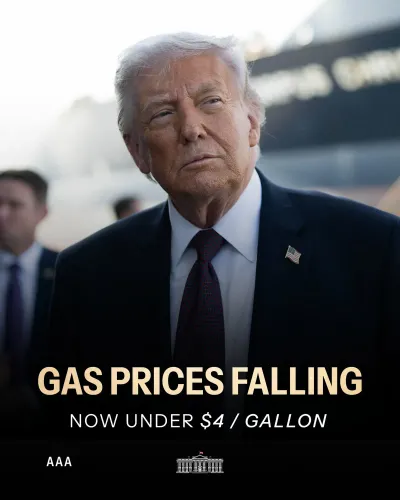
Trump on November 3, 2026 , claiming oil prices have fallen nearly $10 a barrel .
Trump described the drop as a record, framing it as a signature achievement of his energy policy.
His energy agenda has historically centred on deregulation, expanded domestic drilling, and withdrawal from the Paris Agreement.
Global oil prices are also driven by OPEC+ production quotas , geopolitical disruptions, and demand shifts beyond US policy control.
Falling oil prices benefit energy consumers but can squeeze domestic oil producers and slow capital investment in new drilling.
Upcoming OPEC+ quota decisions and executive actions on energy leasing will be key indicators of price trajectory.
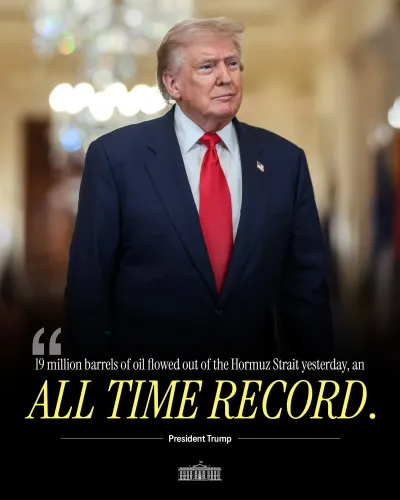
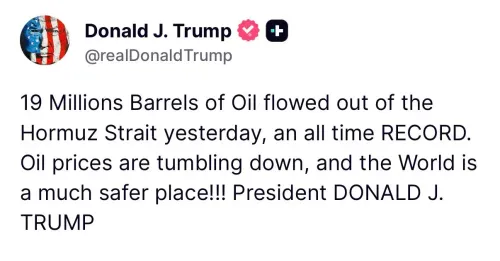
Oil prices are cratering, and President Donald J. Trump wants the world to know he sees his fingerprints on the fall. In a post on Tuesday, November 3, 2026, the White House shared Trump's declaration that crude is 'dropping like a rock,' down almost $10 a barrel — a move he called a record.
Trump's Claim: A $10-a-Barrel Plunge
The post, shared from the official White House account, quotes Trump in his signature all-caps style: 'Oil Prices are DROPPING LIKE A ROCK, down almost $10 a Barrel, A RECORD.' The framing is unmistakably triumphant — a sitting president pointing at the pump and saying: this is because of me. Trump has long treated cheap energy as a political trophy, one he first polished aggressively during his 2017–2021 first term through sweeping deregulation and withdrawal from the Paris Agreement.
Why American Presidents Love a Falling Oil Price
The political arithmetic is simple: cheaper oil means cheaper petrol, cheaper goods, cheaper everything. US presidents of both parties have historically rushed to claim credit when crude slides. Trump is no different — his energy agenda has centred on maximising domestic fossil fuel output, cutting permitting red tape, and insulating American producers from international pressure. A sharp price drop fits neatly into that 'energy dominance' narrative.
But global oil markets are rarely that obedient. OPEC+ production quotas, geopolitical supply disruptions, and demand swings from major economies all move the needle independently of Washington's policy choices. Periods of surging US shale output have historically coincided with price volatility — sometimes helping consumers, sometimes hammering producers.
What the Drop Means for Consumers and Producers
For energy consumers — households, airlines, manufacturers — a sustained fall of this magnitude would offer real relief, particularly at a time when inflation fatigue runs deep. For oil producers, the calculus flips: lower prices squeeze margins, raise questions about capital investment, and can slow down the very domestic drilling expansion Trump champions. That tension sits at the heart of every energy-price celebration from the Oval Office.
Whether this drop reflects a structural shift, a demand signal, or a supply surge remains the defining question. The next OPEC+ production quota decision and any new executive actions on energy leasing and permitting will be the clearest indicators of where prices head from here.
A falling oil price is a headline that writes itself — the harder story is always whether it lasts.
Point of View
Disclaim expensive energy. The move lands within a broader arc of Trump's second-term 'energy dominance' push, which has prioritised deregulation and domestic production over climate commitments. The risk is that markets rarely stay loyal to a political narrative — OPEC+ has repeatedly demonstrated its ability to override US shale momentum with a single quota decision. If prices rebound, the same bully pulpit that celebrated the drop will need a very different message.
NationPress
3 Nov 2026
Frequently Asked Questions
Why are oil prices falling in November 2026 according to Trump?
Trump has attributed the near-$10-a-barrel drop to his administration's energy policies, though specific market factors behind the November 2026 move have not been independently detailed in this post.
How does a drop in US oil prices affect India?
India is a major crude oil importer, so a sustained fall in global oil prices typically reduces India's import bill, eases fuel prices domestically, and can help cool inflation — making it a broadly positive development for the Indian economy.
What is Trump's energy policy and how does it affect oil prices?
Trump's energy policy centres on expanding domestic US fossil fuel production through deregulation and streamlined permitting, which can increase supply and put downward pressure on global oil prices over time.
Can OPEC+ reverse the oil price drop Trump is claiming?
Yes. OPEC+ has consistently shown the ability to tighten production quotas and push prices higher, regardless of US domestic output levels — making any price rally claim contingent on cartel decisions outside Washington's control.
What is the significance of a $10-per-barrel drop in crude oil?
A $10-per-barrel decline is a substantial single move in crude markets, representing a significant percentage shift that ripples through fuel costs, airline tickets, manufacturing inputs, and trade balances worldwide.