Trump vows fuel prices to 'drop like a rock' after Iran conflict ends
Synopsis
Trump has told American farmers — his most loyal base — to absorb higher fuel and fertiliser bills as the cost of dismantling Iran's nuclear programme. His promise that prices will fall 'lower than they were before' once the conflict ends is a high-stakes political bet: if the war drags on, that pledge becomes a liability.
Key Takeaways
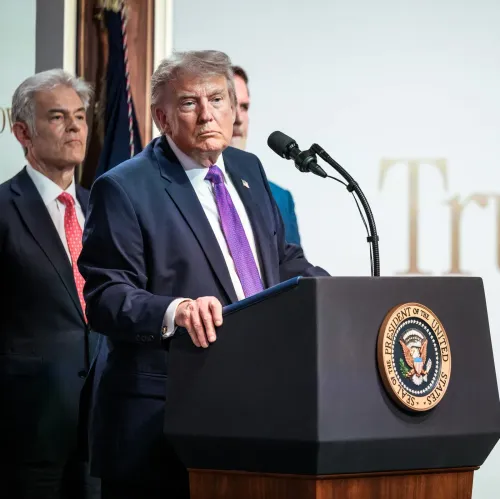
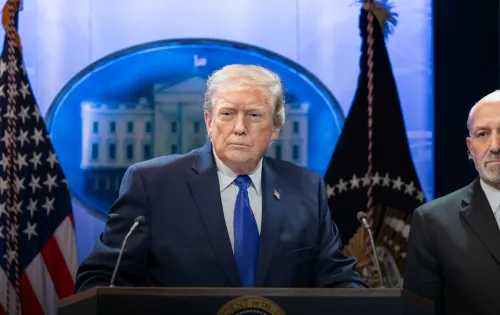
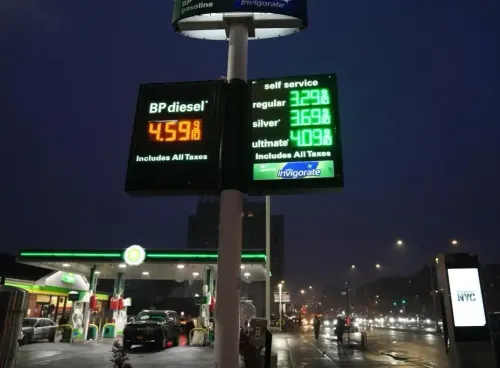
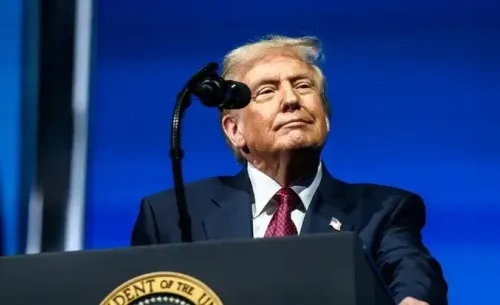
President Donald Trump predicted US gasoline prices will 'drop like a rock' once the Iran conflict is resolved, speaking on NBC's Meet the Press on 8 June .
Trump said prices would ultimately fall below pre-conflict levels , but acknowledged timing depends on whether a deal is signed or military objectives are completed.
American farmers are currently absorbing higher costs for both gasoline and fertiliser as a result of the conflict, now in its 100th day .
Trump cited $28 billion in farm assistance from his first term and argued rural America continues to support him.
The President insisted US military action has significantly weakened Iran's capabilities and rejected fears of a prolonged engagement.
Trump pointed to a stronger-than-expected US jobs report as evidence the broader economy remains resilient despite the conflict.
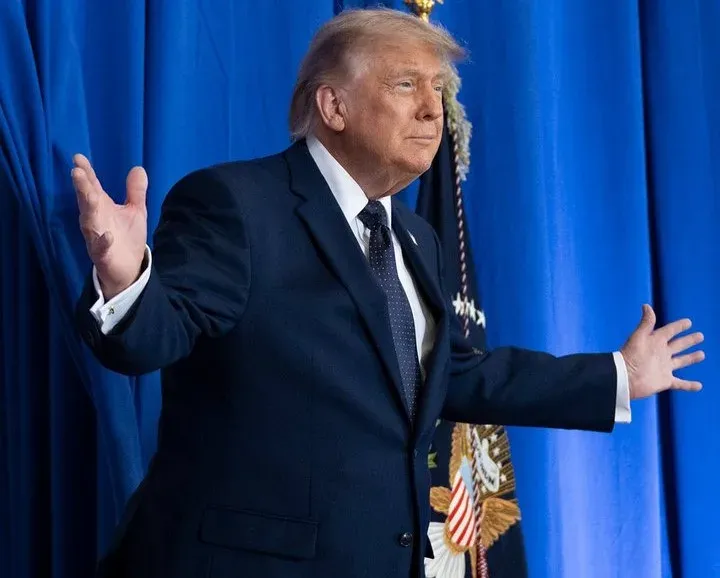
US President Donald Trump has predicted that American gasoline prices will fall sharply once the ongoing conflict with Iran is resolved, framing the current spike in fuel and fertiliser costs as a necessary trade-off for preventing Tehran from acquiring a nuclear weapon. The remarks were made during an interview on NBC's Meet the Press on 8 June, as the White House faces mounting political pressure over the economic consequences of the 100-day-old military campaign.
Trump's Fuel Price Pledge
When pressed on concerns from American farmers struggling with elevated energy and input costs, Trump was unequivocal. 'As soon as that's complete, gasoline prices are going to drop like a rock,' he said, tying the forecast directly to either a negotiated settlement with Tehran or the successful conclusion of US military objectives.
He went further, claiming prices would ultimately fall below pre-conflict levels. 'They're going to come low, very low. They're going to go lower than they were before,' Trump told the interviewer. He acknowledged, however, that the timeline remained contingent on how the conflict develops. 'It depends where the war goes. It could be, I'll have to give them a shot, and it could be we'll sign an agreement. If we sign an agreement, it'll go down now. Otherwise, it'll go down after we're finished,' he said.
The Economic Pain Farmers Are Absorbing
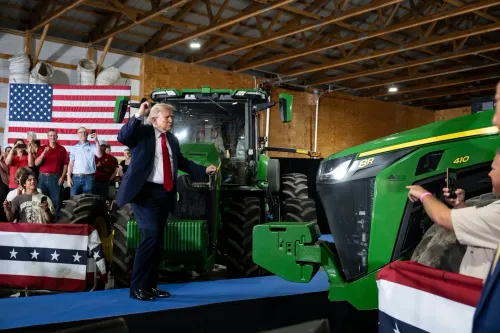
The conflict has placed particular strain on rural America, with farmers reporting higher costs for both gasoline and fertiliser — inputs whose prices are closely linked to global energy markets. Trump acknowledged this directly but argued that the agricultural community would ultimately back his decision.
'I love the farmers, and the farmers love me. The farmers trust me,' he said, pointing to the $28 billion in farm assistance he said he provided during his first term as evidence of his commitment to the sector. He contended that rural America continues to support him despite the short-term economic pain.
The Nuclear Justification
Trump framed the entire economic disruption as a deliberate and justified choice. 'I could've kept it that way. But I said, I have to take a little bit of a turn. The farmers are going to understand it better than anybody. We're going to have higher gasoline. We're going to have a little higher fertiliser, et cetera, et cetera. But I'm going to get rid of a nuclear weapon in the hands of very dangerous people,' he said.
The President insisted that US military action had significantly degraded Iran's capabilities and rejected comparisons to prolonged overseas engagements. 'We're not going to be there,' he said when asked whether the situation risked becoming a quagmire — a pointed reference to past US military entanglements in the Middle East that he had long criticised.
Economy and Political Context
To counter the narrative of economic damage, Trump cited a stronger-than-expected US jobs report, describing the employment figures as 'really strong' and arguing that the broader economy remained resilient. He described the country as experiencing record economic performance, even as energy-sensitive sectors face headwinds.
This comes amid the White House facing growing bipartisan scrutiny over the conflict's domestic economic footprint, with critics arguing that sustained elevated fuel prices could erode the administration's base in key agricultural states. Whether prices fall as Trump has pledged will depend heavily on how swiftly — and on what terms — the Iran conflict concludes.
Point of View
The administration is visibly trying to hold together a coalition — rural, energy-sensitive, and war-weary — that is beginning to feel the pinch. The $28 billion first-term subsidy reference is telling: it signals the White House knows goodwill alone won't hold if pump prices stay elevated through harvest season. The deeper risk is that Trump has now publicly staked his credibility on a post-war price correction that depends on variables — Iranian negotiations, global oil supply, OPEC responses — entirely outside his control. If the conflict extends, the promise becomes a political liability that opponents will replay on a loop.
NationPress
19 Sept 2026
Frequently Asked Questions
What did Trump say about fuel prices and the Iran conflict?
Trump said US gasoline prices would 'drop like a rock' once the conflict with Iran is resolved, and would ultimately fall below pre-conflict levels. He made the remarks in an interview on NBC's Meet the Press on 8 June, framing the current price spike as a temporary cost of preventing Iran from obtaining a nuclear weapon.
Why are US fuel and fertiliser prices higher because of the Iran conflict?
Global energy markets are sensitive to Middle East instability, and the ongoing US military campaign against Iran has contributed to elevated oil prices, which in turn push up gasoline and fertiliser costs. American farmers, who are heavy users of both, have been among the most vocal about the economic strain.
How long has the US-Iran conflict been ongoing?
According to Trump's own remarks, the conflict had entered its 100th day at the time of the NBC interview on 8 June, dating the first US strikes to roughly late February.
What did Trump say to reassure American farmers?
Trump acknowledged farmers are facing higher fuel and fertiliser costs but argued the pain would be short-lived. He cited $28 billion in farm assistance from his first term, said 'the farmers trust me,' and insisted rural America understands the strategic necessity of the action against Iran.
When will gasoline prices fall, according to Trump?
Trump said prices could fall immediately if a negotiated agreement is reached with Tehran, or after US military objectives are completed. He said the timing 'depends where the war goes' but maintained prices would eventually go lower than they were before the conflict began.