Sonowal Hails 12 Years of Modi Govt's Middle-Class Gains
Synopsis
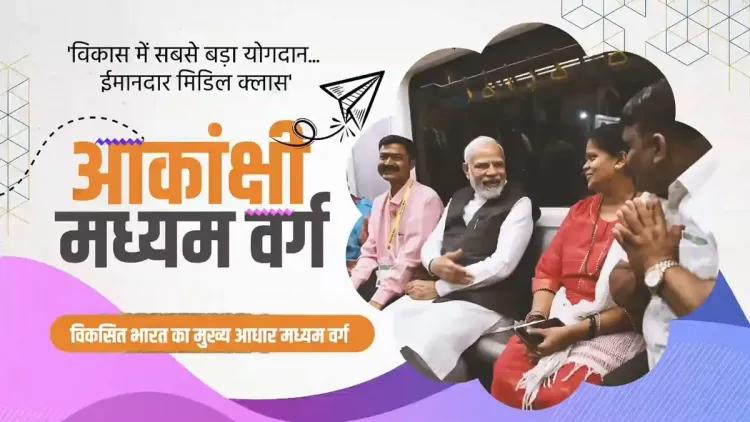
Ports Minister Sarbananda Sonowal marked 12 years of PM Modi's government by crediting tax relief, Digital India infrastructure, and Vande Bharat trains with delivering unprecedented ease of living for India's middle class and powering the Viksit Bharat vision.
Key Takeaways
Sarbananda Sonowal , Union Minister of Ports, Shipping and Waterways, posted on June 15, 2026 under #12YearsOfSakshamMiddleClass .
He cited three pillars of middle-class uplift: historic tax relief , digital public infrastructure , and Vande Bharat rail connectivity.
The Digital India programme, launched in 2015 , underpins the digital infrastructure strand of this policy record.
GST , implemented in 2017 , and income-tax adjustments form the tax-relief component cited by the minister.
The first Vande Bharat Express was inaugurated in 2019 as part of Indian Railways modernisation.
Sonowal frames the middle class as the active driver of the Viksit Bharat 2047 national development vision.
Union Minister of Ports, Shipping and Waterways Sarbananda Sonowal on Monday, June 15, 2026, credited Prime Minister Narendra Modi's 12-year governance record with delivering 'unprecedented ease of living' for India's middle class, pointing to tax relief, digital public infrastructure, and modern rail connectivity as the three pillars of this transformation.
Context
Sonowal's post, shared under the hashtag #12YearsOfSakshamMiddleClass, marks the completion of 12 years since the Narendra Modi-led government assumed office in May 2014. The message frames this milestone through the lens of household-level benefits rather than macroeconomic aggregates, specifically invoking the lived experience of the middle class as the benchmark of policy success.
The minister cited 'historic tax relief, world-class digital public infrastructure, and modern mobility like Vande Bharat' as the defining achievements of this period. He described an 'empowered middle class' as the driving force behind the Viksit Bharat (Developed India) journey — the government's overarching long-term development vision.
Policy Backdrop
The three pillars Sonowal references each have a distinct policy lineage. The Digital India programme, launched in 2015, was designed to expand digital public infrastructure and improve citizen access to government services, creating platforms that have since underpinned everything from direct benefit transfers to digital payments.
On taxation, the nationwide rollout of the Goods and Services Tax (GST) in 2017 rationalised India's indirect tax structure, while successive Union Budgets have adjusted income-tax slabs in ways the government has framed as relief for salaried and middle-income households. The Vande Bharat Express, first inaugurated in 2019, represents the rail modernisation strand — a semi-high-speed train service positioned as an upgrade in everyday mobility for urban and semi-urban passengers.
Together, these measures reflect a deliberate policy pattern: simultaneous interventions in fiscal burden, digital service delivery, and physical connectivity, presented as mutually reinforcing improvements to quality of life.
Stakeholders and Impact
The primary constituency invoked in Sonowal's message is India's middle class — a broad demographic of salaried professionals, small business owners, and aspirational urban and semi-urban households. This group has historically been sensitive to income-tax policy, inflation, and access to quality public services and transport.
The framing of the middle class as an active agent — 'driving the Viksit Bharat journey' — rather than a passive beneficiary is notable. It positions this demographic as both the recipient of government policy and the engine of national development, a rhetorical construct that the ruling Bharatiya Janata Party (BJP) has consistently deployed in its public communication ahead of electoral cycles and policy anniversaries.
What's Next
The #12YearsOfSakshamMiddleClass campaign signals coordinated messaging across the BJP and the Union Cabinet around the government's anniversary. Future Union Budget documents and railway project completion reports are expected to detail further expansions of digital services and new Vande Bharat rail corridors, which will serve as the next set of data points against which these claims can be assessed.
As India advances toward its Viksit Bharat 2047 target, the government's ability to sustain and deepen middle-class gains — particularly on real income, employment quality, and public infrastructure — will determine whether this narrative holds electoral and policy traction in the years ahead.
Point of View
Digital infrastructure, and rail modernisation under a single 'ease of living' umbrella, the messaging avoids granular scrutiny of any single policy while projecting cumulative governance momentum. The invocation of 'Viksit Bharat' ties the 12-year retrospective to a forward-looking 2047 horizon, insulating the narrative from near-term electoral pressures. For a senior minister from Assam, amplifying this message also reinforces BJP's broader Northeast consolidation strategy ahead of state and national electoral cycles.
NationPress
15 Sept 2026
Frequently Asked Questions
What is the #12YearsOfSakshamMiddleClass campaign about?
It is a BJP-led social media campaign marking 12 years of PM Narendra Modi's government, highlighting policy benefits for India's middle class such as tax relief, digital infrastructure, and modern rail services like Vande Bharat.
What is Vande Bharat Express and why is it mentioned?
Vande Bharat Express is a semi-high-speed train service launched under Indian Railways modernisation, first inaugurated in 2019. It is cited as an example of improved everyday mobility for middle-class passengers.
What tax relief has the Modi government provided to the middle class?
The government has adjusted income-tax slabs in successive Union Budgets to reduce the burden on salaried households, and implemented GST in 2017 to rationalise indirect taxation across the country.
What is Viksit Bharat and how does it relate to the middle class?
Viksit Bharat, meaning 'Developed India', is the government's long-term vision to make India a developed nation by 2047. The BJP frames the empowered middle class as the primary engine driving this national goal.
Who is Sarbananda Sonowal?
Sarbananda Sonowal is a senior BJP leader, former Chief Minister of Assam, and currently Union Minister of Ports, Shipping and Waterways in the Modi government.