Sonowal hails Modi as India's longest-serving elected PM

Synopsis
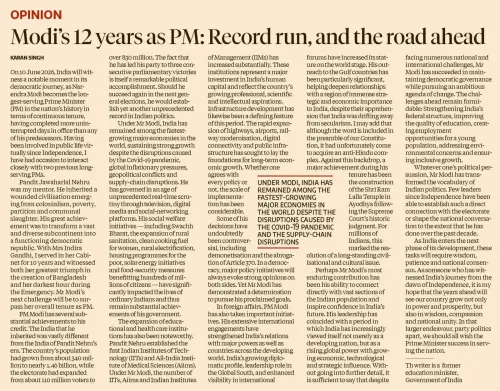
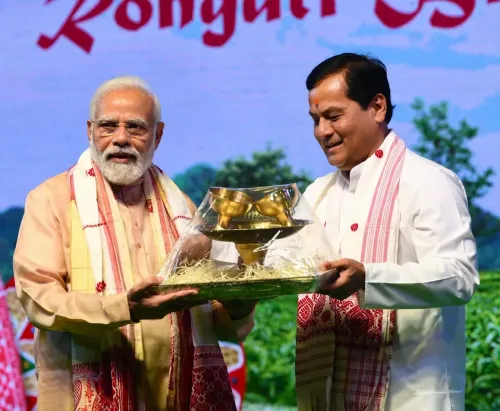
Union Minister Sarbananda Sonowal hailed Prime Minister Narendra Modi on 10 June 2026 for becoming India's longest-serving elected Prime Minister, citing 4,399 days of governance marked by welfare delivery, economic growth and North East development under the Viksit Bharat vision.
Key Takeaways
Union Minister Sarbananda Sonowal congratulated PM Narendra Modi on 10 June 2026 for becoming India's longest-serving elected Prime Minister.
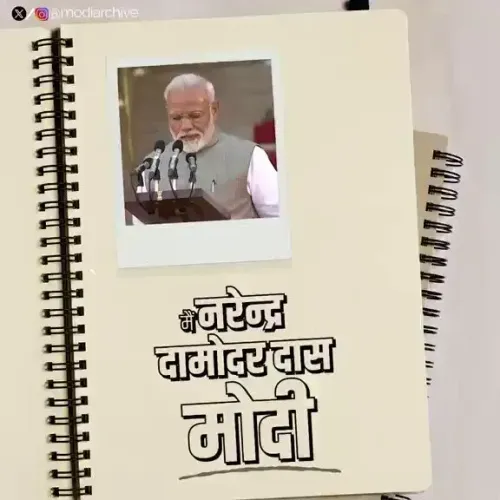
The milestone is pegged at 4,399 days of continuous tenure, beginning with Modi's first oath on 26 May 2014 .
Sonowal specifically highlighted development in the North East as a defining achievement of Modi's leadership.
The tribute links Modi's record to the Viksit Bharat vision of making India a developed nation by 2047 .
The post reflects a broader BJP pattern of framing governance longevity as electoral validation ahead of state elections in 2026–27 .
Sonowal, as former Chief Minister of Assam , lends regional credibility to the North East development narrative.
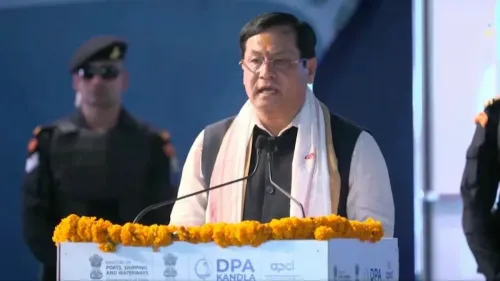
Union Minister of Ports, Shipping and Waterways Sarbananda Sonowal on Wednesday, 10 June 2026 congratulated Prime Minister Narendra Modi on crossing the milestone of becoming India's longest-serving elected Prime Minister, calling it 'a monumental milestone for the nation's democratic history.'
Context
Sonowal's post marks 4,399 days of Modi's tenure as Prime Minister — a figure the minister describes as representing 'relentless Seva aur Samarpan' (service and dedication). Modi first took office on 26 May 2014 following the BJP-led NDA's decisive general-election victory, ending nearly a decade of coalition-led governments at the Centre. He was re-elected in May 2019 with an expanded majority and began his third consecutive term in June 2024.
The congratulatory post arrives amid a broader pattern of senior BJP leaders publicly framing the longevity of Modi's rule as evidence of sustained voter confidence and policy continuity, particularly ahead of state assembly elections scheduled through 2026–27.
Policy Backdrop
Sonowal highlighted two pillars of Modi's governance record: grassroots welfare delivery and India's emergence as a 'leading global economic powerhouse.' Both themes are central to the government's Viksit Bharat vision — the official roadmap for India to become a developed nation by 2047, anchored in infrastructure expansion, poverty alleviation and digital public infrastructure.
The minister also drew attention to the North East, a region of eight states that has received targeted central investment in connectivity and security under successive NDA governments. Modi's Act East Policy, upgraded in 2014, deepened India's engagement with ASEAN nations while simultaneously routing infrastructure projects into the north-eastern states — a dual-purpose strategy Sonowal, as a former Chief Minister of Assam, has long championed.
Stakeholders and Impact
As a senior BJP leader and the former Chief Minister of Assam, Sonowal carries particular weight when speaking on North-eastern development, lending a regional dimension to what is otherwise a national tribute. His post explicitly links Modi's record to 'giving new wings of confidence to the North East,' signalling that the region's transformation remains a politically significant metric for the ruling alliance.
For the wider electorate, the milestone is being positioned by party leaders as validation of a governance model that has moved India away from fragmented coalition politics toward sustained single-party majority rule — a narrative the BJP is expected to amplify in upcoming electoral cycles.
What's Next
Attention will now turn to parliamentary proceedings on the next Union Budget and any fresh policy announcements tied to Viksit Bharat 2047 targets. State assembly elections scheduled through 2026–27 will serve as the next major test of whether the governance themes Sonowal and other BJP leaders are celebrating translate into continued voter support. The milestone also sets the stage for the ruling party to sharpen its long-term development narrative as India moves deeper into Modi's third term.
Point of View
Majority-led governance while also staking a regional claim, with the former Assam chief minister spotlighting North East development as a personal and political touchstone. The invocation of 'Seva aur Samarpan' taps into the party's ideological vocabulary, framing governance as devotion rather than politics. Arriving as state assembly elections loom through 2026–27, the post is as much a campaign-season signal as it is a congratulatory message. It also underscores how BJP leaders are building a long-arc narrative around Viksit Bharat 2047 to give Modi's third term a sense of historic, generational purpose.
NationPress
26 Oct 2026
Frequently Asked Questions
When did Narendra Modi become India's longest-serving elected Prime Minister?
Narendra Modi crossed the milestone of becoming India's longest-serving elected Prime Minister in June 2026, having served continuously since 26 May 2014 — a span described by Union Minister Sonowal as 4,399 days .
What is Viksit Bharat and how does it relate to Modi's tenure?
Viksit Bharat is the Indian government's official vision to transform India into a fully developed nation by 2047 , the centenary of independence. It encompasses economic growth, infrastructure, welfare delivery and digital public infrastructure, and has been the overarching policy framework of Modi's third term.
Why did Sarbananda Sonowal mention the North East in his congratulatory post?
Sonowal, as a former Chief Minister of Assam and a senior leader from the North East, highlighted the region's development as a signature achievement of Modi's tenure. Targeted central investment in connectivity and security under the Act East Policy has been a key plank of NDA governance in the region.
Who is Sarbananda Sonowal?
Sarbananda Sonowal is a senior BJP leader who serves as Union Minister of Ports, Shipping and Waterways. He previously served as Chief Minister of Assam from 2016 to 2021 and is one of the party's most prominent faces from North East India.
How many terms has Narendra Modi served as Prime Minister?
Narendra Modi has served three consecutive terms as Prime Minister: his first from May 2014 , his second from May 2019 and his third commencing in June 2024 following the general elections that year.