CM Bhajan Lal Sharma pays tribute to Mirabai on her Jayanti
Synopsis
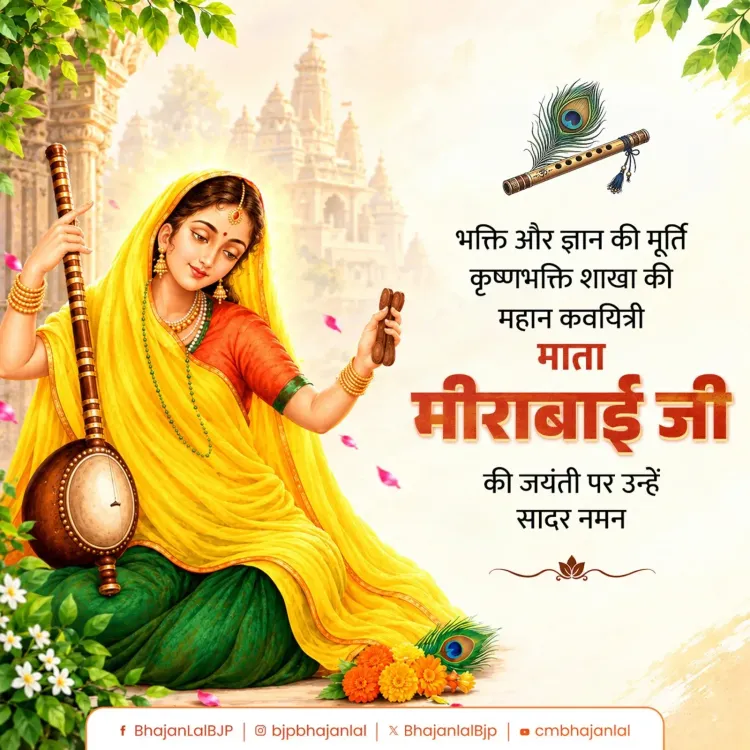
Rajasthan Chief Minister Bhajan Lal Sharma paid homage to the 16th-century Bhakti poet-saint Mata Meerabai on her Jayanti on 26 October 2026, praising her selfless devotion to Lord Krishna as an enduring inspiration for humanity and a pillar of Sanatan literary heritage.
Key Takeaways
Rajasthan CM Bhajan Lal Sharma posted a tribute to Mata Meerabai on her Jayanti on 26 October 2026 .
He described her as the embodiment of 'singular Krishna devotion, surrender, and renunciation.' Meerabai was a 16th-century Rajput princess from Mewar, Rajasthan , who became a central figure of the Bhakti movement.
Sharma highlighted her concept of nishkama bhakti — selfless, desireless devotion — as a timeless inspiration for all of humanity.
Her bhajans remain a core part of Rajasthan's devotional and literary tradition, performed at temples and cultural events across the state.
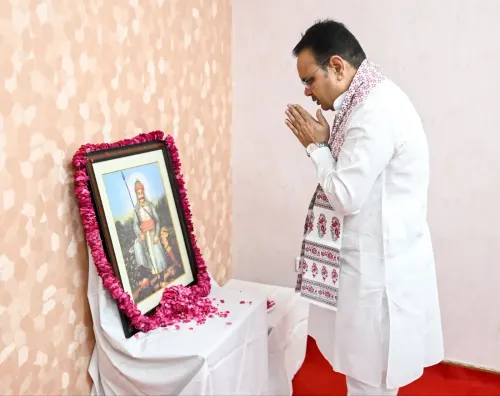
Centuries after she composed her immortal bhajans in the lanes of Mewar, Mata Meerabai continues to command reverence from every corner of India — and on Monday, 26 October 2026, Rajasthan Chief Minister Bhajan Lal Sharma added his voice to that long chorus, offering a heartfelt tribute to the poet-saint on her Jayanti.
Posting in Hindi on X, CM Sharma described Meerabai as 'ananya Krishna bhakti, samarpan aur virakti ki pratimoorti' — 'the very embodiment of singular Krishna devotion, surrender, and renunciation.' He wrote that her bhajans and spiritual thought have 'enriched Sanatan faith and literature across ages,' and that her nishkama bhakti — selfless, desireless devotion — towards Lord Krishna 'will forever remain a source of inspiration for all of humanity.'
A Rajput princess who chose devotion over a throne
Mata Meerabai was a 16th-century Rajput princess born in Mewar, Rajasthan — the very state that Sharma now governs. She renounced royal comfort and social convention to dedicate her life entirely to the worship of Lord Krishna, composing hundreds of devotional poems and bhajans that have endured for five centuries. Her works are considered a cornerstone of the Bhakti movement, a medieval devotional renaissance that swept across the Indian subcontinent and democratised spiritual expression beyond caste and social rank.
Her poetry, raw with longing and luminous with faith, is among the most widely sung devotional literature in the Hindi and Rajasthani literary traditions. The concept of nishkama bhakti she embodied — love for the divine with no expectation of reward — remains a touchstone of Sanatan philosophy taught in schools and recited at temples across Rajasthan every day.
Bhakti saints, BJP tributes, and Rajasthan's cultural identity
The tribute follows a well-established pattern among Indian leaders, particularly from the BJP, of marking the Jayantis of Bhakti-era saints as moments to reaffirm cultural and spiritual heritage. For a Rajasthan Chief Minister specifically, honouring Meerabai carries an added weight — she is not merely a national spiritual icon but a daughter of this soil, her story inseparable from the forts and deserts of Mewar.
Devotional gatherings, bhajan recitals, and temple programmes traditionally mark Meerabai Jayanti across Rajasthan, keeping her legacy alive not as museum history but as living practice.
Point of View
Meerabai is not a distant symbol but a local icon, making the gesture resonant beyond ritual party messaging. The appeal to her concept of nishkama bhakti — selfless devotion — also carries a subtle universalism that softens the cultural-nationalist framing and widens the intended audience. Over time, such recurring tributes help stitch a political identity in which governance and spiritual heritage are presented as inseparable.
NationPress
26 Oct 2026
Frequently Asked Questions
Who was Meerabai and why is she celebrated?
Meerabai was a 16th-century Rajput princess from Mewar, Rajasthan, who became one of India's most celebrated Bhakti poet-saints. She composed hundreds of devotional bhajans dedicated to Lord Krishna and her work is considered a cornerstone of the Bhakti movement and Rajasthani literary heritage.
What is Meerabai Jayanti?
Meerabai Jayanti marks the birth anniversary of the poet-saint Mata Meerabai. It is observed with devotional gatherings, bhajan recitals, and cultural programmes, particularly in Rajasthan, where she is revered as a daughter of the land.
What did CM Bhajan Lal Sharma say about Meerabai?
CM Bhajan Lal Sharma described Meerabai as the embodiment of singular Krishna devotion, surrender, and renunciation. He said her bhajans and spiritual thought have enriched Sanatan faith and literature for ages, and her selfless devotion will remain an eternal inspiration for all of humanity.
What is nishkama bhakti?
Nishkama bhakti is the concept of selfless, desireless devotion to the divine — love for God with no expectation of personal reward or gain. It is central to Meerabai's poetry and the broader Bhakti philosophical tradition.
What is the connection between Meerabai and Rajasthan?
Meerabai was born and lived in Mewar, a historic kingdom in present-day Rajasthan. Her poetry is deeply embedded in Rajasthani devotional culture and literature, and she is considered one of the state's most iconic spiritual and literary figures.