CM Bhajan Lal Sharma Pays Tribute to Ahilyabai Holkar on Jayanti
Synopsis
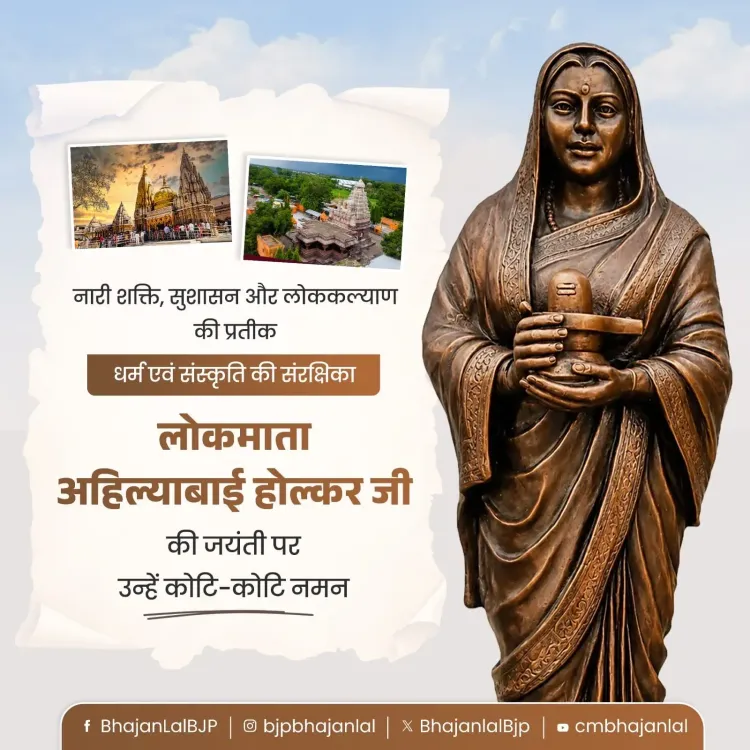
Rajasthan Chief Minister Bhajan Lal Sharma paid tribute to 18th-century Maratha ruler Ahilyabai Holkar on her birth anniversary, 31 May 2026, calling her a symbol of women's power, good governance, and Sanatan heritage — a tribute consistent with BJP's broader cultural-political narrative.
Key Takeaways
Rajasthan CM Bhajan Lal Sharma posted a tribute to Ahilyabai Holkar on her birth anniversary, 31 May 2026 .
He described her as a symbol of Nari Shakti (women's power), good governance, and public welfare.
Ahilyabai Holkar ruled the Malwa kingdom from 1767 to 1795 , known for temple construction and welfare measures across India.
The tribute fits a wider BJP pattern of invoking pre-colonial female rulers to reinforce women's empowerment and cultural continuity themes.
State-level commemorative events or heritage schemes around Ahilyabai Jayanti may follow in Rajasthan .
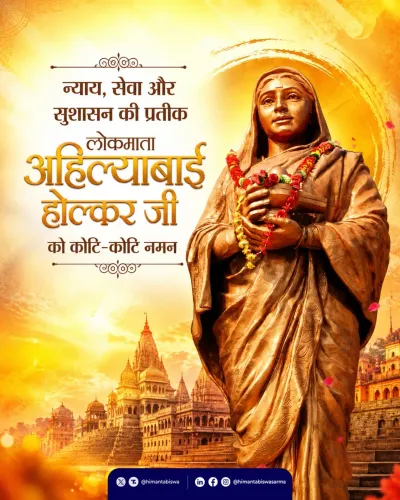
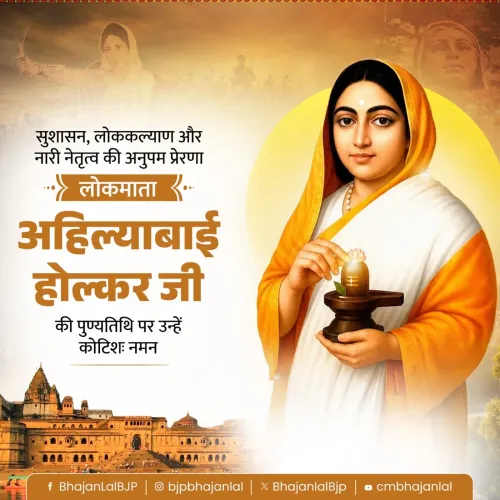
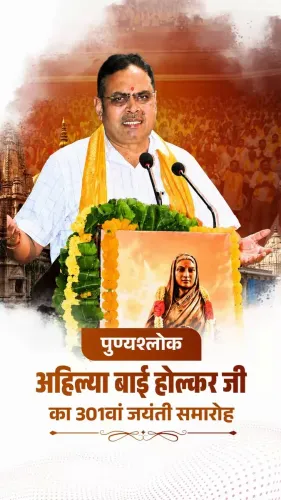
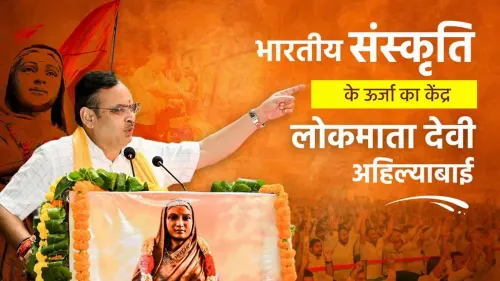
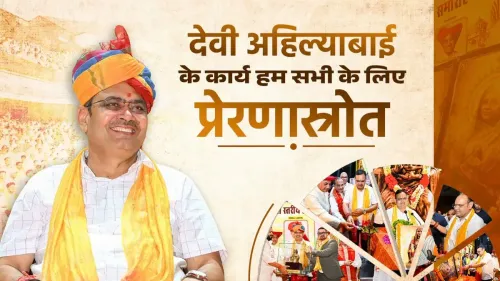
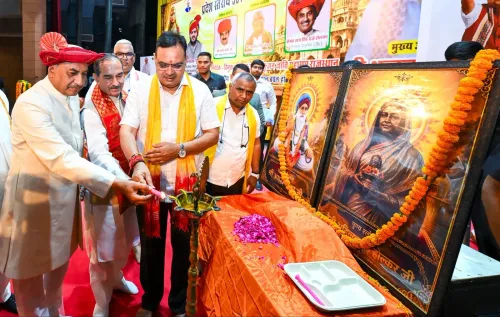
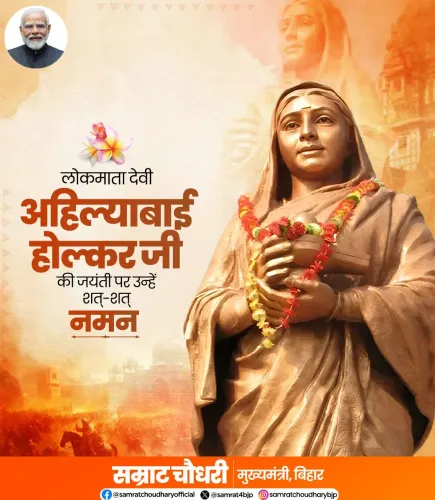
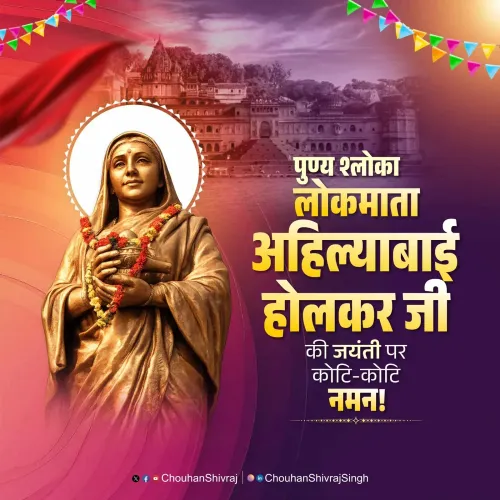
Rajasthan Chief Minister Bhajan Lal Sharma on Sunday, 31 May 2026 paid tribute to Ahilyabai Holkar, the 18th-century Maratha ruler celebrated as Lokamata (mother of the people), on her birth anniversary, describing her as a symbol of women's empowerment, good governance, and public welfare.
Context
Posting in Hindi on X, Chief Minister Sharma offered 'koti-koti naman' — countless salutations — to Ahilyabai Holkar, hailing her as 'Nari Shakti, Sushasan aur Lok Kalyan ki pratik, Dharm evam Sanskriti ki sanrakshika' ('a symbol of women's power, good governance and public welfare, and a guardian of religion and culture'). He added that her works in public service, justice, and the protection of Sanatan heritage 'are inscribed in golden letters in Indian history' and that 'her ideal life will continue to inspire dedication, compassion, and service to the nation.'
31 May is observed as Ahilyabai Holkar Jayanti across India, marked each year by official tributes from central and state governments as well as cultural organisations.
Policy Backdrop
Ahilyabai Holkar ruled the Malwa kingdom of the Holkar dynasty from 1767 to 1795, a period widely recognised for its administrative efficiency, extensive temple and infrastructure construction across the subcontinent, and welfare measures that benefited ordinary citizens. She is remembered for building or restoring temples, dharamshalas, and water facilities in places as far apart as Kashi, Dwarka, Somnath, and Gaya.
Central and state governments have formally commemorated her birth anniversary since at least the early 2000s, often using the occasion to highlight historical models of women-led administration and justice delivery. BJP-governed states have been particularly consistent in invoking her legacy to connect current governance priorities — women's empowerment, heritage protection, and public welfare — with pre-colonial precedents.
Stakeholders and Impact
The tribute resonates with women administrators, heritage organisations, and communities associated with Maratha history and Sanatan cultural traditions. For the ruling BJP in Rajasthan, invoking Ahilyabai reinforces a broader political narrative that links the party's governance agenda to celebrated female rulers of the past.
Rajasthan, with its own rich heritage of Rajput and Maratha history, has a natural constituency for such commemorations. Statements of this kind also feed into state-level policy conversations around women's welfare schemes, religious tourism, and heritage conservation.
What's Next
Observers will watch whether Rajasthan announces any commemorative programmes, heritage schemes, or women's welfare initiatives timed to Ahilyabai Holkar Jayanti on 31 May. Any references to her legacy in the state's upcoming tourism or women's empowerment policy documents would signal a move beyond symbolic tribute toward programmatic action.
Point of View
Heritage protection, justice delivery — in celebrated pre-colonial precedents. By invoking Ahilyabai as both a female ruler and a guardian of Sanatan culture, the CM signals continuity between historical Hindu statecraft and his government's agenda. Such tributes rarely remain purely symbolic; they often precede or accompany policy announcements in tourism, women's welfare, or heritage conservation. The timing on a nationally observed birth anniversary maximises visibility while keeping the messaging broadly inclusive.
NationPress
15 Oct 2026
Frequently Asked Questions
Who was Ahilyabai Holkar?
Ahilyabai Holkar was an 18th-century ruler of the Malwa kingdom under the Holkar dynasty, governing from 1767 to 1795. She is celebrated for her administrative efficiency, construction of temples and infrastructure across India, and welfare measures for ordinary citizens.
When is Ahilyabai Holkar Jayanti?
Ahilyabai Holkar Jayanti is observed on 31 May each year, marking the birth anniversary of the Maratha ruler. Central and state governments across India mark the day with official tributes and cultural events.
What did CM Bhajan Lal Sharma say about Ahilyabai Holkar?
CM Bhajan Lal Sharma called Ahilyabai Holkar a symbol of women's power, good governance, and public welfare, and described her works in public service and heritage protection as 'inscribed in golden letters in Indian history.'
Why do BJP governments frequently tribute Ahilyabai Holkar?
BJP-led state governments regularly invoke Ahilyabai Holkar to connect their governance priorities — women's empowerment, cultural heritage, and justice — with celebrated pre-colonial examples of women-led administration and Sanatan heritage protection.
What is Bhajan Lal Sharma's role?
Bhajan Lal Sharma is the Chief Minister of Rajasthan and a senior BJP leader. He assumed office in December 2023 and frequently issues public statements on cultural icons and governance themes.