Giriraj Singh Pays Tribute to PVC Hero Sekhon on Birth Anniversary
Synopsis
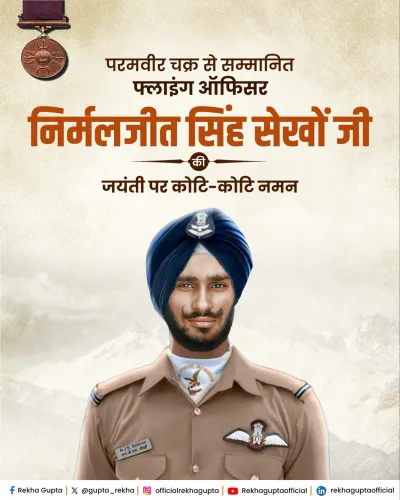
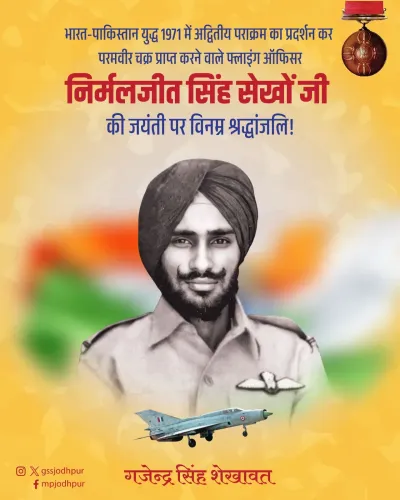
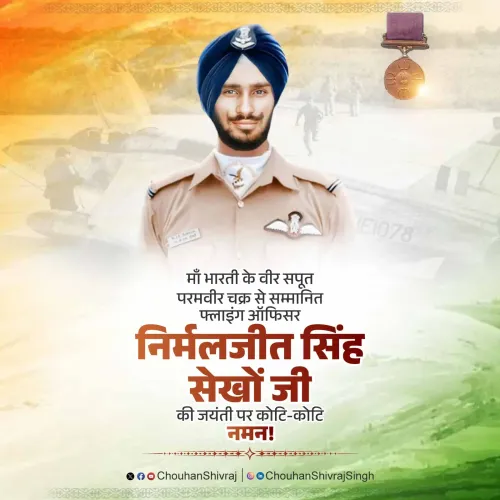
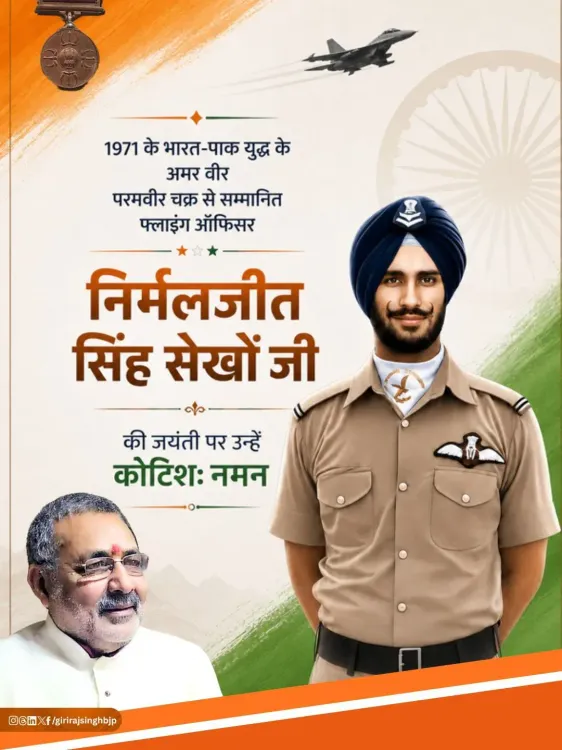
Union Textiles Minister Giriraj Singh on 17 July 2026 paid tribute to Flying Officer Nirmaljit Singh Sekhon — the only IAF recipient of the Param Vir Chakra — on his birth anniversary, honouring his lone stand against Pakistani jets over Srinagar during the 1971 war.
Key Takeaways
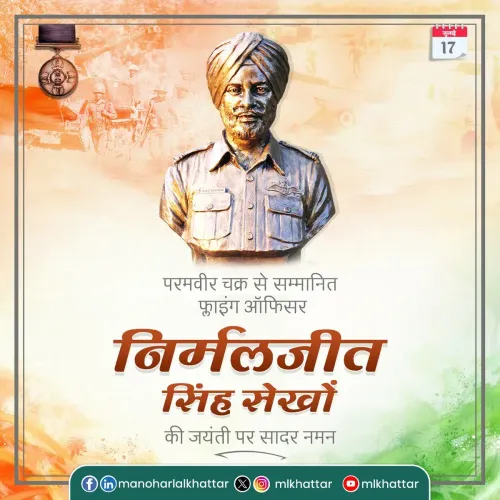
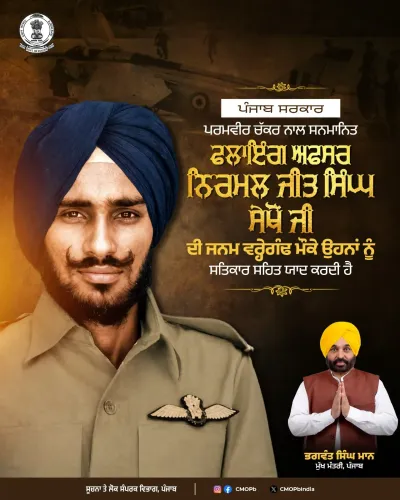
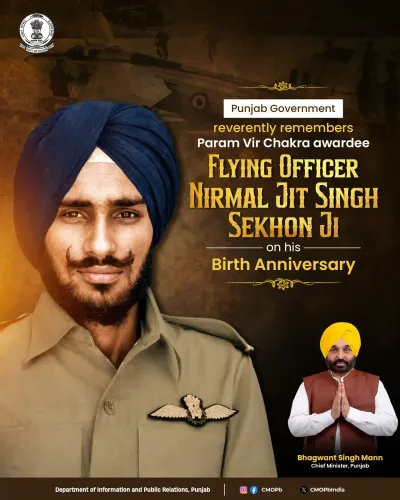
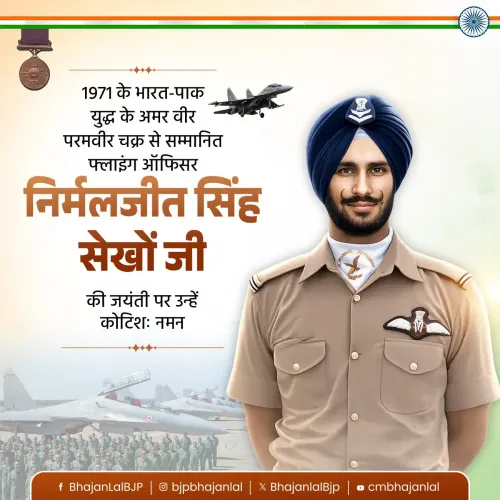
Union Textiles Minister Giriraj Singh posted a Hindi tribute on X on 17 July 2026 to mark the birth anniversary of Flying Officer Nirmaljit Singh Sekhon .
Sekhon is the only officer of the Indian Air Force ever to receive the Param Vir Chakra , India's highest wartime gallantry award, which was conferred posthumously.
He was killed in action on 14 December 1971 while single-handedly engaging Pakistani Sabre jets attacking Srinagar airfield , flying a Folland Gnat with No.
The Param Vir Chakra was instituted by the Government of India in 1950 as the highest wartime gallantry decoration for Indian armed forces.
India observes 16 December as Vijay Diwas annually since 1972 , commemorating the 1971 war victory and honouring its martyrs.
Union Textiles Minister Giriraj Singh on Friday, 17 July 2026, paid tribute to Flying Officer Nirmaljit Singh Sekhon, the only Indian Air Force recipient of the Param Vir Chakra, on the occasion of Sekhon's birth anniversary. The minister posted a Hindi tribute on X, honouring the 1971 war hero as an 'immortal legend' whose valour would be 'forever inscribed in golden letters in the pages of history.'
Context
In his post, Singh wrote: '1971 ke yudh ke amar mahanayak, Param Vir Chakra vijeta Flying Officer Nirmaljit Singh Sekhon ji ki jayanti par unhe vinamra shraddhanjali aur koti-koti naman' — translated as: 'Humble tribute and a million salutes to Flying Officer Nirmaljit Singh Sekhon, the immortal hero and Param Vir Chakra laureate of the 1971 war, on his birth anniversary.' He added that Sekhon's 'courage and valour in defending the nation's borders will always be inscribed in golden letters in the pages of history.'
Flying Officer Sekhon is a singular figure in Indian military history — the only IAF officer ever to have been awarded the Param Vir Chakra, India's highest wartime gallantry decoration. The award was conferred posthumously for his extraordinary actions during the 1971 Indo-Pakistani War.
Policy Backdrop
The Param Vir Chakra was instituted by the Government of India in 1950 as the highest wartime gallantry honour, replacing the Victoria Cross for Indian armed forces. It is awarded for the most conspicuous bravery or some daring or pre-eminent act of valour in the presence of the enemy.
On 14 December 1971, Flying Officer Sekhon, flying a Folland Gnat fighter with No. 18 Squadron of the IAF, single-handedly engaged a superior formation of Pakistani Sabre jets that were attacking Srinagar airfield in Jammu and Kashmir. He was killed in action during the engagement. His aircraft was outnumbered, but he continued to fight until the end, preventing greater damage to the airfield and the aircraft stationed there.
India observes 16 December each year as Vijay Diwas since 1972, commemorating the Pakistani military's surrender and honouring all participants and martyrs of the 1971 war, including Sekhon.
Stakeholders and Impact
Tributes of this nature carry significance for the Indian Air Force, the families of 1971 war martyrs, and the broader veteran community, reinforcing institutional memory of the conflict that led to the creation of Bangladesh. Public acknowledgements by serving Union Ministers lend official weight to these commemorations.
Ministers and political leaders across party lines regularly issue such tributes on birth and death anniversaries of gallantry award winners, situating individual acts of military sacrifice within a wider national security narrative. These posts also reflect ongoing public interest in the 1971 war amid periodic India-Pakistan tensions rooted in that conflict's outcome.
What's Next
The most significant annual commemoration of the 1971 war remains Vijay Diwas on 16 December, when the Defence Ministry typically organises formal events honouring war heroes including Flying Officer Sekhon. Any fresh announcements on war memorial initiatives, gallantry award ceremonies, or IAF commemorations of the 1971 victory are expected around that date. Sekhon's legacy continues to be a touchstone in debates around military honours and the recognition of airpower's role in the 1971 conflict.
Point of View
Connecting the ruling establishment to the most decorated chapter of Indian airpower history. Such commemorations also serve a quieter institutional function: keeping the memory of the 1971 war alive in public discourse at a time when India-Pakistan relations remain structurally fraught. The consistency of these tributes across anniversaries signals a deliberate political communication strategy rather than spontaneous sentiment.
NationPress
16 Oct 2026
Frequently Asked Questions
Who was Flying Officer Nirmaljit Singh Sekhon?
Flying Officer Nirmaljit Singh Sekhon was an Indian Air Force pilot and the only IAF officer to receive the Param Vir Chakra, India's highest wartime gallantry award. He was killed in action on 14 December 1971 while defending Srinagar airfield against Pakistani aircraft during the 1971 war, and the award was conferred posthumously.
Why is Nirmaljit Singh Sekhon famous?
Sekhon is famous for single-handedly engaging a formation of Pakistani Sabre jets that attacked Srinagar airfield during the 1971 Indo-Pakistani War, flying a Folland Gnat with No. 18 Squadron. His lone stand, which cost him his life, made him the only IAF recipient of the Param Vir Chakra.
What is the Param Vir Chakra?
The Param Vir Chakra is India's highest wartime gallantry decoration, instituted by the Government of India in 1950. It is awarded for the most conspicuous bravery or a pre-eminent act of valour in the presence of the enemy, and has been awarded posthumously in several cases.
Why did Giriraj Singh pay tribute to Sekhon?
Union Textiles Minister Giriraj Singh posted the tribute on X on 17 July 2026 to mark the birth anniversary of Flying Officer Nirmaljit Singh Sekhon, honouring his sacrifice in the 1971 war and his status as the only IAF recipient of the Param Vir Chakra.
What is Vijay Diwas and when is it observed?
Vijay Diwas is observed on 16 December each year since 1972 to commemorate India's victory in the 1971 Indo-Pakistani War, which resulted in the creation of Bangladesh. The day honours all participants and martyrs of the war, including Flying Officer Sekhon.