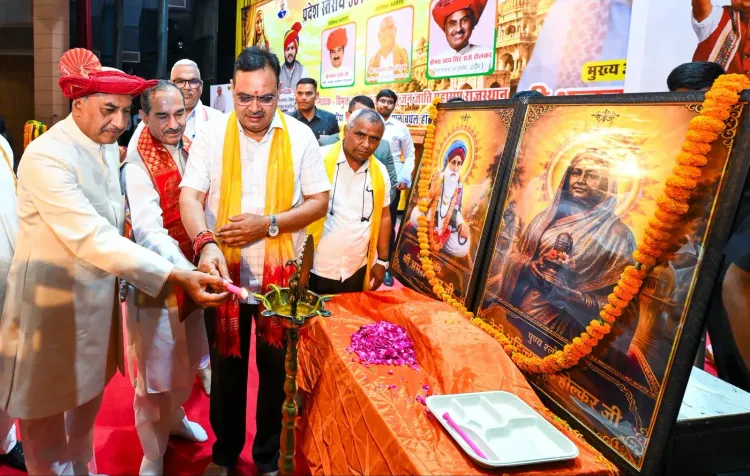
CM Bhajan Lal pays tribute at Ahilyabai Holkar's 301st Jayanti
Synopsis
Rajasthan Chief Minister Bhajan Lal Sharma paid tribute to Lokmata Ahilyabai Holkar on her 301st birth anniversary at Birla Auditorium, Jaipur, pledging his government's commitment to inclusive development, women's equal opportunities, and good governance inspired by her legacy.
Key Takeaways
Rajasthan Chief Minister Bhajan Lal Sharma offered floral tributes at a state-level ceremony marking Ahilyabai Holkar's 301st birth anniversary on 31 May 2026 .
The event was held at Birla Auditorium, Jaipur , and was attended by BJP Rajasthan president Madan Rathore .
Sharma invoked Ahilyabai's values of service, good governance, justice, and public welfare as the inspiration for his government's agenda.
The Chief Minister pledged to build a Rajasthan where development reaches the last person and women receive equal opportunities .
The commemoration is part of a wider BJP pattern across states of linking pre-colonial women rulers' legacies to contemporary welfare and governance messaging.
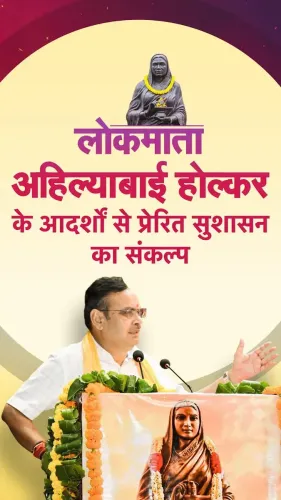
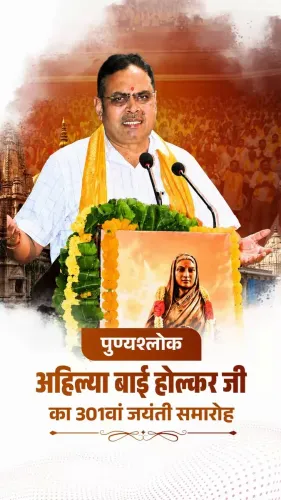
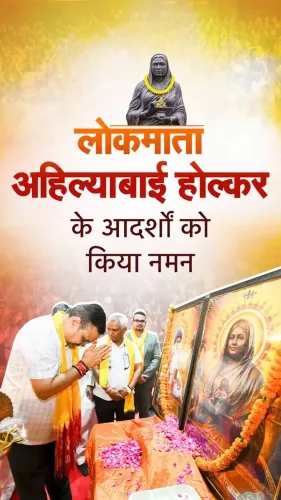
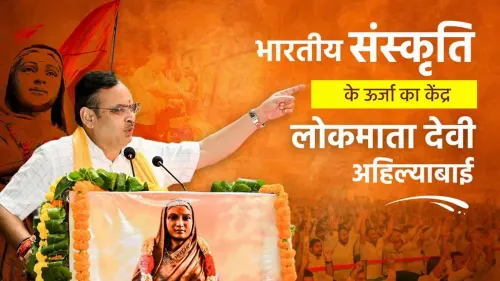
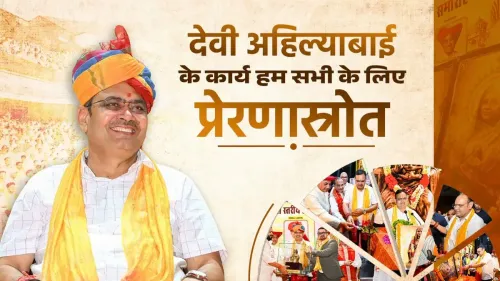
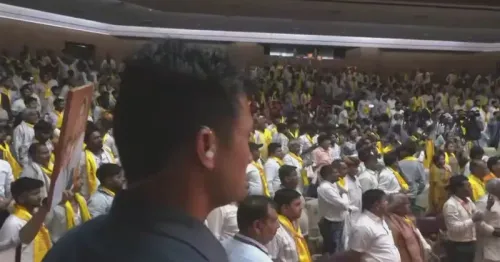
Rajasthan Chief Minister Bhajan Lal Sharma offered floral tributes to Lokmata Ahilyabai Holkar at a state-level ceremony held at Birla Auditorium, Jaipur, on 31 May 2026, marking the 301st birth anniversary of the revered 18th-century Holkar ruler. The event, organised at the provincial level, was also attended by BJP Rajasthan unit president Madan Rathore.
Context
Sharma posted on X, offering his reverence to Punyashlok Lokmata Ahilyabai Holkar ji (the venerated Lokmata Ahilyabai Holkar), describing her as an embodiment of seva, sushasan, nyay aur lokkallyan — service, good governance, justice, and public welfare. He stated that her life 'remains our source of inspiration even today.' The Chief Minister personally participated in the pushpanjali (floral tribute) ceremony at Birla Auditorium in the state capital.
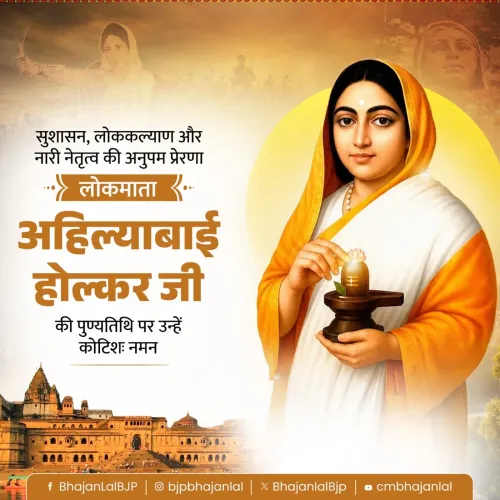
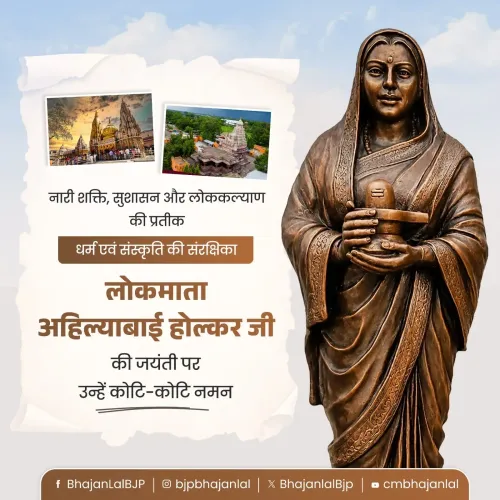
Ahilyabai Holkar, born in 1725, ruled the Holkar kingdom of Indore and is celebrated across India for her extensive public works: construction of temples, ghats, roads, and rest houses, and for her model of just, people-centric administration. She is widely regarded as one of the most significant women rulers in Indian history.
Policy Backdrop
In his post, Sharma linked Ahilyabai's values directly to his government's stated commitments, writing that his administration is 'dedicated to building a Rajasthan where development reaches the last person, women get equal opportunities, and good governance brings positive change in the lives of all.' This framing connects a historical figure's legacy to the BJP government's current welfare and governance agenda.
Rajasthan BJP governments have annually observed Ahilyabai Holkar Jayanti with state functions, consistently emphasising themes of women's leadership and last-mile delivery. The practice is part of a broader pattern among BJP-governed states of invoking pre-colonial women rulers to frame contemporary welfare and anti-corruption priorities.
Stakeholders and Impact
The ceremony drew attention to women's empowerment and rural welfare as twin pillars of the state government's self-described governance model. By holding a provincial-level event rather than a local one, the administration signalled the symbolic weight it attaches to the occasion.
BJP Rajasthan president Madan Rathore's presence alongside the Chief Minister underscored the event's political significance within the party's state unit, reinforcing organisational unity around cultural commemoration events.
What's Next
Sharma's invocation of Ahilyabai's values — particularly equal opportunities for women and governance that reaches 'the last person' — is expected to be reflected in the Rajasthan government's 2026-27 budget cycle, where schemes targeting women's economic participation and grievance-redressal mechanisms are being watched closely. How the state translates ceremonial commitments into measurable policy outcomes will be the key test of the anniversary's political significance.
Point of View
Where these stated commitments must translate into concrete scheme allocations.
NationPress
20 Sept 2026
Frequently Asked Questions
Who was Ahilyabai Holkar and why is she celebrated?
Ahilyabai Holkar was an 18th-century ruler of the Holkar kingdom of Indore, born in 1725, celebrated across India for her public works including temples, roads, and ghats, and for her model of just, people-centric administration. She is widely regarded as one of the most significant women rulers in Indian history.
What happened at the Ahilyabai Holkar Jayanti event in Jaipur on 31 May 2026?
Rajasthan Chief Minister Bhajan Lal Sharma offered floral tributes at a state-level ceremony held at Birla Auditorium, Jaipur, to mark Ahilyabai Holkar's 301st birth anniversary. BJP Rajasthan president Madan Rathore was also present at the event.
What did CM Bhajan Lal Sharma say about Ahilyabai Holkar's legacy?
Sharma described Ahilyabai Holkar as an embodiment of service, good governance, justice, and public welfare, and pledged that his government is committed to building a Rajasthan where development reaches the last person and women receive equal opportunities.
Why do BJP governments commemorate Ahilyabai Holkar Jayanti?
BJP-governed states regularly observe Ahilyabai Holkar Jayanti to link her historical model of administration — emphasising justice, welfare, and women's leadership — with the party's current governance priorities of last-mile delivery and gender equity.
Who is Madan Rathore and what was his role at the event?
Madan Rathore is the president of the BJP's Rajasthan state unit. He was present alongside Chief Minister Bhajan Lal Sharma at the state-level Ahilyabai Holkar Jayanti ceremony at Birla Auditorium, Jaipur.