Karnataka CM Office honours Valmiki Jayanti, pledges uplift for marginalised communities
Synopsis
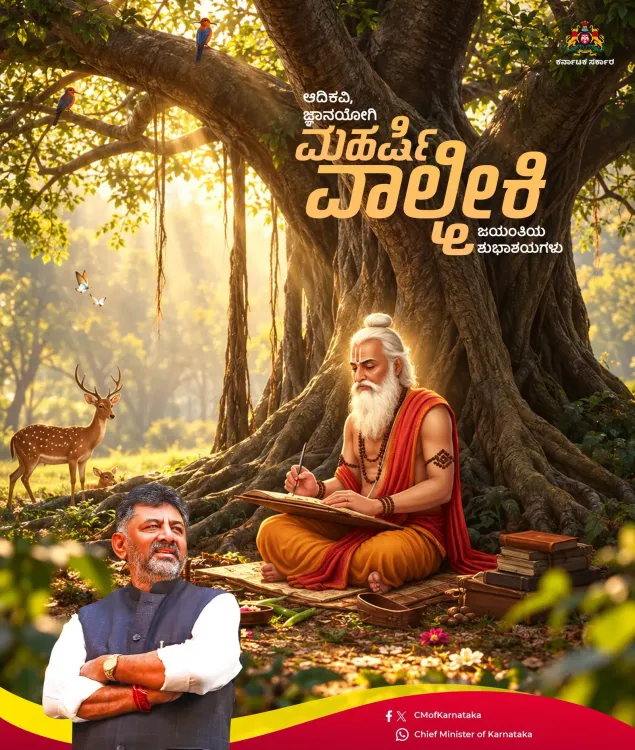
The Chief Minister's Office of Karnataka honoured Maharshi Valmiki on his Jayanti, drawing on his transformation from hunter to sage as a symbol of human potential, and reaffirmed the state government's commitment to educationally and economically empowering Valmiki, Scheduled Caste, Scheduled Tribe, and backward communities.
Key Takeaways
Maharshi Valmiki Jayanti was observed on 26 October 2026 , with Karnataka's CMO issuing a formal tribute in Kannada.
The post cites Valmiki's transformation from hunter Ratnakara to sage as proof that 'any person can rise through labour, knowledge, and resolve.' Karnataka's government pledged 'complete commitment' to the educational, economic, and social empowerment of weak, backward, and scheduled communities.
The Valmiki community is explicitly named among the beneficiaries of the state's welfare focus.
The tribute reflects a broader pattern of state governments across India linking cultural icons to social-justice commitments on Jayanti observances.
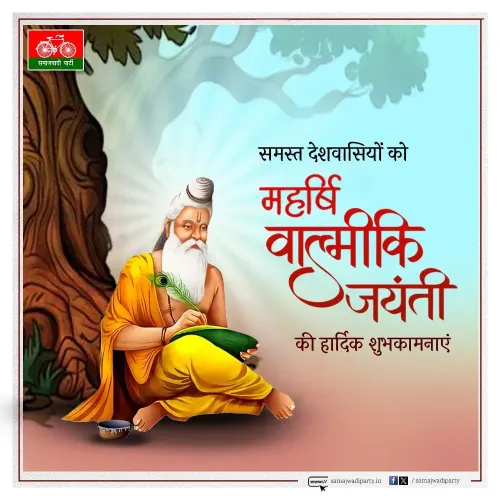
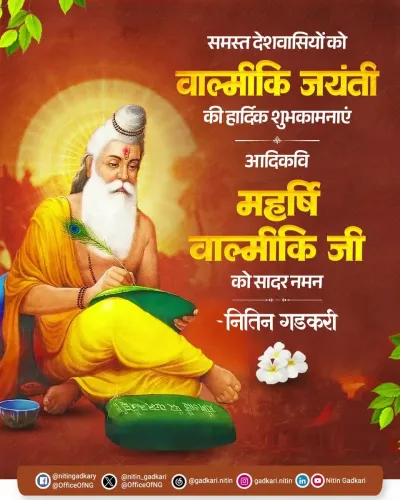
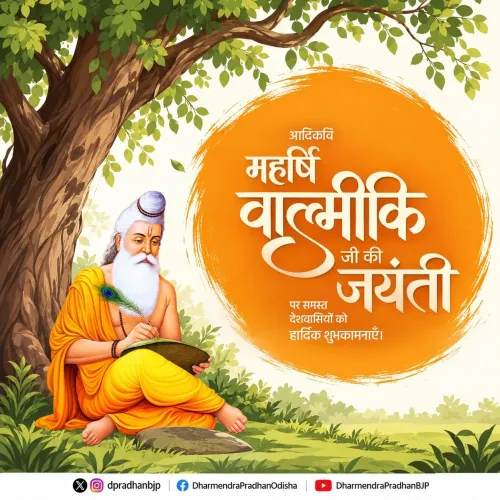
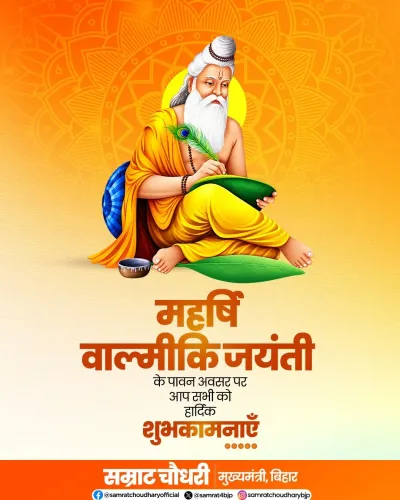
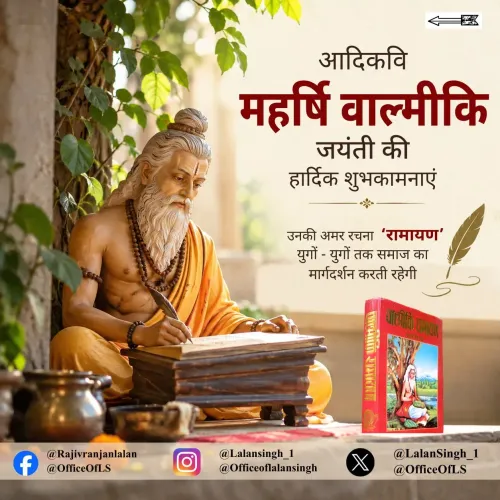
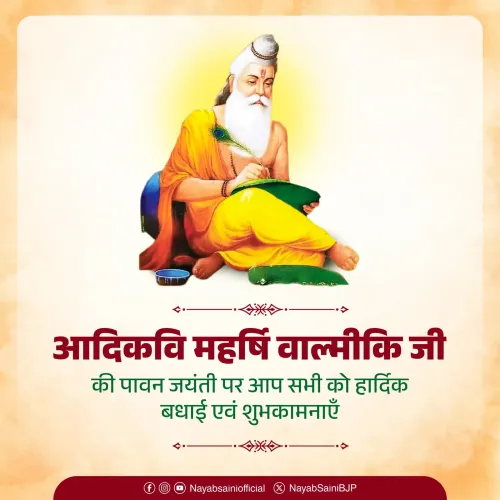
Born a hunter, transformed into a sage — Maharshi Valmiki's extraordinary journey from bedana (hunter) to composer of the Ramayana stands as one of antiquity's most powerful parables of human potential. On Monday, 26 October 2026, the Chief Minister's Office of Karnataka invoked that story as a living beacon for every citizen striving to rise above circumstance — and paired the tribute with a firm government commitment to the communities that revere him most.
The post, written in Kannada, declared: 'The life of Valmiki, who was born a hunter and transformed into a Maharshi through intense penance and self-realisation, is a great guiding light for all of humanity. He is a living example that any person can rise to a high station through labour, knowledge, and strength of resolve.' The government then pledged 'complete commitment' to the educational, economic, and social empowerment of every weak, backward, and scheduled community — explicitly including the Valmiki community.
Who was Maharshi Valmiki — and why does the story still resonate
Tradition holds that Valmiki began life as Ratnakara, a bandit who turned to brigandry to survive. A chance encounter with the sage Narada set him on a path of deep meditation, through which he shed his past and emerged as the Adi Kavi — the first poet — credited with composing the Ramayana, one of Hinduism's foundational epics. The transformation narrative makes him uniquely resonant: unlike figures born to privilege or divine lineage, Valmiki earned his place through effort alone.
That is precisely the thread Karnataka's government chose to pull. By anchoring a welfare pledge to Valmiki's story, the CMO frames social justice not as charity but as a continuation of a principle the sage himself embodied — that birth does not determine destiny.
Karnataka's commitment to Scheduled and Backward communities
The statement specifically names weak, backward, and Scheduled Caste and Scheduled Tribe groups as beneficiaries of the government's commitment. India's Constitution, since 1950, has mandated reservations and affirmative action for these communities — a framework Karnataka has long supplemented with state-level schemes targeting education access, livelihood support, and economic inclusion.
The Valmiki community itself occupies a distinct place in Karnataka's social fabric, recognised under the Scheduled Caste category. Welfare messaging tied to Valmiki Jayanti — observed on the full moon day of the Hindu month of Ashvin — is a recurring moment for state governments across India to reaffirm policy priorities for SC, ST, and OBC populations. What distinguishes this post is its explicit linking of the sage's philosophical arc to the government's present-day agenda: the idea that the state's role is to clear the path so that every individual can make their own Valmiki-like ascent.
Whether that commitment translates into measurable budget allocations or new scheme announcements in the months ahead will be the real test of the tribute's weight.
Point of View
Karnataka's government deploys a well-tested political grammar — converting a religious observance into a social-justice statement that speaks simultaneously to cultural reverence and constitutional entitlement. The messaging is carefully calibrated: the emphasis on 'labour, knowledge, and resolve' rather than caste identity alone signals an aspiration to broaden the appeal of SC/ST welfare beyond core vote banks. Whether the rhetorical commitment is followed by fresh policy action — new schemes, enhanced budget lines, or institutional reforms — will determine whether this Jayanti message is remembered as a milestone or a seasonal ritual.
NationPress
26 Oct 2026
Frequently Asked Questions
Why is Valmiki Jayanti celebrated?
Valmiki Jayanti marks the birth anniversary of Maharshi Valmiki , the ancient sage traditionally credited with composing the Ramayana and revered as the Adi Kavi or first poet. It is observed on the full moon day of the Hindu month of Ashvin and holds special significance for the Valmiki community across India.
What did Karnataka's CMO say on Valmiki Jayanti 2026?
The Chief Minister's Office of Karnataka posted a tribute in Kannada calling Valmiki's life 'a great guiding light for all of humanity' and pledged the state government's 'complete commitment' to the educational, economic, and social empowerment of the Valmiki community, as well as all weak, backward, and scheduled communities.
Who was Maharshi Valmiki before he became a sage?
According to tradition, Valmiki was born as Ratnakara , a hunter and bandit. After an encounter with the sage Narada, he undertook intense penance and self-realisation, emerging as a revered sage and the author of the Ramayana — a transformation story that symbolises the power of effort and knowledge over circumstance of birth.
What is the Valmiki community's status in Karnataka?
The Valmiki community is recognised as a Scheduled Caste in Karnataka, making its members eligible for constitutional protections including reservations in education and government employment, as well as state-level welfare schemes targeting SC/ST and backward groups.
What government welfare commitments exist for SC/ST communities in Karnataka?
Karnataka supplements India's Constitutional affirmative action framework — in place since 1950 — with state-level schemes focused on educational access, livelihood support, and economic inclusion for Scheduled Caste, Scheduled Tribe, and Other Backward Class communities. Specific new allocations tied to this statement were not announced at the time of the post.