Kakori Train Action centenary: SSB honours revolutionaries of 1925 heist
Synopsis
A century after ten HSRA revolutionaries stopped a British tax train near Kakori and looted ₹8,000 to fund India's armed independence movement, the SSB has formally saluted their sacrifice — a reminder that organised revolutionary resistance predated, and arguably shaped, the mass-movement politics that followed.
Key Takeaways
The SSB paid official tribute to the Kakori Train Action on its 100th anniversary , 9 August 2025 .
The 1925 heist was planned by Ram Prasad Bismil and Ashfaqulla Khan of the Hindustan Socialist Republican Association (HSRA) to fund weapons procurement.
Revolutionaries looted approximately ₹8,000 in British tax revenue from the guard's cabin; passengers' belongings were untouched.
Bismil , Roshan Singh , Rajendra Lahiri , and Ashfaqulla Khan were sentenced to death; others received terms ranging from 10 to 14 years or deportation to the Cellular Jail, Andamans .
The Chief Court of Oudh delivered its verdict on 22 August 1925 ; all clemency petitions were rejected.
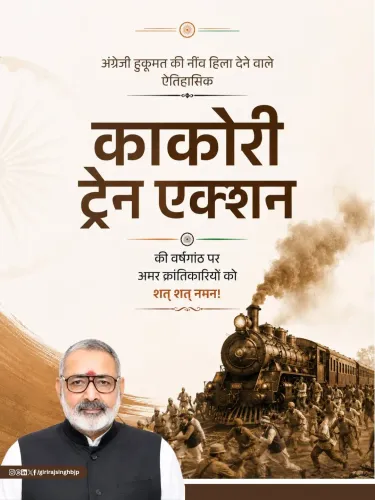
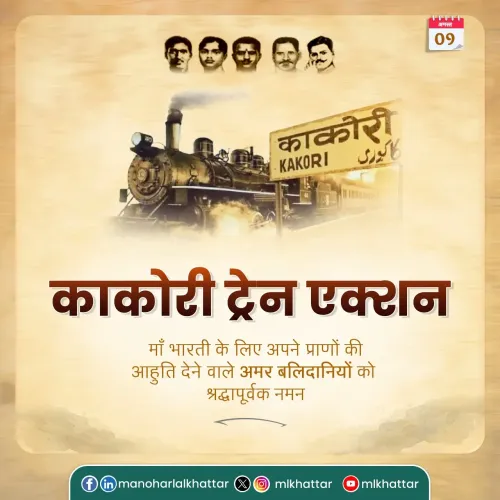
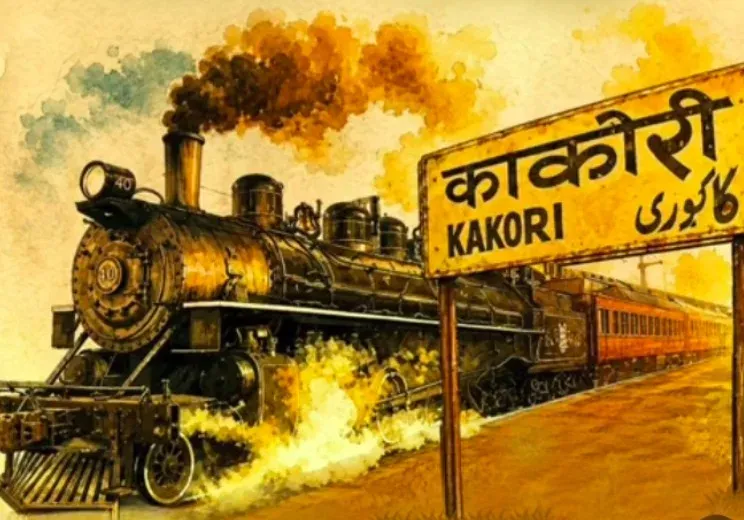
The Sashastra Seema Bal (SSB) on 9 August 2025 paid tribute to the Indian revolutionaries who carried out the Kakori Train Action on 9 August 1925, marking 100 years since one of the most daring acts of resistance against British colonial rule. The paramilitary force honoured the event through an official post on X, calling it 'that immortal chapter of the Indian freedom struggle, which infused new vigour into the revolutionary consciousness against the British Empire.'
What the SSB Said
In its post, the SSB saluted the revolutionaries by name: 'The indomitable courage, sacrifice, and unwavering dedication to the motherland by Shri Ram Prasad Bismil, Shri Chandrashekhar Azad, and other immortal revolutionaries is an invaluable legacy of independent India. A hundred salutes to these valiant sons who offered their all for the nation's freedom. Their sacrifice will forever inspire on the path of national service, duty, and devotion.'
The Kakori Train Action: What Happened
The Kakori Train Action took place near Kakori, Uttar Pradesh, when revolutionaries of the Hindustan Socialist Republican Association (HSRA) stopped the Number 8 Down train travelling from Shahjahanpur to Lucknow. The operation was planned by Ram Prasad Bismil and Ashfaqulla Khan to raise funds for the purchase of weapons to fight British rule.
Rajendra Lahiri pulled the alarm chain to halt the train as it passed Kakori, while the others overpowered the guard. The revolutionaries targeted only the guard's cabin, which carried tax money being transported to the treasury in Lucknow — approximately ₹8,000 in all. Passengers' belongings were deliberately left untouched.
The operation was executed by Bismil, Khan, Lahiri, Chandra Shekhar Azad, Sachindra Bakshi, Keshav Chakravarthy, Manmath Nath Gupta, Mukundi Lal, Murari Lal Khanna, and Banwari Lal.
Arrests, Trial, and Sentences
The British response was swift. Several revolutionaries were arrested, and the Chief Court of Oudh delivered its judgement on 22 August 1925. Bismil, Roshan Singh, Lahiri, and Khan were sentenced to death. Sachindranath Sanyal, Bakshi, Govind Charan Kar, Jogesh Chandra Chatterjee, and Mukundi Lal were deported to the Cellular Jail in the Andamans.
Manmath Nath Gupta received 14 years' imprisonment, while Raj Kumar Sinha, Vishnu Sharan Dublish, Ram Krishna Khatri, and Suresh Chandra Bhattacharya were each sentenced to 10 years. Clemency petitions filed on behalf of the condemned were turned down.
Why the Kakori Action Still Matters
The Kakori Train Action is widely regarded as a turning point in India's revolutionary freedom movement — a moment when armed resistance shifted from isolated acts to organised, ideologically driven operations. The HSRA's decision to target British tax revenue, rather than individuals, was a deliberate political statement. This comes amid a broader national effort to formally recognise lesser-remembered chapters of the independence struggle, with institutions like the SSB increasingly using official platforms to anchor institutional memory.
Point of View
Not just a cultural ministry, is anchoring this commemoration. The Kakori Action is often overshadowed by the Dandi March and Quit India Movement in popular history, yet it represents something distinct: ideologically organised armed resistance with a clear economic logic — seizing British tax money to fund anti-colonial operations. A century on, the episode also raises an underexplored question: how India's security establishment chooses to remember revolutionary violence directed at a colonial state says something about how it frames legitimate resistance itself.
NationPress
10 Aug 2026
Frequently Asked Questions
What was the Kakori Train Action of 1925?
The Kakori Train Action was a planned robbery of a British tax-carrying train near Kakori in Uttar Pradesh on 9 August 1925, carried out by revolutionaries of the Hindustan Socialist Republican Association (HSRA). The operation was designed to seize British-collected tax revenue to fund the purchase of weapons for the independence movement.
Who planned and executed the Kakori Train Action?
The action was planned by Ram Prasad Bismil and Ashfaqulla Khan. It was executed by ten revolutionaries including Bismil, Khan, Rajendra Lahiri, Chandra Shekhar Azad, Sachindra Bakshi, Manmath Nath Gupta, and others.
What punishment did the Kakori revolutionaries receive?
The Chief Court of Oudh sentenced Bismil, Roshan Singh, Rajendra Lahiri, and Ashfaqulla Khan to death. Others received deportation to the Cellular Jail in the Andamans or prison terms of 10 to 14 years. All clemency petitions were rejected.
Why did the SSB pay tribute to the Kakori revolutionaries?
The SSB marked the centenary of the Kakori Train Action on 9 August 2025 with an official post on X, honouring the courage and sacrifice of the revolutionaries. The tribute reflects a broader institutional effort to commemorate lesser-highlighted chapters of India's freedom struggle.
How much money was looted in the Kakori Train Action?
The revolutionaries looted approximately ₹8,000 from the guard's cabin of the Number 8 Down train — money that the British had collected as tax from Indians. Passengers' personal belongings were not touched.