CM Dhami Pays Tribute on Kakori Train Action Anniversary
Synopsis
On the 101st anniversary of the Kakori Train Action, Uttarakhand CM Pushkar Singh Dhami honoured the revolutionaries of the Hindustan Republican Association, calling their sacrifice — led by Ram Prasad Bismil and Ashfaqulla Khan — an enduring inspiration for national service and patriotism.
Key Takeaways
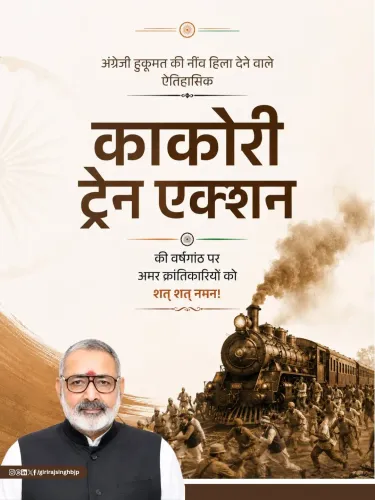
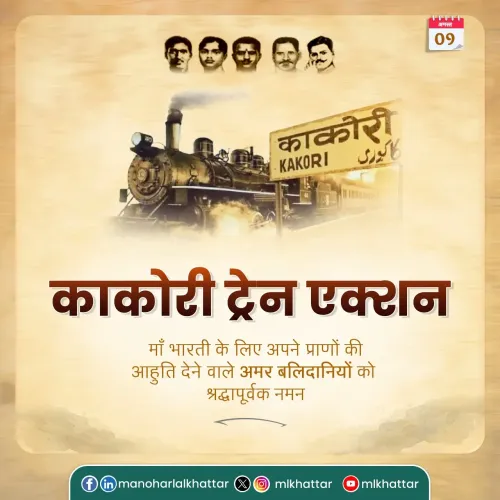
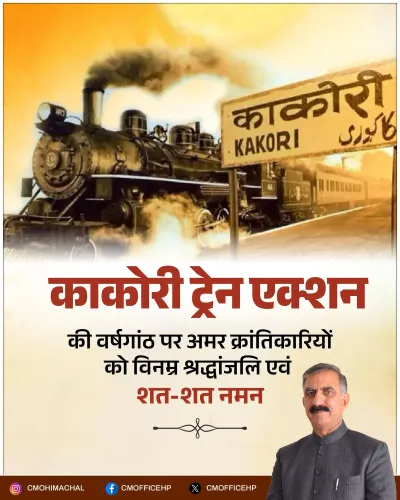
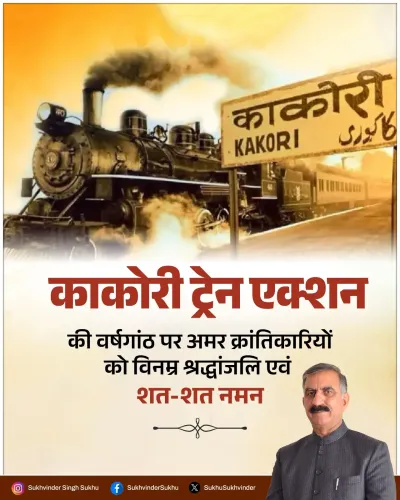
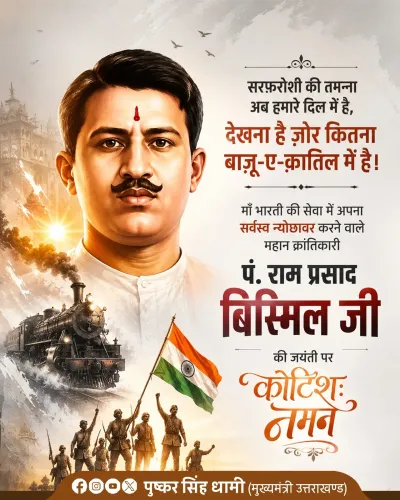
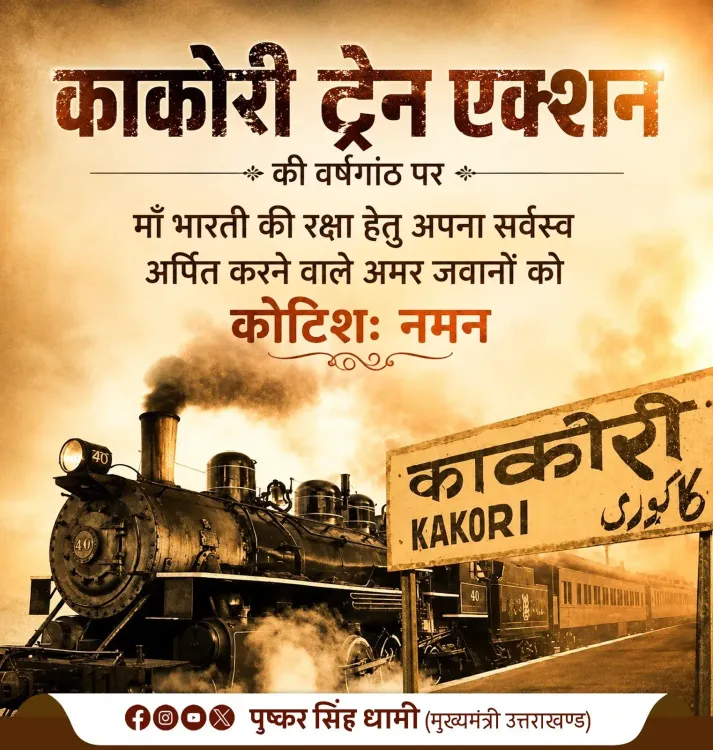
Uttarakhand CM Pushkar Singh Dhami posted a tribute on 9 August 2026 marking the anniversary of the Kakori Train Action .
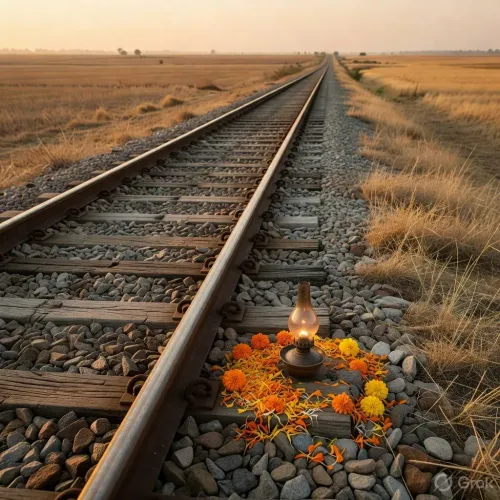
The Kakori Train Action took place on 9 August 1925 , when members of the Hindustan Republican Association looted a British treasury train near Kakori, Uttar Pradesh.
Key leaders Ram Prasad Bismil and Ashfaqulla Khan were tried in the Kakori Conspiracy Case and hanged by British authorities in 1927 .
CM Dhami described the revolutionaries' sacrifice as an 'invaluable heritage' that will continue to inspire patriotism.
9 August also marks the anniversary of the Quit India Movement (1942) , making it one of the most significant dates in India's independence calendar.
A century after British authorities put down one of colonial India's boldest acts of armed defiance, Uttarakhand Chief Minister Pushkar Singh Dhami on Sunday, 9 August 2026 paid homage to the revolutionaries of the Kakori Train Action, calling their sacrifice an 'invaluable heritage' that will continue to inspire patriotism for generations.
Writing in Hindi, CM Dhami offered 'crores of salutes' (kotishah naman) to the 'immortal revolutionaries who gave their all for the freedom of Mother India.' He described the Kakori episode as a symbol of the 'indomitable courage and firm resolve' of Indian revolutionaries against British rule.
What Happened at Kakori on 9 August 1925
On 9 August 1925, members of the Hindustan Republican Association (HRA) stopped a British treasury train near the small town of Kakori, in present-day Uttar Pradesh, and seized government funds to finance the revolutionary movement. The audacity of the act — targeting colonial finances in broad daylight — sent shockwaves through the British administration.
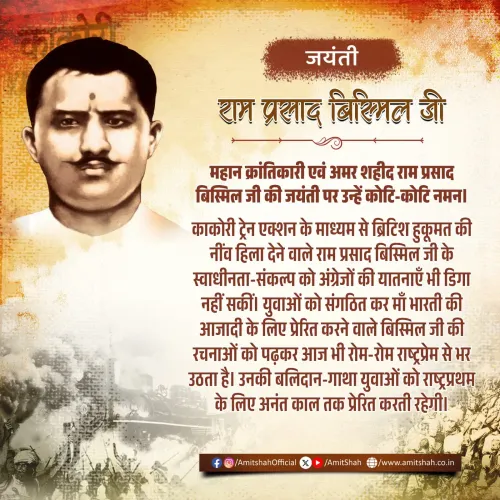
The mastermind was Ram Prasad Bismil, poet, organiser, and one of the most electrifying voices of the armed independence movement. Alongside him stood Ashfaqulla Khan, among the first Muslim revolutionaries to be executed by the British for his role in the conspiracy. Both were hanged in 1927 following the Kakori Conspiracy Case trial — a judicial proceeding the colonial government used to decimate the HRA's leadership.
Why 9 August Carries a Double Weight
The date is not incidental. 9 August is also the anniversary of the Quit India Movement of 1942, when Mahatma Gandhi issued his 'Do or Die' call from Bombay. The convergence makes this day one of the most symbolically loaded dates on India's independence calendar — a meeting point between the revolutionary and non-violent strands of the anti-colonial struggle.
Indian political leaders across parties mark the Kakori anniversary each year, but the tribute carries particular resonance for the BJP, which has consistently elevated the revolutionary strand of the freedom movement alongside the Gandhian narrative.
Bismil and Ashfaqulla Khan remain towering figures — their friendship across religious lines, and their shared fate on the gallows, a story that independent India returns to repeatedly when it reaches for proof that the republic was built on something larger than any one community or ideology.
Their courage was not borrowed from certainty of victory. It was spent freely, with no guarantee of return. That, CM Dhami's tribute implies, is exactly the kind of memory a nation should keep close.
Point of View
Ashfaqulla Khan, Bhagat Singh — as co-equal heroes alongside the Gandhian mainstream. By invoking Kakori on 9 August, a date that also carries the Quit India Movement, the messaging implicitly broadens the BJP's claim on the full spectrum of anti-colonial resistance. The cross-religious symbolism of Bismil and Ashfaqulla Khan's partnership adds a unity subtext that is rarely accidental in contemporary political communication.
NationPress
23 Sept 2026
Frequently Asked Questions
What was the Kakori Train Action?
The Kakori Train Action was an armed robbery of a British treasury train carried out on 9 August 1925 near Kakori in present-day Uttar Pradesh by members of the Hindustan Republican Association, led by Ram Prasad Bismil, to fund the revolutionary independence movement.
Who were the main revolutionaries involved in the Kakori conspiracy?
Ram Prasad Bismil was the chief organiser, and Ashfaqulla Khan was among the key participants. Both were arrested, tried in the Kakori Conspiracy Case, and hanged by British authorities in 1927 .
Why is 9 August significant in Indian history?
9 August marks two major events: the Kakori Train Action of 1925 and the launch of the Quit India Movement in 1942 , when Mahatma Gandhi gave his 'Do or Die' call, making it one of the most important dates in India's freedom struggle.
What did CM Dhami say about the Kakori revolutionaries?
CM Dhami called the revolutionaries' sacrifice, courage, and dedication to the nation an 'invaluable heritage' and said their example would 'always inspire national service and patriotism.'
Who was Ashfaqulla Khan?
Ashfaqulla Khan was a key participant in the 1925 Kakori Train Action and one of the earliest Muslim revolutionaries to be executed by British colonial authorities for his role in the Indian independence movement.