CM Dhami pays tribute to Ram Prasad Bismil on birth anniversary
Synopsis
Uttarakhand Chief Minister Pushkar Singh Dhami marked the birth anniversary of revolutionary poet and Kakori Kand leader Ram Prasad Bismil on 11 June 2026, offering tribute and invoking his legacy of national service.
Key Takeaways
Uttarakhand Chief Minister Pushkar Singh Dhami paid tribute to Pandit Ram Prasad Bismil on his birth anniversary on 11 June 2026 .
Bismil, born 11 June 1897 in Shahjahanpur , was a poet and revolutionary central to the Kakori Kand of August 1925 .
The Kakori Kand involved members of the Hindustan Republican Association looting a British government train to fund anti-colonial operations.
Bismil was executed on 19 December 1927 at Gorakhpur Jail alongside Ashfaqullah Khan , Roshan Singh , and Rajendra Lahiri .
Dhami stated that Bismil's ideals 'will continue to inspire us towards national service.' The tribute is part of a wider annual commemorative cycle observed by Indian political leaders across parties.
Uttarakhand Chief Minister Pushkar Singh Dhami on Thursday, 11 June 2026 paid tribute to revolutionary freedom fighter Pandit Ram Prasad Bismil on his birth anniversary, honouring him as a hero of the Kakori Kand who sacrificed his life for India's independence.
Context
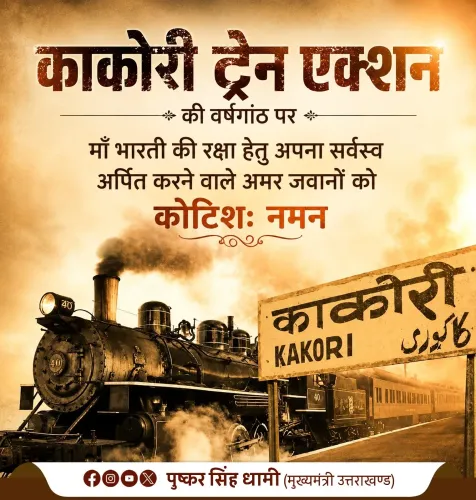
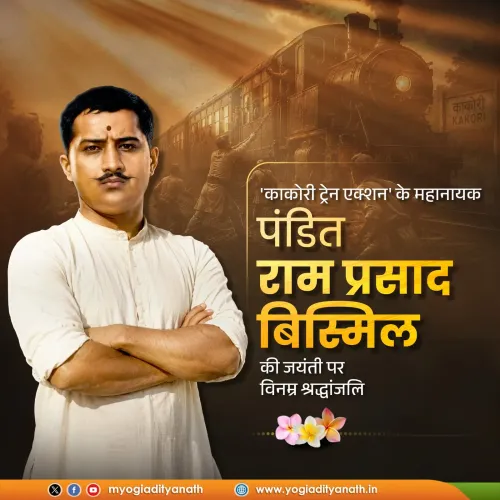
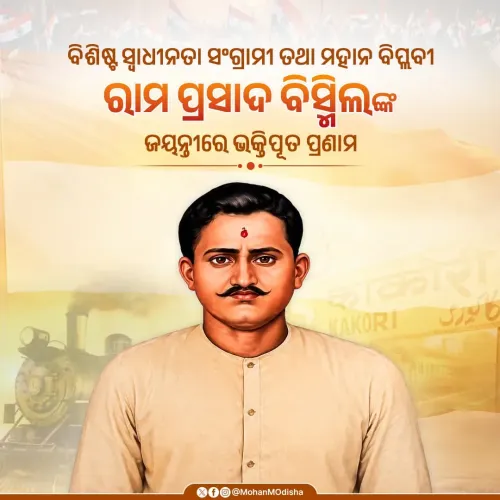
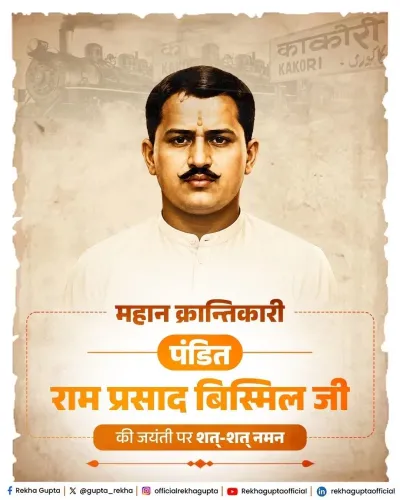
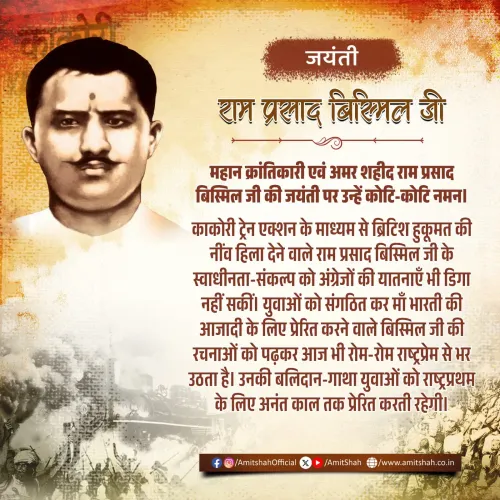
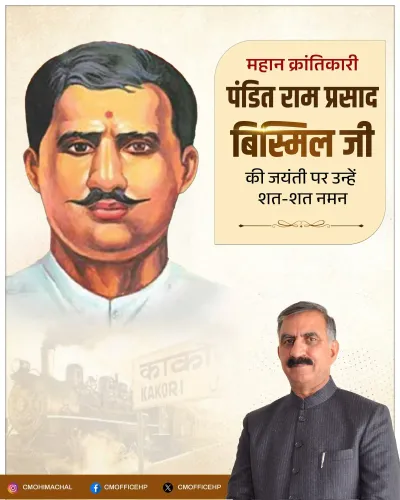
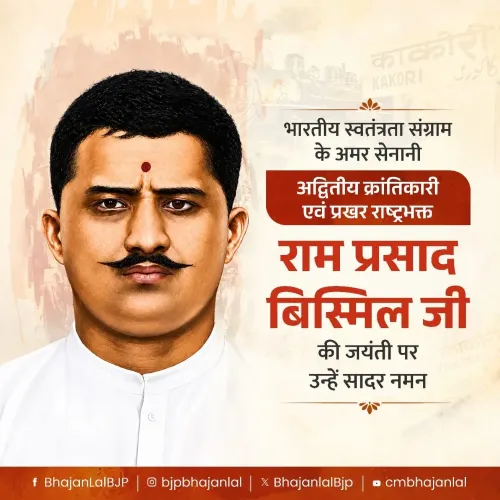
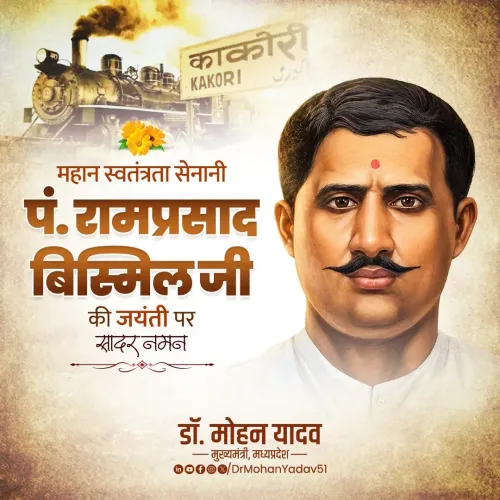
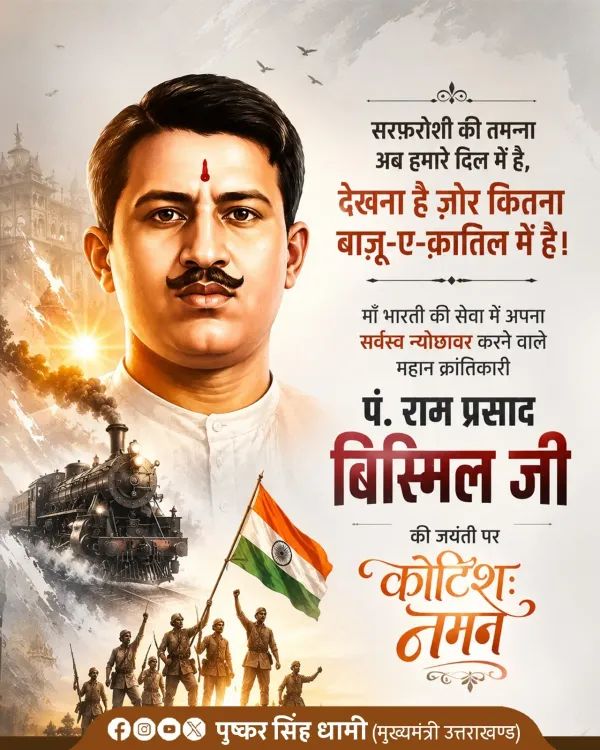
In his post, Chief Minister Dhami offered 'kotish naman' — salutations in the millions — to Bismil, describing him as a 'mahan krantikari' (great revolutionary) and a central figure of the Kakori conspiracy. He wrote that Bismil's ideals 'will continue to inspire us towards national service.' The post was accompanied by an image marking the occasion.
Bismil was born on 11 June 1897 in Shahjahanpur, in present-day Uttar Pradesh. He was a poet, writer, and armed revolutionary who became one of the most prominent voices of anti-British resistance in the early twentieth century.
Policy Backdrop
The Kakori Kand of August 1925 was a landmark act of armed resistance in which members of the Hindustan Republican Association (HRA) looted a British government train near Kakori, in present-day Uttar Pradesh, to fund revolutionary operations against colonial rule. Bismil was among the principal organisers and was subsequently arrested, tried, and convicted by the British administration.
He was executed on 19 December 1927 at Gorakhpur Jail, along with fellow revolutionaries Ashfaqullah Khan, Roshan Singh, and Rajendra Lahiri. His poetry, including the celebrated 'Sarfaroshi ki tamanna', remains widely recited in India's public life and official commemorations.
Stakeholders and Impact
Commemorations of figures such as Bismil carry particular resonance among youth and citizens who identify with the armed-resistance strand of India's freedom movement, which has historically received less institutional attention than the dominant non-violent narrative. Political leaders across parties mark these anniversaries as a means of connecting governance to national heritage.
The practice of issuing formal tributes on birth and martyrdom anniversaries of early twentieth-century revolutionaries has intensified across Indian states over the past decade, forming a consistent thread in official political communication. Chief Minister Dhami has issued similar tributes to other independence-era figures as part of this broader commemorative cycle.
What's Next
The next major date in the Bismil commemorative calendar is 19 December, observed annually as his martyrdom anniversary. State-level events under the Azadi Ka Amrit Mahotsav framework have in previous years included references to Bismil and other HRA figures. Tributes to contemporaries such as Ashfaqullah Khan and Bhagat Singh typically accompany the broader commemorative arc through the second half of the year.
Point of View
' the post draws a rhetorical line between revolutionary sacrifice and contemporary state-building — a framing that has become a signature of BJP-led administrations at both the central and state levels. The commemoration also reinforces Uttarakhand's positioning within the broader Azadi Ka Amrit Mahotsav legacy framework. Such tributes, while ceremonial in form, serve a consistent function: anchoring present political identity in a curated reading of the freedom movement.
NationPress
14 Sept 2026
Frequently Asked Questions
Who was Ram Prasad Bismil?
Ram Prasad Bismil was a revolutionary poet and freedom fighter born on 11 June 1897 in Shahjahanpur. He was a key organiser of the Kakori Kand of 1925 and was executed by the British on 19 December 1927.
What was the Kakori Kand?
The Kakori Kand was an armed train robbery carried out in August 1925 near Kakori in present-day Uttar Pradesh by members of the Hindustan Republican Association to fund anti-British revolutionary activities.
Why did CM Dhami pay tribute to Bismil?
Chief Minister Pushkar Singh Dhami paid tribute on 11 June 2026 to mark Bismil's birth anniversary, honouring his sacrifice and invoking his ideals as an inspiration for national service.
When is Ram Prasad Bismil's martyrdom day observed?
Bismil's martyrdom day is observed on 19 December each year, the date he was executed at Gorakhpur Jail in 1927 alongside fellow revolutionaries Ashfaqullah Khan, Roshan Singh, and Rajendra Lahiri.
What is the Hindustan Republican Association?
The Hindustan Republican Association was an early twentieth-century revolutionary organisation that sought to overthrow British rule in India through armed resistance. Bismil was one of its prominent leaders.