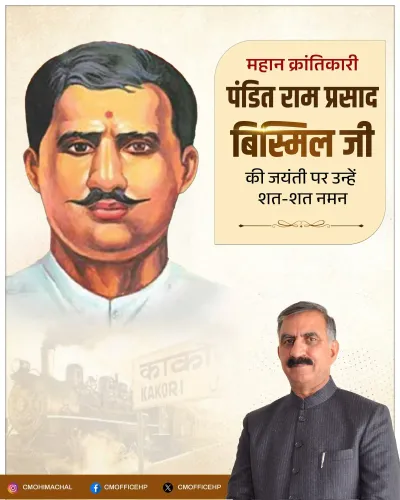
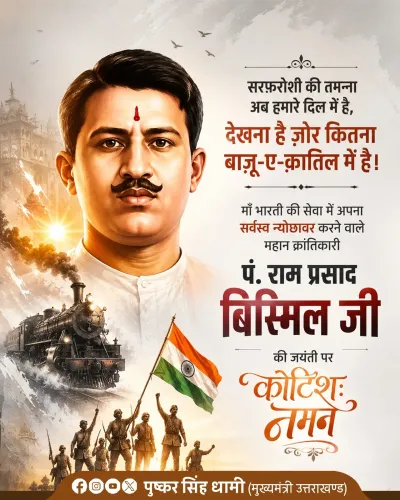
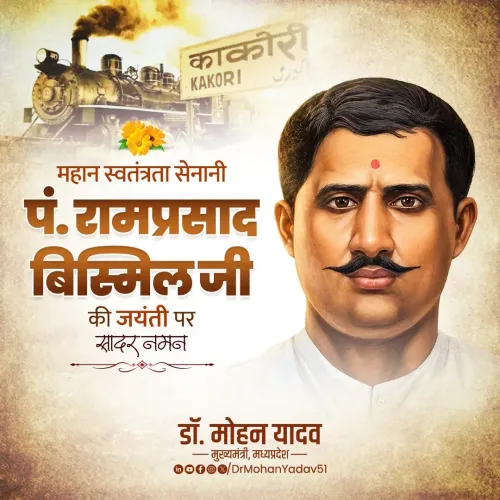
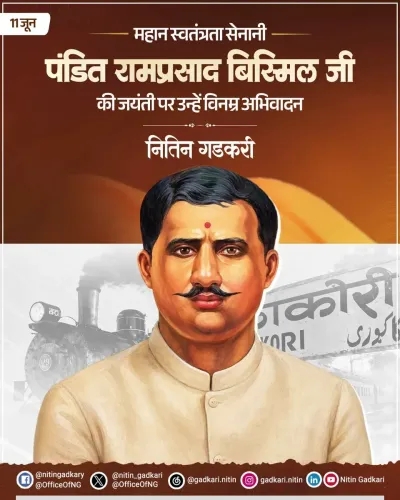
CM Bhajan Lal Sharma Pays Tribute to Ram Prasad Bismil on Birth Anniversary
Synopsis
Rajasthan Chief Minister Bhajan Lal Sharma paid homage to revolutionary freedom fighter Pandit Ram Prasad Bismil on his birth anniversary on 11 June 2026, highlighting Bismil's role in the 1925 Kakori Train Action and calling his sacrifice an enduring inspiration for future generations.
Key Takeaways
Rajasthan CM Bhajan Lal Sharma posted a formal tribute to Pandit Ram Prasad Bismil on his birth anniversary, 11 June 2026 .
Ram Prasad Bismil was born on 11 June 1897 in Shahjahanpur, Uttar Pradesh , and executed by British authorities on 19 December 1927 .
Bismil was a founding member of the Hindustan Republican Association and a key participant in the Kakori Train Action of 9 August 1925 .
The tribute aligns with the Azadi Ka Amrit Mahotsav framework launched in 2021 to commemorate revolutionary freedom fighters.
The centenary of Bismil's execution falls in December 2027 , with larger state-level commemorations likely to follow.
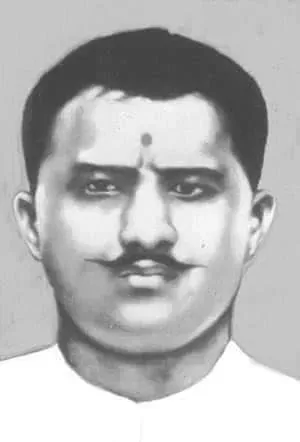
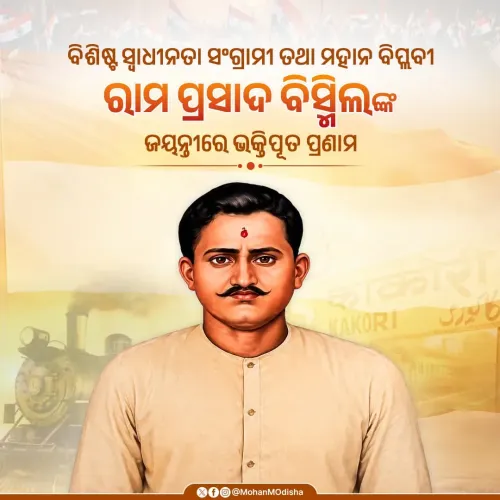
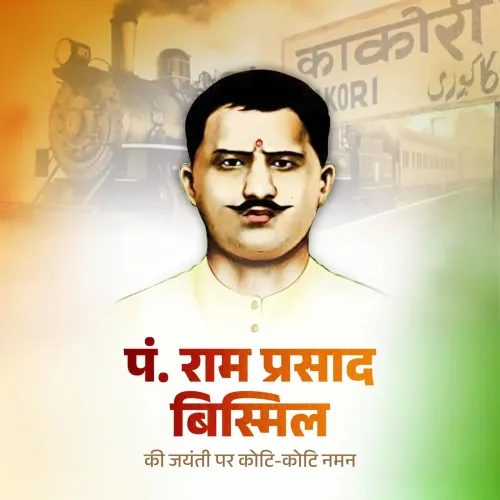
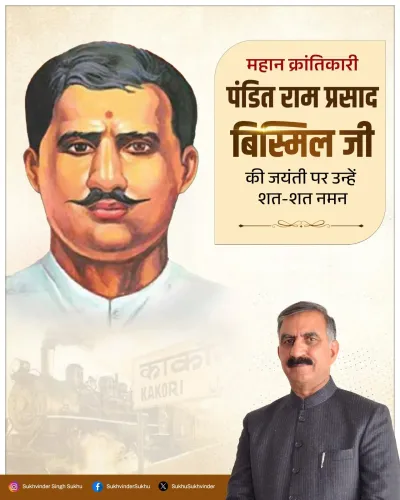
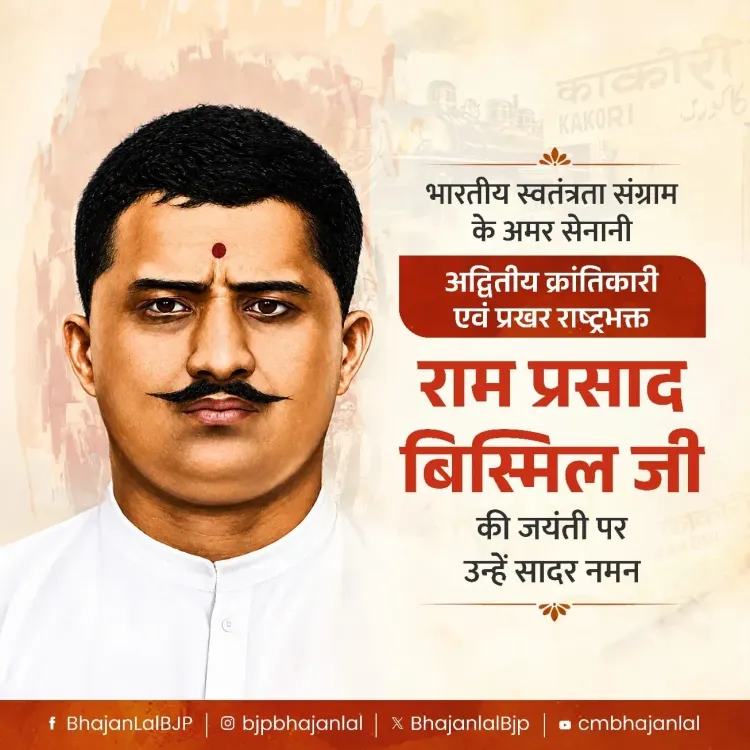
Rajasthan Chief Minister Bhajan Lal Sharma on Thursday, 11 June 2026, paid tribute to revolutionary freedom fighter Pandit Ram Prasad Bismil on his birth anniversary, honouring his role in India's independence struggle and his historic participation in the Kakori Train Action of 1925.
In his post, CM Sharma described Bismil as an 'amar senani, prakhar rashtrbhakt evam mahan krantikari' (immortal freedom fighter, ardent patriot, and great revolutionary), saluting his 'indomitable courage, unwavering dedication to the nation, and the historic role he played in the Kakori Train Action, which challenged the foundations of the British Empire and ignited the flame of freedom, self-respect, and patriotism across the country.'
Context
Pandit Ram Prasad Bismil was born on 11 June 1897 in Shahjahanpur, Uttar Pradesh. A poet, writer, and militant nationalist, he was a founding member of the Hindustan Republican Association (HRA), an organisation dedicated to overthrowing British colonial rule through armed resistance. He is also remembered for patriotic compositions that became rallying cries during the independence movement.
Bismil was arrested following the Kakori Train Action and was executed by British authorities on 19 December 1927 at the age of 30. His legacy endures as a symbol of youthful sacrifice and revolutionary nationalism in Indian memory.
The Kakori Train Action
The Kakori Train Action took place on 9 August 1925 near Kakori, Uttar Pradesh, when members of the Hindustan Republican Association stopped a train carrying British government treasury funds and seized the cash to finance anti-colonial activities. The action was one of the most audacious acts of armed resistance of its era and resulted in the arrest, trial, and execution of several revolutionaries, including Bismil.
The episode remains a landmark event in the narrative of India's independence movement, representing the strand of militant nationalism that operated alongside the non-violent civil disobedience campaigns of the period.
Policy Backdrop
The Government of India launched the Azadi Ka Amrit Mahotsav in 2021 to mark the 75th anniversary of independence, with a specific mandate to commemorate lesser-known and revolutionary freedom fighters alongside more widely celebrated figures. Bismil's legacy has been prominently featured within this initiative.
BJP-led state governments, including Rajasthan, have consistently issued formal tributes to revolutionary martyrs on their birth and death anniversaries, integrating their stories into official state narratives. This reflects a broader documented pattern since 2014 of giving greater institutional visibility to armed-resistance figures alongside Gandhian icons.
Stakeholders and Impact
Such public commemorations by sitting chief ministers carry symbolic weight for students, youth organisations, and educational institutions that draw on official state narratives to frame historical memory. Bismil's story — poetry, sacrifice, and defiance — resonates particularly with younger audiences.
Rajasthan's school curriculum and state-sponsored cultural programmes are among the channels through which such tributes translate into sustained public memory, especially as the centenary of Bismil's execution approaches in 2027.
What's Next
With the centenary of the Kakori Train Action already marked in 2025 and the centenary of Bismil's execution due in December 2027, state governments are expected to organise larger commemorative events. Rajasthan may announce curriculum updates, memorial events, or youth programmes to mark that milestone, continuing the state's engagement with revolutionary freedom fighter legacies.
Point of View
Armed-resistance figures to the same ceremonial plane as Gandhian icons — a positioning that reinforces a particular reading of the independence movement. As the centenary of Bismil's execution approaches in 2027, such tributes are likely to grow in scale and institutional backing. For the Rajasthan government, these commemorations also serve as soft cultural outreach to youth and student constituencies. The gesture carries low political risk while reinforcing a nationalist identity narrative central to the party's ideological brand.
NationPress
26 Oct 2026
Frequently Asked Questions
Who was Ram Prasad Bismil?
Ram Prasad Bismil was a revolutionary freedom fighter born on 11 June 1897 in Shahjahanpur, Uttar Pradesh. He was a member of the Hindustan Republican Association and a key figure in the 1925 Kakori Train Action. He was executed by British authorities on 19 December 1927 at the age of 30.
What was the Kakori Train Action?
The Kakori Train Action took place on 9 August 1925, when members of the Hindustan Republican Association stopped a British government treasury train near Kakori, Uttar Pradesh, and seized funds to finance anti-colonial activities. It led to the arrest and execution of several revolutionaries, including Bismil.
Why did Bhajan Lal Sharma pay tribute to Ram Prasad Bismil?
Rajasthan Chief Minister Bhajan Lal Sharma posted the tribute on 11 June 2026 to mark Bismil's birth anniversary, honouring his sacrifice, patriotism, and historic role in the independence struggle.
What is the Azadi Ka Amrit Mahotsav?
Azadi Ka Amrit Mahotsav is a Government of India initiative launched in 2021 to mark 75 years of independence, with a specific focus on commemorating lesser-known and revolutionary freedom fighters, including Ram Prasad Bismil.
When is the centenary of Ram Prasad Bismil's execution?
The centenary of Ram Prasad Bismil's execution falls on 19 December 2027. State governments, including Rajasthan, are expected to organise larger commemorative events around that milestone.