Delhi CM Rekha Gupta Pays Tribute to Ram Prasad Bismil on Birth Anniversary
Synopsis
Delhi Chief Minister Rekha Gupta on 11 June 2026 honoured revolutionary freedom fighter Pandit Ram Prasad Bismil on his birth anniversary, saluting his supreme sacrifice in the Kakori Revolution of 1925 and calling his patriotism an enduring inspiration for every generation.
Key Takeaways
Delhi Chief Minister Rekha Gupta posted a tribute to Pandit Ram Prasad Bismil on his birth anniversary on 11 June 2026 .
Bismil was a revolutionary poet and member of the Hindustan Republican Association , executed by the British on 19 December 1927 .
He was a key leader of the Kakori Revolution of August 1925 , in which HRA members seized British government funds from a train near Kakori, Uttar Pradesh .
Gupta described Bismil's sacrifice and patriotism as a message that 'will continue to inspire every generation towards serving the nation.' BJP leaders regularly mark anniversaries of revolutionary nationalists to highlight the armed resistance strand of India's freedom movement.
The next major commemoration is expected on 19 December 2026 , the anniversary of Bismil's martyrdom.
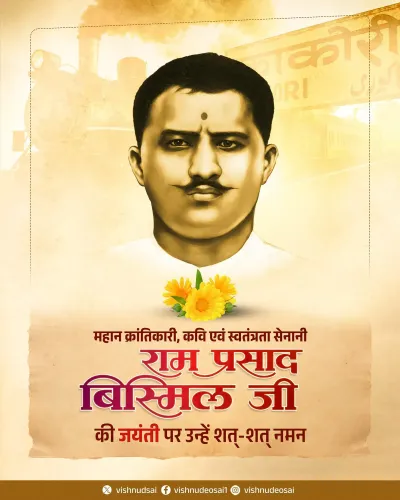
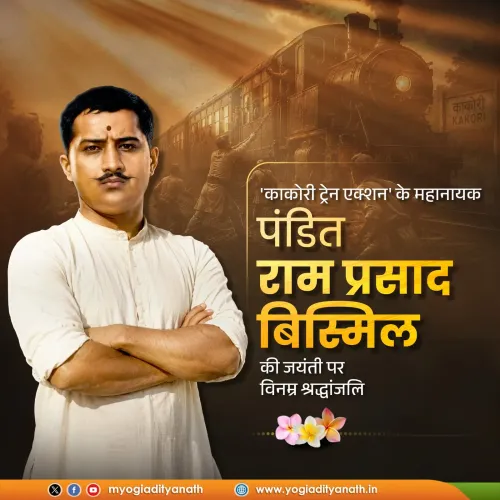
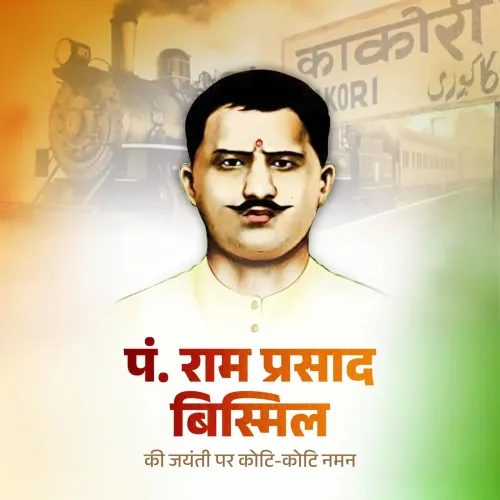
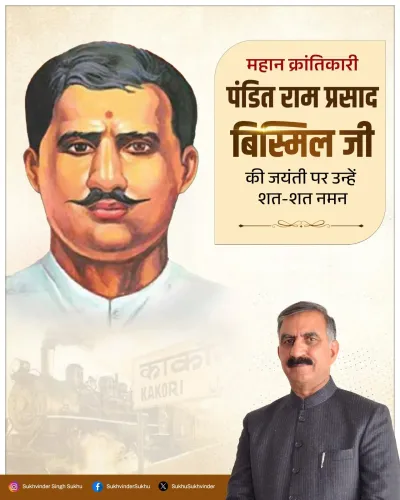
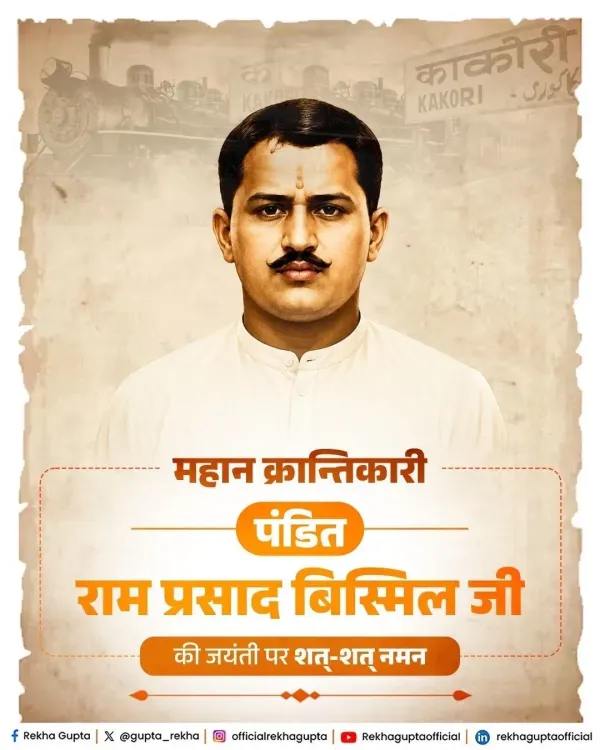
Delhi Chief Minister Rekha Gupta on Thursday, 11 June 2026 paid tribute to revolutionary freedom fighter Pandit Ram Prasad Bismil on his birth anniversary, honouring his sacrifice and nationalist legacy in a post on X.
In her tribute, Gupta wrote: 'Maa Bharati ke amar sapoot, mahan krantikari Pandit Ram Prasad Bismil ki jayanti par koti-koti naman' — 'Countless salutations to the immortal son of Mother India, the great revolutionary Pandit Ram Prasad Bismil, on his birth anniversary.' She added that Bismil's supreme sacrifice and message of patriotism 'will continue to inspire every generation towards serving the nation.'
Context
Pandit Ram Prasad Bismil was a prominent revolutionary poet and freedom fighter who dedicated his life to ending British colonial rule in India. A founding member of the Hindustan Republican Association (HRA), he was known as much for his stirring patriotic poetry as for his direct action against colonial authority. He was executed by the British on 19 December 1927, at the age of 30.
Bismil is remembered as one of the principal architects of the Kakori Revolution of August 1925, in which a group of HRA revolutionaries intercepted a British government train near Kakori station in present-day Uttar Pradesh to seize funds for the armed resistance movement. The incident, subsequently prosecuted as the Kakori Conspiracy Case, led to the arrest and trial of dozens of revolutionaries and resulted in the hanging of Bismil and three of his comrades.
Policy Backdrop
Commemorating the birth and death anniversaries of revolutionary nationalists — including Bhagat Singh, Chandrashekhar Azad, and Bismil — has become a consistent feature of BJP leaders' public communication. These tributes foreground the armed resistance strand of India's independence movement, which has historically received less institutional emphasis than the dominant non-violent tradition.
Such messaging is especially prominent on dates linked to the Hindustan Republican Association network — notably 9 August (Quit India Movement), 11 June (Bismil's birth anniversary), and 19 December (Bismil's martyrdom day). The pattern reflects a broader political effort to embed revolutionary patriotism more firmly in mainstream public memory and school curricula.
Stakeholders and Impact
Bismil's legacy holds particular resonance for Indian youth and students, for whom his defiant poetry — including the celebrated lines later popularised as 'Sarfaroshi ki tamanna ab hamare dil mein hai' — remains a touchstone of nationalist sentiment. Educational institutions and cultural organisations across Uttar Pradesh and Delhi regularly mark his birth anniversary with programmes and recitations.
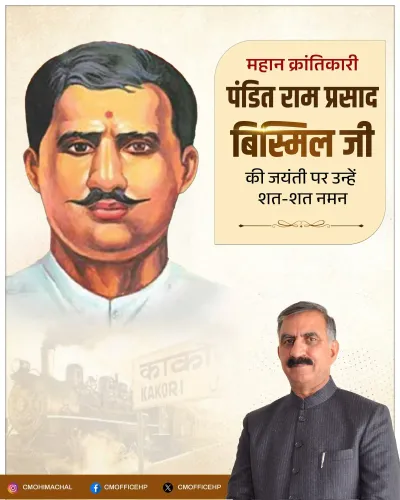
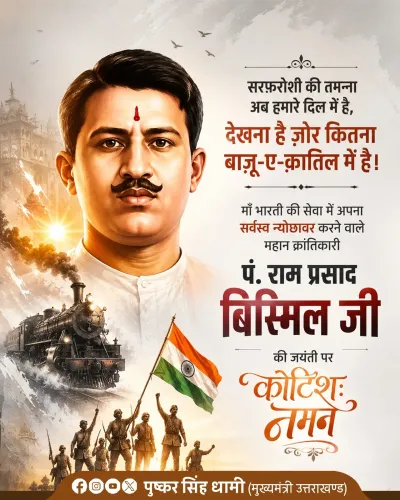
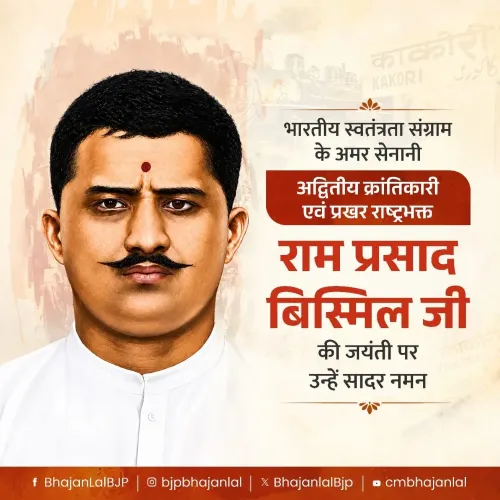
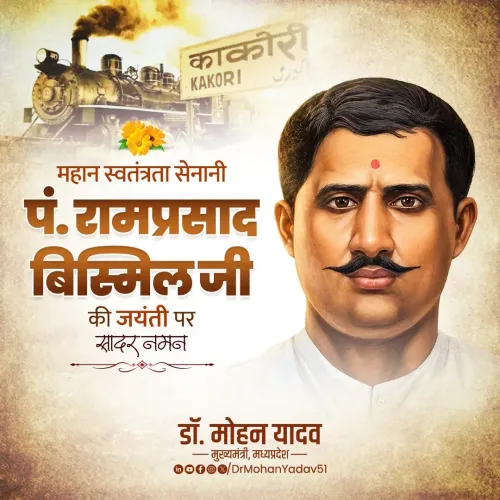
Tributes from sitting chief ministers carry institutional weight, often prompting state-level commemorations and renewed attention to revolutionary history in public discourse. Gupta's post, accompanied by an image, is likely to amplify awareness of Bismil's contributions among her followers and the wider public on social media.
What's Next
Similar commemorative posts and state-organised events are expected from other political leaders and cultural bodies through the day. Observers will watch for any announcements linking the tribute to concrete policy action — such as educational programmes, cultural grants, or the naming of public infrastructure — that would move the gesture beyond ceremonial remembrance. 19 December 2026, the anniversary of Bismil's martyrdom, is likely to see a further round of tributes and possibly larger state-sponsored events.
Point of View
The post connects Bismil's legacy to themes of direct action and supreme sacrifice that resonate strongly with the party's core ideological messaging. For a sitting chief minister, such tributes also serve a governance signal: that the state honours all strands of the freedom struggle, not just the most institutionally celebrated ones. The consistency of this pattern across BJP leaders and dates suggests a coordinated cultural-political strategy rather than spontaneous commemoration.
NationPress
20 Sept 2026
Frequently Asked Questions
Who was Pandit Ram Prasad Bismil?
Pandit Ram Prasad Bismil was an Indian revolutionary, poet and freedom fighter who co-founded the Hindustan Republican Association. He led the Kakori train robbery of 1925 and was executed by the British in December 1927 at the age of 30.
What was the Kakori Revolution?
The Kakori Revolution was a train robbery carried out in August 1925 near Kakori station in present-day Uttar Pradesh by members of the Hindustan Republican Association, including Bismil, to seize British government funds for the armed independence movement. It led to the Kakori Conspiracy Case and the execution of several revolutionaries.
Why did Delhi CM Rekha Gupta pay tribute to Bismil?
Rekha Gupta posted the tribute on 11 June 2026 to mark Bismil's birth anniversary, honouring his sacrifice and calling his patriotism an enduring inspiration for future generations.
When is Ram Prasad Bismil's birth anniversary?
Ram Prasad Bismil's birth anniversary falls on 11 June. His martyrdom anniversary is observed on 19 December, the date he was executed in 1927.
Why do BJP leaders regularly tribute revolutionary freedom fighters like Bismil?
BJP leaders consistently mark anniversaries of revolutionary nationalists such as Bismil, Bhagat Singh and Chandrashekhar Azad to highlight the armed resistance strand of India's independence movement and embed revolutionary patriotism more prominently in public memory.