Pralhad Joshi previews Bharat Renewable Energy Summit 2026 finale

Synopsis
Union Minister Pralhad Joshi previews the concluding day of the Bharat Renewable Energy Summit 2026, calling for deeper global collaboration and clean energy transition focus as India races toward its 500 GW non-fossil fuel target by 2030.
Key Takeaways
Pralhad Joshi , Union Minister of New and Renewable Energy, previewed the final day of the Bharat Renewable Energy Summit 2026 on 5 November 2026 .
The summit's closing theme centres on 'global collaboration' and the clean energy transition .
India has committed to 500 GW of non-fossil fuel capacity by 2030 and net-zero emissions by 2070 , pledges made at COP26 in 2021 .
Observers are watching for joint statements on technology transfer and investment frameworks as summit outcomes.
The International Solar Alliance , launched in 2015 , provides a precedent for India's multilateral approach to clean energy diplomacy.
With one day left on the clock, Union Minister of New and Renewable Energy Pralhad Joshi has signalled that the closing stretch of the Bharat Renewable Energy Summit 2026 will centre on global collaboration and the accelerating shift to clean energy — a moment India has been building toward for years.
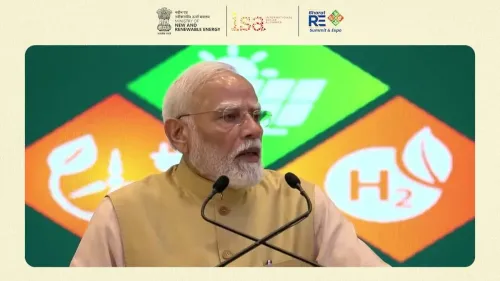
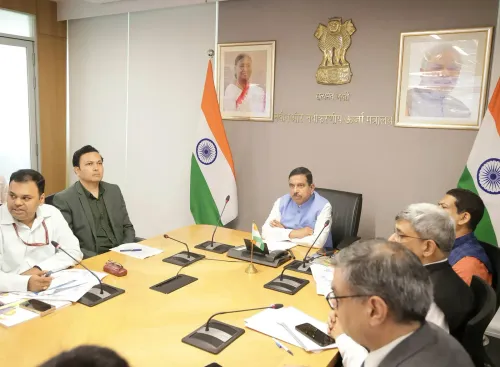
Joshi posted on 5 November 2026, inviting attention to the summit's final-day agenda, writing that 'meaningful engagements and key discussions' await as the event wraps up with 'a renewed focus on global collaboration and the #cleanenergy transition.' The post carries a preview image of the day's programme, underscoring the summit's ambition to close on a note of international momentum.
India's 500 GW target and the summit's stakes
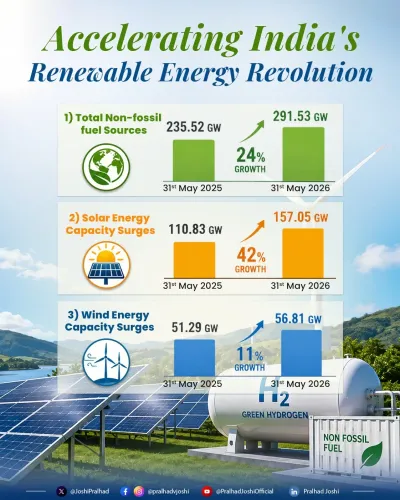
The Bharat Renewable Energy Summit 2026 sits squarely inside India's most consequential energy pledge: 500 GW of non-fossil fuel capacity by 2030, a commitment made at COP26 in 2021, paired with a net-zero emissions target by 2070. Getting there demands not just domestic policy muscle but technology transfer and investment flows from international partners — precisely the conversation this summit is designed to host.
India's track record of building multilateral energy architecture adds weight to these proceedings. The International Solar Alliance, launched in 2015, brought over a hundred nations under a single framework to accelerate solar deployment across sun-rich developing economies. The Bharat Renewable Energy Summit continues that tradition of using high-profile convening to convert diplomatic goodwill into bankable commitments.
Global collaboration as the summit's closing theme
The emphasis on 'renewed focus on global collaboration' in Joshi's post is deliberate. Renewable energy developers and international partners are watching the summit's final-day sessions for joint statements on technology-sharing arrangements and investment frameworks — the kind of concrete outcomes that move a 500 GW pledge from aspiration to pipeline.
As minister overseeing both renewable energy and consumer affairs, Joshi occupies a unique vantage point: clean energy expansion is inseparable from energy affordability and supply security for ordinary Indian households. The summit's closing day, then, is not just a diplomatic calendar item. It is a pressure point where India's global climate credibility and its domestic energy promise converge.
The world's eyes are on what India signs, says, and commits to when the gavel finally falls.
Point of View
Not just declarations — a distinction that matters enormously given the gap between India's 500 GW pledge and current installed capacity. The framing around 'global collaboration' aligns with New Delhi's consistent strategy of using multilateral energy forums to attract foreign capital and technology without ceding policy sovereignty. For the BJP government, a headline-grabbing summit outcome also serves a domestic narrative: that India is not just a climate-vulnerable nation but a clean-energy leader setting the terms of the global transition. The minister's dual portfolio — renewable energy and consumer affairs — further ties green ambition to kitchen-table energy costs, making the summit politically resonant beyond the diplomatic class.
NationPress
5 Nov 2026
Frequently Asked Questions
What is the Bharat Renewable Energy Summit 2026?
The Bharat Renewable Energy Summit 2026 is a major India-hosted event bringing together renewable energy developers and international partners to discuss clean energy transition goals, technology transfer, and investment frameworks in support of India's 500 GW non-fossil fuel target by 2030.
What is India's renewable energy target by 2030?
India has pledged to achieve 500 GW of non-fossil fuel capacity by 2030 , a commitment made at COP26 in Glasgow in 2021, alongside a net-zero emissions target by 2070.
Who is Pralhad Joshi and what ministry does he lead?
Pralhad Joshi is a senior BJP leader from Karnataka and serves as Union Minister of New and Renewable Energy as well as Minister of Consumer Affairs, Food and Public Distribution in the Indian cabinet.
What is the International Solar Alliance and how is it relevant?
The International Solar Alliance, launched in 2015, is an India-led multilateral body of over a hundred nations aimed at accelerating solar energy deployment in sun-rich countries. It represents India's established model for clean energy diplomacy and provides the template for the kind of global collaboration being sought at the Bharat Renewable Energy Summit 2026.
What outcomes are expected from the Bharat Renewable Energy Summit 2026?
Observers are watching for joint statements and frameworks on technology transfer and international investment in India's renewable energy sector, though specific agreements had not been officially confirmed ahead of the summit's final day.