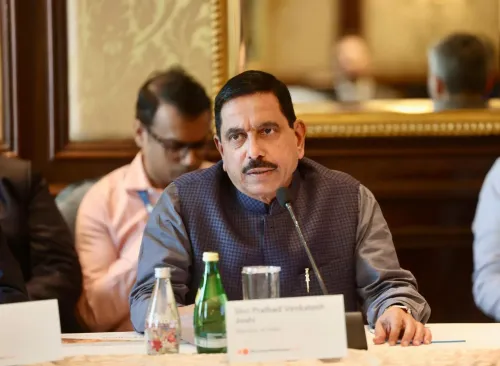
Joshi flags off Bharat Renewable Energy Summit in New Delhi

Synopsis
Union Minister Pralhad Joshi has announced the Bharat Renewable Energy Summit & Expo 2026 in New Delhi, convening global leaders and industry to accelerate India's clean energy transition ahead of its 500 GW non-fossil capacity target by 2030.
Key Takeaways
Union Minister Pralhad Joshi announced the Bharat Renewable Energy Summit & Expo 2026 in New Delhi on November 2, 2026 .
The summit targets global leaders, policymakers and industry pioneers to forge clean energy partnerships.
India has a 500 GW non-fossil fuel capacity target by 2030 , announced at COP26 in 2021 .
The International Solar Alliance (launched 2015 ) and the National Green Hydrogen Mission (approved 2023 ) form the policy backbone behind the event.
India's longer-term net-zero goal is set for 2070 .
Key outcomes to watch: investment pledges, bilateral MoUs and technology-transfer commitments.
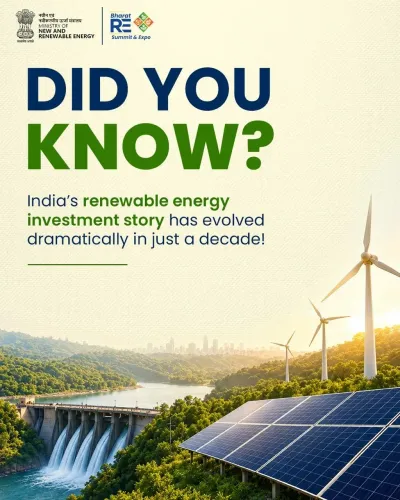
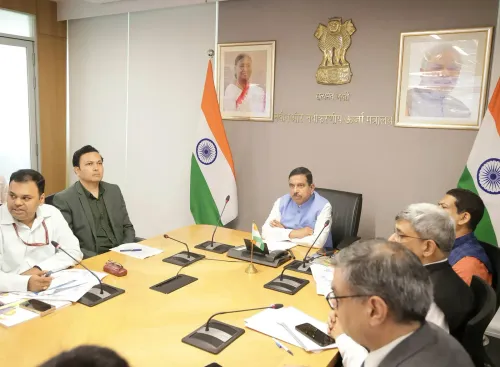
India's clean energy moment has a new stage. Union Minister for New and Renewable Energy Pralhad Joshi on Monday, November 2, 2026 signalled the launch of the Bharat Renewable Energy Summit & Expo 2026 in New Delhi, calling on global leaders, policymakers and industry pioneers to forge partnerships and accelerate the clean energy transition.
New Delhi becomes the room where clean energy deals get made
The summit is framed as a convergence platform — not a conference of speeches, but a marketplace of partnerships. Joshi's post put the ambition plainly: 'connect, collaborate and power a sustainable future.' The capital has hosted a string of energy diplomacy forums over the past decade, but the 2026 edition arrives at a particularly high-stakes moment, with India's self-imposed deadline of 500 GW of non-fossil fuel capacity by 2030 — announced at COP26 in Glasgow in 2021 — drawing closer by the quarter.
That target is not aspirational wallpaper. It anchors India's Nationally Determined Contribution under the Paris Agreement and sits beneath the longer arc of the country's net-zero 2070 commitment. Every summit of this kind is, in part, a mobilisation exercise — a bid to compress the gap between ambition and installed megawatts.
Three missions that set the table for 2026
The policy architecture behind the summit runs deep. The International Solar Alliance, launched in 2015 and co-founded by India, built the early scaffolding for south-south solar diplomacy. The National Green Hydrogen Mission, approved in 2023, opened the next frontier — positioning India as a potential green hydrogen exporter to energy-hungry economies in Europe and East Asia. Together, these initiatives have given India a credible multilateral track record to leverage in rooms like the one the Bharat Renewable Energy Summit creates.
Joshi, who holds the renewable energy portfolio alongside Consumer Affairs, has been the political face of this push. His ministry sits at the intersection of domestic industrial policy and international energy diplomacy — a dual brief that makes a summit of this scale a natural centrepiece.
What investors and delegates will be watching
The real scorecard for a summit of this kind is written not in its agenda but in its outcomes: investment pledges, bilateral memoranda of understanding, and technology-transfer commitments. India's renewable sector has already drawn tens of billions of dollars in foreign investment over the past decade, but scaling to the 500 GW target demands an acceleration in financing, grid infrastructure and supply-chain localisation. The #BRESummit is positioned as the forum where those conversations move from corridor chatter to signed documents.
Whether the summit delivers on that billing will depend on who walks through the door — and what they leave on the table.
Point of View
Staging a high-visibility international summit reinforces the BJP government's messaging that India is not merely a climate-agreement signatory but an active architect of the global clean energy order. The timing, with the 2030 deadline for 500 GW now just four years away, raises the stakes: success will be measured in gigawatts and signed MoUs, not applause. If the summit yields major bilateral commitments on green hydrogen or solar manufacturing, it could meaningfully de-risk India's transition targets — and hand the ministry a political win heading into budget season.
NationPress
2 Nov 2026
Frequently Asked Questions
What is the Bharat Renewable Energy Summit & Expo 2026?
The Bharat Renewable Energy Summit & Expo 2026 is an international forum hosted in New Delhi, convened to bring together global leaders, policymakers and industry players to build partnerships and accelerate the clean energy transition, announced by Union Minister Pralhad Joshi.
What is India's renewable energy target by 2030?
India announced a target of 500 GW of non-fossil fuel capacity by 2030 at the COP26 climate summit in Glasgow in 2021 , which forms the core of its Nationally Determined Contribution under the Paris Agreement.
Who is Pralhad Joshi and which ministry does he lead?
Pralhad Joshi is a senior BJP leader from Karnataka and currently serves as Union Minister of New and Renewable Energy as well as Minister of Consumer Affairs, Food and Public Distribution in the Indian Cabinet.
What is India's National Green Hydrogen Mission?
The National Green Hydrogen Mission was approved in 2023 to scale up green hydrogen production in India, with the aim of making the country a major green hydrogen producer and potential exporter to global markets.
What is the International Solar Alliance?
The International Solar Alliance is a treaty-based intergovernmental organisation co-founded by India in 2015 to promote solar energy deployment globally, particularly among sun-rich developing nations.