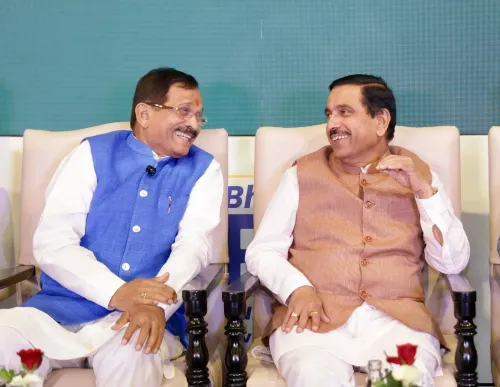
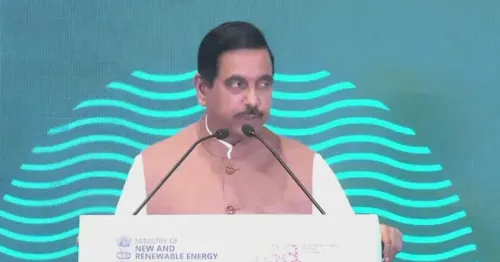
Pralhad Joshi Counts Down to BRE Summit 2026 in New Delhi
Synopsis
Union Minister Pralhad Joshi marks one day to the Bharat Renewable Energy Summit & Expo 2026, a four-day event at Bharat Mandapam from 2–5 November, aimed at drawing global leaders and investors to accelerate India's clean-energy transition.
Key Takeaways
The Bharat Renewable Energy Summit & Expo 2026 opens on 2 November 2026 at Bharat Mandapam, New Delhi , running through 5 November .
Union Minister Pralhad Joshi is promoting the event in his capacity as head of the Ministry of New and Renewable Energy .
The summit targets global leaders, industry pioneers, and clean energy innovators to strengthen international partnerships.
India has committed to 500 GW non-fossil fuel capacity by 2030 and net-zero by 2070 , the backdrop against which the summit is positioned.
Bharat Mandapam previously hosted the 2023 G20 Summit , lending the venue established international credibility.
Registration and exhibition opportunities are open at bresummit.in .
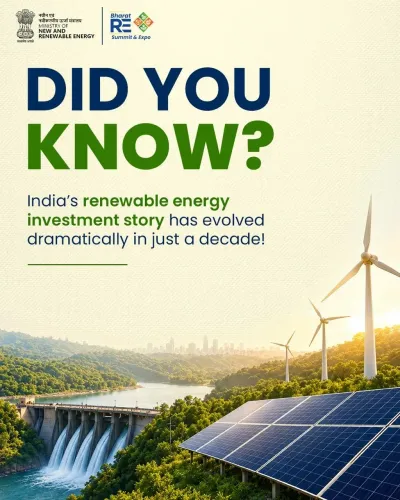
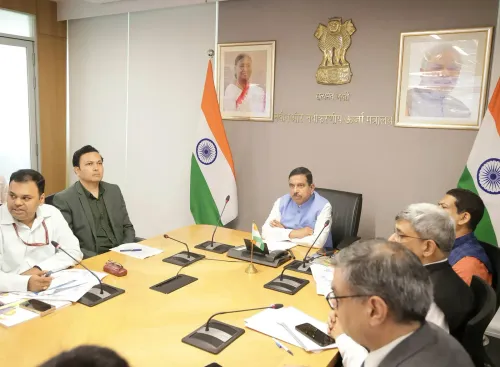
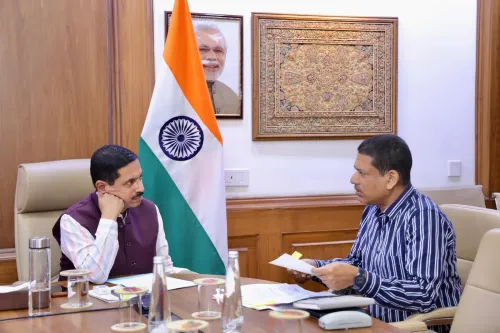
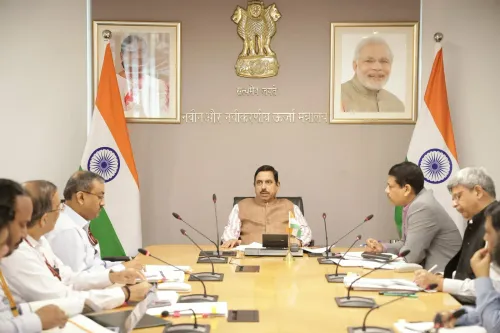
With one day to go, Union Minister of New and Renewable Energy Pralhad Joshi has signalled that New Delhi is primed to host what could be one of India's most consequential clean-energy gatherings — the Bharat Renewable Energy Summit & Expo 2026, opening 2 November at the iconic Bharat Mandapam.
Four days at Bharat Mandapam, one big ambition
The summit runs from 2 to 5 November 2026 at Bharat Mandapam, New Delhi — the same venue that hosted the 2023 G20 Summit, giving it instant global currency as a stage for high-stakes multilateral dialogue. Joshi's post calls the event a platform to 'explore new opportunities, strengthen global partnerships and accelerate the journey towards a cleaner energy future,' framing it squarely within India's long-running push to court global capital and technology into its renewable sector.
The four-day format combines a policy summit with an industry expo, offering both a diplomatic track for international leaders and a commercial floor for innovators and investors to exhibit and transact.
India's 500 GW target and why this summit lands now
India is not hosting this event in a vacuum. At COP26 in 2021, the country committed to 500 GW of non-fossil fuel capacity by 2030 and net-zero emissions by 2070 — targets that have since been embedded in India's updated Nationally Determined Contributions under the Paris Agreement (2022). The clock on the 2030 deadline is running, and the gap between current installed capacity and that 500 GW target means India needs both investment scale and technology acceleration — fast.
India also co-launched the International Solar Alliance in 2015, positioning itself as a convener rather than just a consumer in the global clean-energy order. Events like the BRE Summit 2026 extend that playbook: India invites the world in, signals policy seriousness, and turns diplomatic goodwill into signed deals on the expo floor.
What investors and industry players will be watching
For the renewable energy industry and global investors, the key question is whether the summit produces binding investment commitments or technology-transfer agreements that move the needle on India's capacity buildout. The Ministry of New and Renewable Energy, which Joshi heads, is the nodal body for both domestic policy and international clean-energy partnerships — making his personal promotion of the event a strong signal of official intent.
Registration and exhibition portals are live at bresummit.in, with the government actively soliciting both attendees and exhibitors in the run-up to the opening day.
When the doors open at Bharat Mandapam on 2 November, the numbers — investment pledges, partnership MOUs, capacity announcements — will determine whether 2026 becomes a landmark year in India's renewable story or just another well-staged summit.
Point of View
A venue synonymous with G20 multilateralism, is a deliberate signal of strategic seriousness. For Joshi, a minister straddling both consumer welfare and energy portfolios, championing the summit reinforces the BJP government's pitch that clean energy is a mainstream economic priority, not a fringe environmental concern. India's pattern of convening major clean-energy summits reflects a dual strategy: domestically, it galvanises investment; internationally, it cements India's self-image as a rule-shaper rather than just a rule-taker in the global energy transition. The real test comes after the expo closes — whether the partnerships announced translate into grid-connected megawatts.
NationPress
1 Nov 2026
Frequently Asked Questions
What is the Bharat Renewable Energy Summit 2026?
The Bharat Renewable Energy Summit & Expo 2026 (BRE Summit 2026) is a four-day event running from 2 to 5 November 2026 at Bharat Mandapam, New Delhi , bringing together global leaders, investors, and clean energy innovators to explore partnerships and opportunities in India's renewable sector.
Where is the BRE Summit 2026 being held?
The summit is being held at Bharat Mandapam in New Delhi , the same convention centre that hosted the 2023 G20 Summit.
Who is organising the Bharat Renewable Energy Summit 2026?
The event is being promoted by Union Minister Pralhad Joshi under the Ministry of New and Renewable Energy . Registration details are available at bresummit.in.
What is India's 2030 renewable energy target?
India committed at COP26 in 2021 to achieving 500 GW of non-fossil fuel capacity by 2030 , a target reinforced through its updated Nationally Determined Contributions under the Paris Agreement in 2022.
How can I register for the BRE Summit 2026?
Attendees can register at bresummit.in/register and exhibitors can apply at bresummit.in/expo/exhibit-with-us , as shared by Minister Pralhad Joshi in his official announcement.