Pralhad Joshi Reviews Bharat Renewable Energy Summit 2026 Prep
Synopsis
Union Minister Pralhad Joshi has reviewed preparations for the Bharat Renewable Energy Summit 2026, scheduled 2-5 November at Bharat Mandapam, calling on global pension funds, sovereign wealth funds and private equity to participate alongside country leaders and State Chief Ministers.
Key Takeaways
Bharat Renewable Energy Summit 2026 will be held from 2 to 5 November 2026 at Bharat Mandapam, New Delhi .
Union Minister Pralhad Joshi chaired a preparatory review with MNRE officials on 29 September 2026 .
The summit will bring together country leaders, global industry figures, and State Chief Ministers .
Joshi explicitly called on pension funds, sovereign wealth funds, venture capital and private equity to register and attend.
The review covered readiness in wind energy and transmission — two critical infrastructure bottlenecks in India's RE expansion.
The summit builds on India's Panchamrit climate pledge of 500 GW non-fossil fuel capacity by 2030 , made at COP26 in 2021.
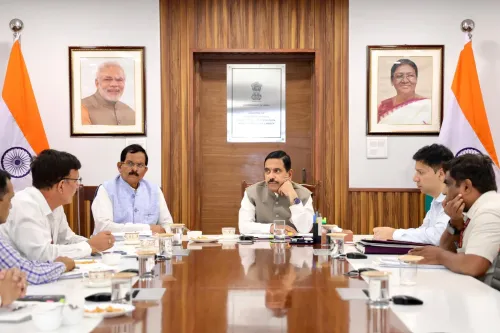
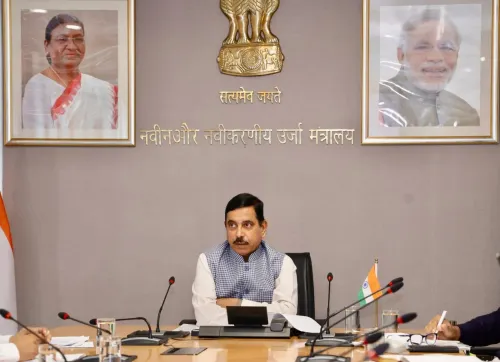
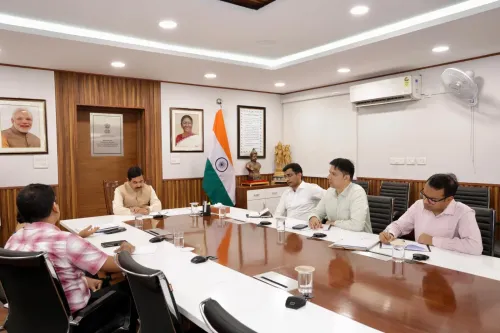
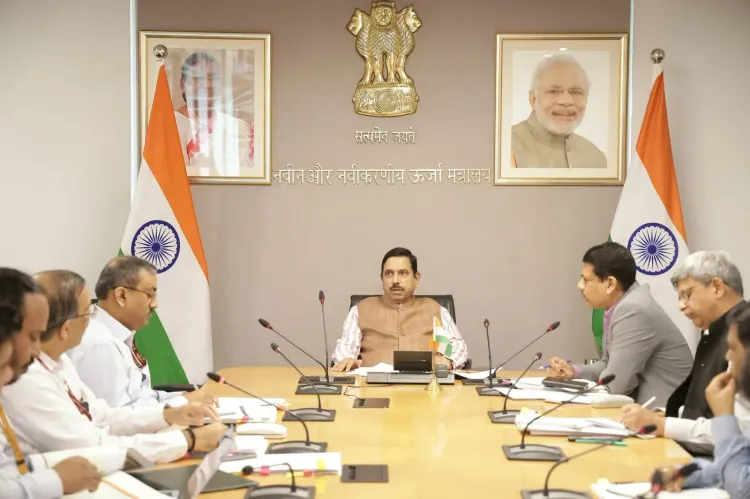
India is setting the stage for one of its largest-ever clean-energy gatherings. Union Minister for New and Renewable Energy Pralhad Joshi on Tuesday, 29 September 2026, chaired a high-level meeting with officials from the Ministry of New and Renewable Energy (MNRE) to review preparations for the Bharat Renewable Energy Summit 2026 — a four-day event scheduled from 2 to 5 November 2026 at Bharat Mandapam, New Delhi.
A Summit Built for Global Capital
The minister made an explicit pitch to the world's biggest pools of patient and risk capital, urging 'domestic and international pension funds, sovereign wealth funds, venture capital, private equity investors, and other stakeholders from across the renewable energy ecosystem' to participate and book spaces at the summit. The breadth of that call-out signals New Delhi's intent: this is not a policy conference for bureaucrats — it is a deal-making platform aimed squarely at unlocking large-scale private financing for India's clean-energy buildout.
Country leaders, global industry leaders, and State Chief Ministers are expected to attend, giving the summit both diplomatic weight and the federal buy-in needed to translate announced targets into on-the-ground projects.
Wind, Transmission, and the Hard Infrastructure Gap
Beyond the optics of investor outreach, Tuesday's meeting zeroed in on operational readiness. Joshi said the preparatory review covered key RE sectors including wind and transmission, and discussed what support would be needed to further accelerate renewable energy projects across the country. Wind and transmission are two of the sector's most persistent pressure points — grid integration and inter-state evacuation infrastructure have repeatedly lagged behind generation capacity additions, creating curtailment risks that unsettle investors.
Flagging both in a single pre-summit review suggests the government intends to use the November gathering not just to announce headline targets, but to surface and address the structural bottlenecks that slow project delivery.
The Lineage: From RE-INVEST to Bharat Mandapam
India has form in staging high-profile renewable energy investor summits. The government held the RE-INVEST editions in 2015 and 2018, which served as flagship platforms for drawing in global capital and signalling policy commitment. The Bharat Renewable Energy Summit 2026 arrives with considerably higher stakes: at COP26 in 2021, Prime Minister Modi committed India to 500 GW of non-fossil fuel capacity by 2030 and net-zero by 2070 — the so-called Panchamrit targets. With 2030 now less than four years away, the urgency to mobilise finance at scale is sharper than ever.
Bharat Mandapam, the sprawling convention centre in New Delhi that has hosted G20 summits and other marquee global events, provides a venue that signals India's seriousness about positioning this gathering on the world stage.
Point of View
Not merely a diplomatic showcase. By personally chairing preparation reviews and explicitly targeting sovereign wealth funds and private equity, Joshi is signalling that the government views investor confidence — not just installed capacity numbers — as the metric that matters most at this stage of India's energy transition. The focus on wind and transmission in the sector-readiness review is telling: these are historically the weakest links in the RE value chain, and surfacing them before the summit suggests an intent to present solutions, not just ambitions. Coming with the 2030 deadline for 500 GW non-fossil capacity now in sharp relief, the November summit will be a measurable test of whether India's policy environment can convert global capital interest into committed investment.
NationPress
29 Sept 2026
Frequently Asked Questions
What is the Bharat Renewable Energy Summit 2026?
The Bharat Renewable Energy Summit 2026 is a major international clean-energy event being organised by India's Ministry of New and Renewable Energy, scheduled for 2 to 5 November 2026 at Bharat Mandapam, New Delhi . It will bring together country leaders, global industry leaders, State Chief Ministers, and financial investors.
Where will the Bharat Renewable Energy Summit 2026 be held?
The summit will be held at Bharat Mandapam , the major international convention and exhibition centre in New Delhi , from 2 to 5 November 2026 .
Who is Pralhad Joshi and what role does he play in India's renewable energy sector?
Pralhad Joshi is the Union Minister of New and Renewable Energy (as well as Consumer Affairs, Food and Public Distribution). As the cabinet minister responsible for MNRE, he oversees India's policy framework, targets, and investor outreach for the clean-energy sector.
Why is India organising a renewable energy summit in 2026?
India needs to attract large-scale domestic and international private investment to meet its Panchamrit target of 500 GW non-fossil fuel capacity by 2030 , pledged at COP26 in 2021. The summit serves as a deal-making and policy-signalling platform to accelerate financing and address sector bottlenecks like wind energy and transmission infrastructure.
What sectors were reviewed at the MNRE preparatory meeting on 29 September 2026?
Minister Pralhad Joshi's preparatory review with MNRE officials on 29 September 2026 covered readiness in wind energy and transmission infrastructure , along with discussions on what support is needed to accelerate renewable energy projects across India.