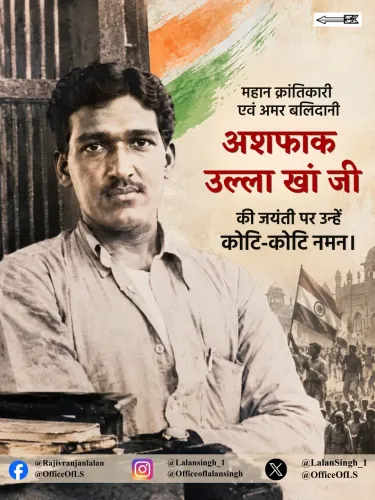
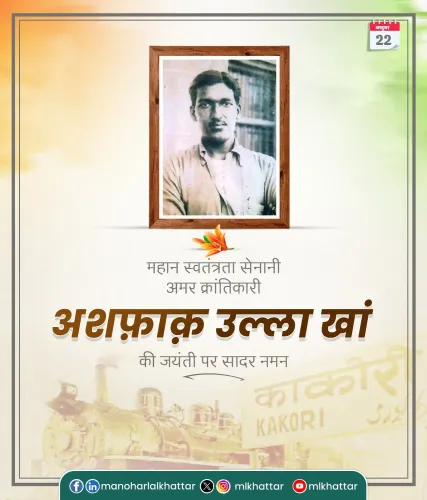
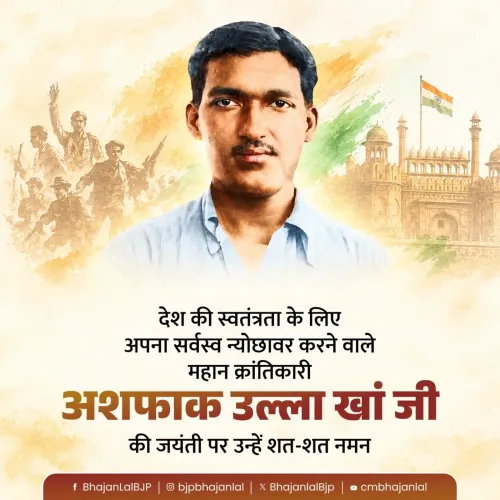
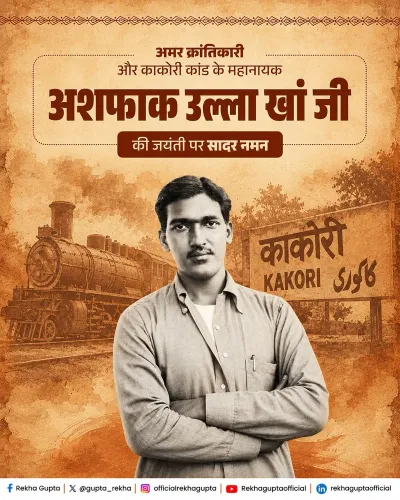
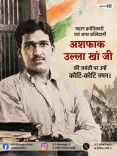
CM Nayab Saini pays tribute to Ashfaqulla Khan on birth anniversary
Synopsis
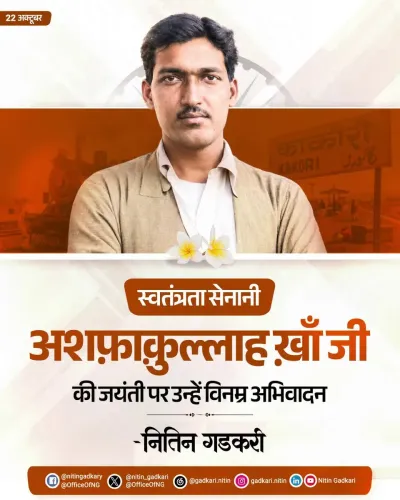
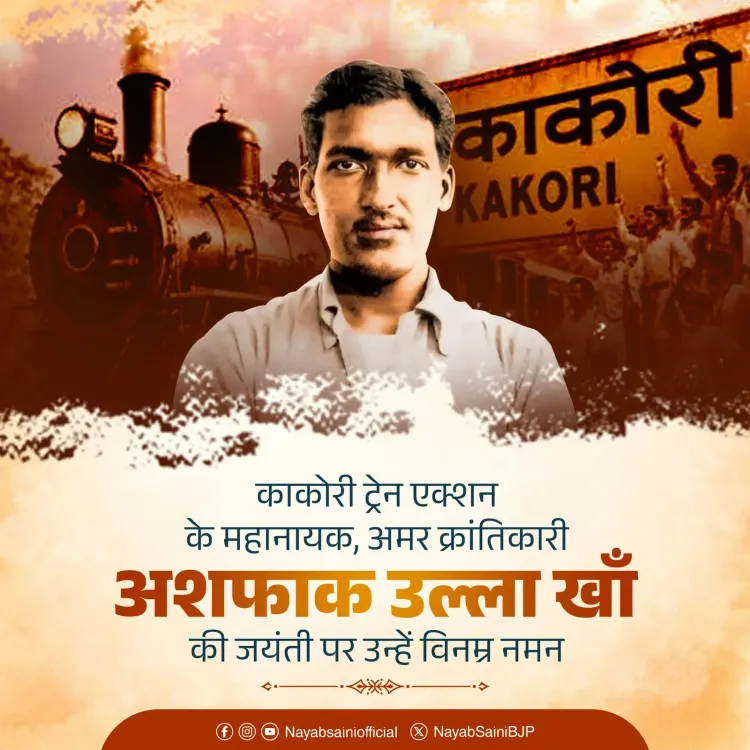
Haryana Chief Minister Nayab Singh Saini marked the birth anniversary of revolutionary Ashfaqulla Khan on October 22, 2026, paying tribute to the Kakori Train Action hero who was hanged by the British in 1927 at the age of 27.
Key Takeaways
Haryana CM Nayab Singh Saini paid tribute to revolutionary Ashfaqulla Khan on his birth anniversary on October 22, 2026 .
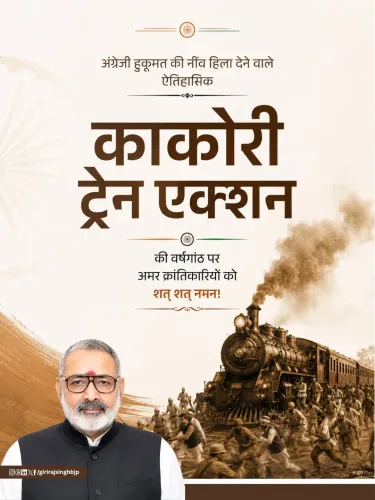
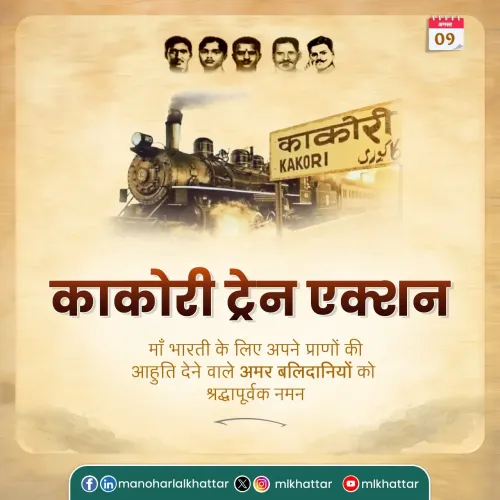
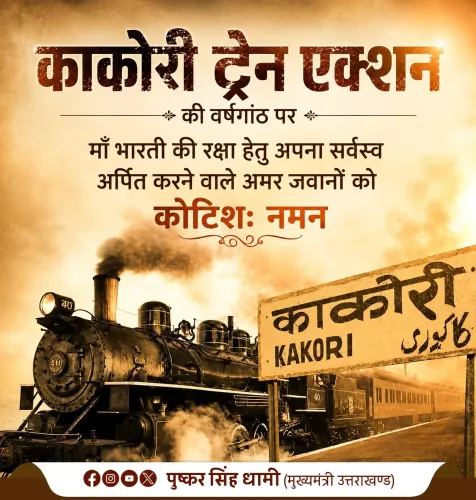
Ashfaqulla Khan was a member of the Hindustan Republican Association and a key participant in the Kakori Train Action of August 9, 1925 .
Khan was arrested after the Kakori operation, tried by the British, and executed on December 19, 1927 , aged 27 .
His close partnership with Hindu revolutionary Ram Prasad Bismil is widely cited as a symbol of composite nationalism and Hindu-Muslim unity in the freedom struggle.
CM Saini described Khan's courage and sacrifice as an enduring inspiration for 'national service, unity, and patriotism.'
A century after Ashfaqulla Khan gave his life for India's freedom, Haryana Chief Minister Nayab Singh Saini marked the revolutionary's birth anniversary on Thursday, October 22, 2026, with a heartfelt salute on X — honouring a man who chose the gallows over surrender.
In his post, CM Saini offered 'koti-koti naman' (countless salutations) to the freedom fighter, describing him as the 'immortal revolutionary who gave everything for Mother India's independence.' He wrote that Khan's 'indomitable courage, supreme sacrifice, and unwavering love for the motherland will forever inspire countrymen to walk the path of national service, unity, and patriotism.'
The Kakori Train Action and Ashfaqulla Khan's place in it
Ashfaqulla Khan was a founding member of the Hindustan Republican Association (HRA), the clandestine revolutionary outfit that sought to dismantle British colonial rule through direct action. On August 9, 1925, Khan and a band of fellow revolutionaries — including Ram Prasad Bismil — stopped a train near Kakori, in present-day Uttar Pradesh, and seized government cash being transported in the guard's safe. The goal was stark and practical: fund the revolution.
The British response was swift and brutal. Mass arrests followed; the HRA was effectively dismantled. Khan was tried, convicted, and hanged on December 19, 1927, at Faizabad Jail. He was 27 years old. His execution came days after that of Bismil, as the colonial administration sought to erase the movement's leadership in one coordinated blow.
Why a Hindu-Muslim friendship still resonates in 2026
The bond between Ashfaqulla Khan and Ram Prasad Bismil — one Muslim, one Hindu — has become one of the most cited symbols of composite nationalism in Indian history. They wrote poetry together, plotted revolution together, and died within weeks of each other. In an era when communal harmony is frequently invoked in political discourse, the Kakori martyrs carry particular symbolic weight.
Indian elected leaders across party lines routinely commemorate independence-era revolutionaries on their birth and martyrdom anniversaries, weaving individual sacrifice into a shared national narrative. CM Saini's tribute fits that wider pattern — but the specific choice to highlight a figure whose legacy embodies cross-religious solidarity adds a layer of resonance that goes beyond routine commemoration.
Nearly a hundred years after the Kakori operation, the revolutionaries who planned it remain a live presence in India's public imagination — proof, perhaps, that the stories a nation chooses to remember are also the arguments it keeps making to itself.
Point of View
Invoking Khan underscores a narrative of nationalism that transcends religious lines, even as such gestures are sometimes scrutinised for authenticity. The Kakori commemoration also fits a longer pattern of state-level governments competing to claim ownership of the freedom movement's legacy, particularly ahead of key electoral cycles. Whether ceremonial or sincere, these anniversaries keep alive a chapter of Indian history that speaks directly to the country's unresolved debates about identity and belonging.
NationPress
22 Oct 2026
Frequently Asked Questions
Who was Ashfaqulla Khan?
Ashfaqulla Khan was an Indian revolutionary and member of the Hindustan Republican Association who participated in the 1925 Kakori Train Action against British colonial rule. He was arrested, tried, and executed by the British on December 19, 1927, at the age of 27.
What was the Kakori Train Action?
The Kakori Train Action was a daring operation carried out on August 9, 1925, in which a group of Indian revolutionaries stopped a British government train near Kakori in present-day Uttar Pradesh and seized colonial treasury funds to finance their independence movement.
What is Ashfaqulla Khan's birth anniversary date?
Ashfaqulla Khan was born on October 22, and his birth anniversary is observed annually on that date. In 2026, Haryana CM Nayab Singh Saini marked the occasion with a tribute on social media.
Why is Ashfaqulla Khan remembered alongside Ram Prasad Bismil?
Ashfaqulla Khan and Ram Prasad Bismil were close friends and fellow revolutionaries in the Hindustan Republican Association. Their bond — one Muslim, one Hindu — has become a celebrated symbol of Hindu-Muslim unity within India's freedom movement. Both were executed within weeks of each other in 1927.
What did CM Nayab Singh Saini say about Ashfaqulla Khan?
CM Saini offered 'koti-koti naman' (countless salutations) to Khan, describing his indomitable courage, supreme sacrifice, and unwavering love for the motherland as an eternal inspiration for Indians to follow the path of national service, unity, and patriotism.