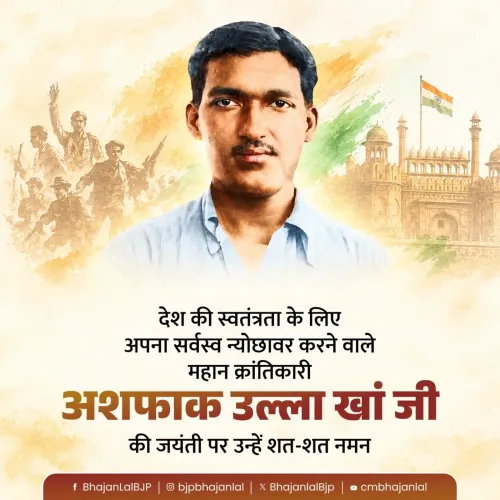
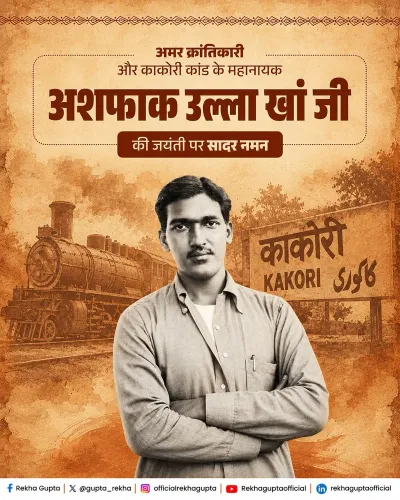
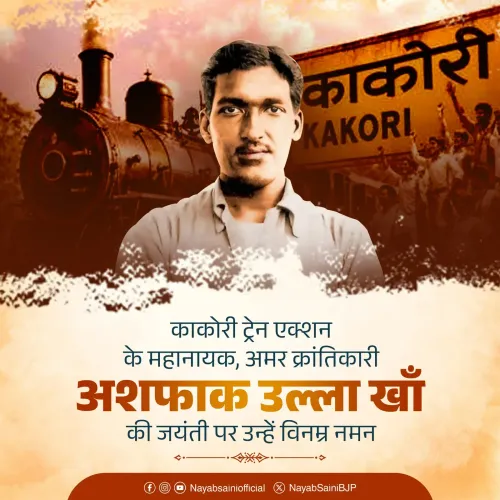
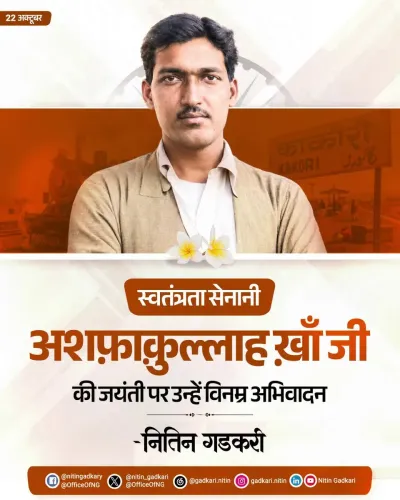
Khattar pays tribute to Ashfaqulla Khan on his birth anniversary
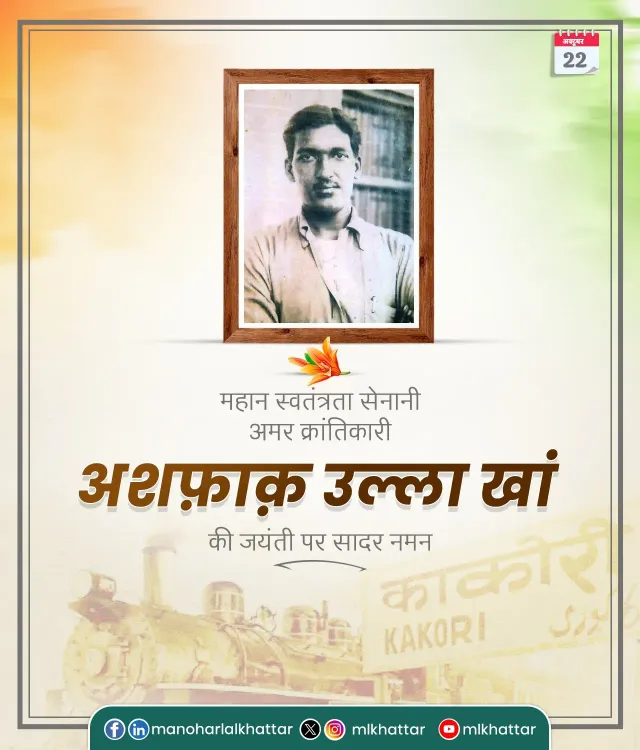
Synopsis
Union Power Minister Manohar Lal Khattar paid tribute to revolutionary poet Ashfaqulla Khan on his birth anniversary, honouring his role in the 1925 Kakori Train Action and his legacy of sacrifice and nationalist inspiration.
Key Takeaways
Manohar Lal Khattar posted a Hindi tribute to Ashfaqulla Khan on his birth anniversary on 22 October 2026 .
Ashfaqulla Khan was a member of the Hindustan Republican Association and a key figure in the Kakori Train Action of 1925 .
Khan was hanged by British authorities on 19 December 1927 at Faizabad , aged 27 .
Khattar praised Khan's revolutionary poetry for inspiring 'countless young people' to join the freedom movement.
Khan's legacy is widely cited across political lines as a symbol of communal unity in India's independence struggle.
A revolutionary who chose the gallows over surrender — Union Power Minister Manohar Lal Khattar on Thursday, 22 October 2026 paid solemn homage to Ashfaqulla Khan, the poet-revolutionary of the Kakori Train Action, on his birth anniversary.
In a heartfelt Hindi tribute posted on X, Khattar wrote: 'माँ भारती को परतंत्रता की बेड़ियों को मुक्त कराने के लिए प्राणोत्सर्ग कर देने वाले अमर क्रांतिकारी' — 'the immortal revolutionary who sacrificed his life to free Mother India from the chains of subjugation.' He saluted Khan for igniting, through his revolutionary ideas and stirring poetry, a flame that inspired countless young people to dedicate themselves to the nation.
The man behind the Kakori legend
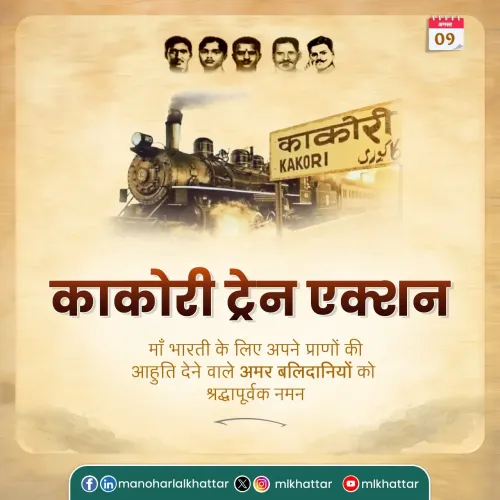
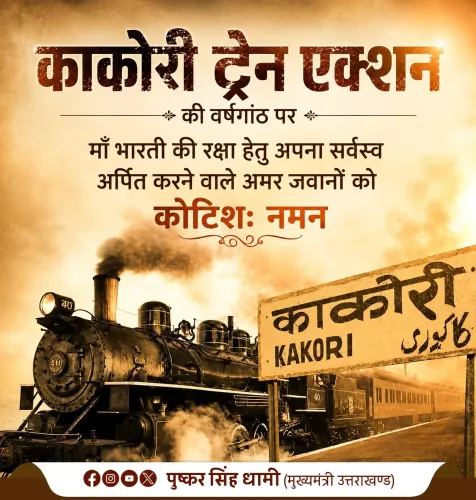
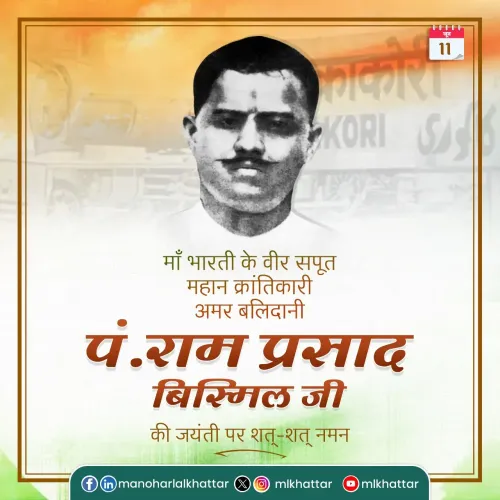
Ashfaqulla Khan was a member of the Hindustan Republican Association — a clandestine anti-colonial organisation that believed armed resistance was the only answer to British rule. On 9 August 1925, he joined comrades including Ram Prasad Bismil in the Kakori Train Action, intercepting a government treasury train in what is now Uttar Pradesh to seize funds for the independence movement.
The British crackdown was swift and brutal. Khan was hunted, captured, and tried. He was hanged on 19 December 1927 at Faizabad, aged just 27. He did not merely fight with a gun — he wrote poetry that burned with defiance, earning him a rare place in India's memory as both a soldier and a bard of freedom.
Why his legacy endures across political lines
Khattar's tribute underscores something important: Khan's legacy belongs to no single community or party. A Muslim revolutionary who died alongside Hindu comrades for a shared idea of azadi — freedom — his story is invoked as proof that India's independence struggle was woven from many threads. Khattar called his life 'an immortal saga of love for the nation, courage, and sacrifice that will inspire the countrymen for eternity.'
Senior political figures across the spectrum regularly observe the birth and death anniversaries of Kakori case figures, framing them as moral lodestars for contemporary public life. Similar tributes are expected around the anniversaries of Ram Prasad Bismil and other martyrs of that chapter.
Nearly a century after his execution, Ashfaqulla Khan's verses still circulate in school textbooks and nationalist discourse alike — a young man's defiance outlasting the empire that silenced him.
Point of View
Signalling inclusive nationalism without requiring a policy announcement. Watch for similar statements around the anniversaries of other Kakori case figures as the BJP sharpens its historical imagery ahead of state electoral cycles.
NationPress
22 Oct 2026
Frequently Asked Questions
Who was Ashfaqulla Khan?
Ashfaqulla Khan was an Indian revolutionary and poet, a member of the Hindustan Republican Association, who was executed by the British on 19 December 1927 for his role in the Kakori Train Action of 1925 .
What was the Kakori Train Action?
The Kakori Train Action was an armed robbery of a British government treasury train carried out on 9 August 1925 by revolutionaries including Ashfaqulla Khan and Ram Prasad Bismil, who sought funds for anti-colonial activities.
Why did Manohar Lal Khattar pay tribute to Ashfaqulla Khan?
22 October is Ashfaqulla Khan's birth anniversary. Union Power Minister Khattar posted a Hindi tribute on X honouring Khan's sacrifice and the inspirational power of his revolutionary poetry.
What is Ashfaqulla Khan known for besides the Kakori case?
Ashfaqulla Khan was also a poet whose stirring verses became part of India's nationalist literary tradition, inspiring young people to join the freedom struggle.
Who else was involved in the Kakori Train Action?
Ram Prasad Bismil was a prominent co-conspirator in the Kakori Train Action and, like Ashfaqulla Khan, was executed by British authorities following the case.