Sonowal: India now World #2 in global seafarer supply
Synopsis
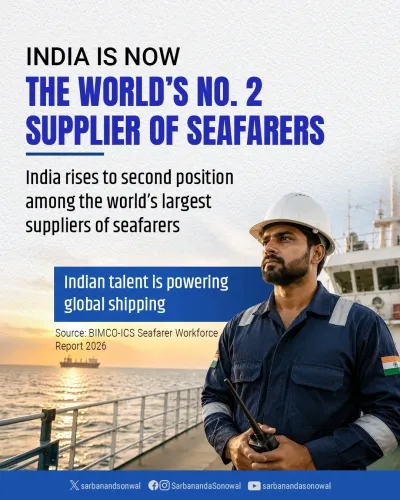
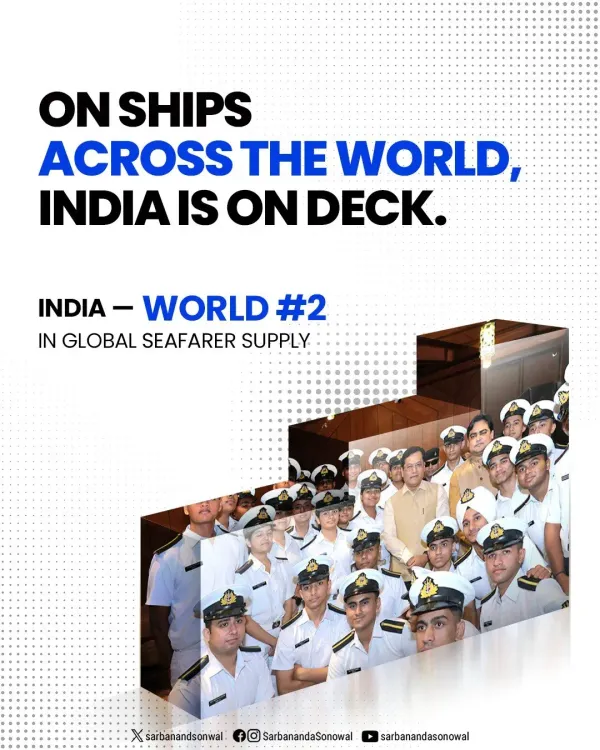
Union Minister Sarbananda Sonowal announced India has risen to the second position globally in seafarer supply, calling it a result of PM Modi's maritime workforce vision and the Maritime India Vision 2030 framework.
Key Takeaways
India ranked #2 globally in seafarer supply, as claimed by Union Minister Sarbananda Sonowal on 20 October 2026 .
The milestone is attributed to PM Narendra Modi 's maritime workforce development vision and the Maritime India Vision 2030 blueprint.
India's seafarers are certified under the international STCW Convention , making them globally deployable across flag states.
Indian seafarers collectively generate significant foreign-exchange remittances , adding economic weight to the supply ranking.
The ranking strengthens India's position at the IMO in shaping international crew certification and welfare standards.
Growth was driven by public-private maritime training partnerships and expansion of certified training institutes over multiple years.
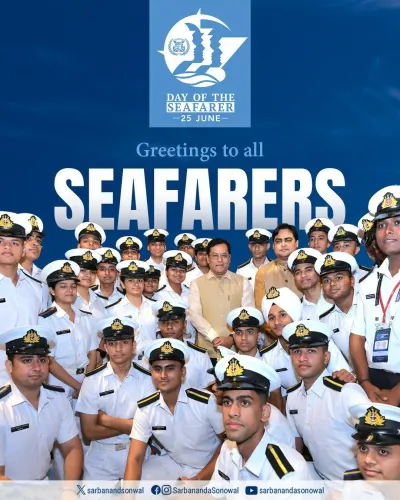
On the high seas that carry 80 percent of world trade, Indian sailors are everywhere — and now, their country has the numbers to prove it. Union Minister of Ports, Shipping and Waterways Sarbananda Sonowal declared on Tuesday, 20 October 2026 that India has climbed to the second position globally in seafarer supply, framing the milestone as a direct outcome of Prime Minister Narendra Modi's maritime workforce vision.
India's seafarers: a quiet export powerhouse
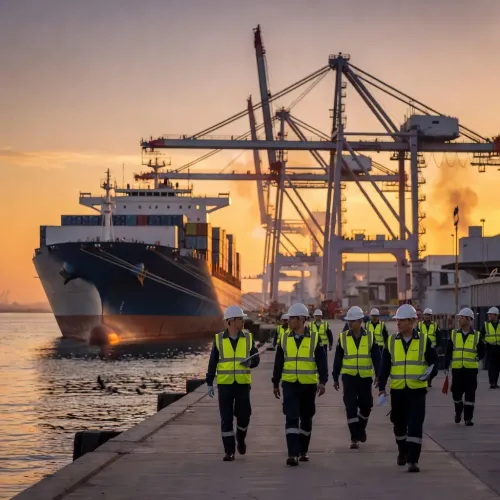
The sea has long been one of India's most reliable talent pipelines. For decades, Indian officers and ratings have staffed vessels flying flags from Panama to Singapore to Liberia, certified under the international STCW Convention that governs standards of training, certification, and watchkeeping worldwide. What Sonowal's post signals is that this pipeline has widened significantly — enough to rank India second only to one country in the global pecking order of seafarer-supplying nations.
In his post, Sonowal put it sharply: 'on ships across the world, India is always on deck.' It is a line that doubles as both a maritime pun and a statement of economic ambition. The global shipping industry employs roughly 1.9 million seafarers at any given time, and holding the second slot in supply gives Indian maritime labour extraordinary leverage in crewing markets, wage negotiations, and bilateral maritime agreements.
Maritime India Vision 2030 and the human-capital bet
The policy scaffolding behind this ranking traces to the Maritime India Vision 2030, released in 2021 — the same year Sonowal took charge of the ministry. That blueprint set explicit targets for expanding India's share of global seafarer supply alongside goals for port capacity, inland waterways, and shipbuilding. The human-capital pillar was deliberate: policymakers recognised that training and certifying seafarers is one of the fastest, most export-ready ways to monetise India's demographic dividend in a globally regulated industry.
Successive governments expanded the network of maritime training institutes, brought private academies into public-private partnerships, and worked to align Indian certificates with standards accepted across flag states. The compounding effect of those investments over multiple years is, Sonowal argues, now visible in the ranking itself.
What a #2 ranking means for trade, remittances, and soft power
The stakes go well beyond a league-table bragging right. Indian seafarers collectively remit billions of dollars annually back home, making them a significant — if often overlooked — component of India's foreign-exchange earnings. A higher supply ranking also gives India's delegation at the International Maritime Organization (IMO) a stronger political hand in shaping crew certification rules, flag-state inspections, and welfare conventions that govern the lives of sailors globally.
For Sonowal and the BJP government, the timing of the announcement is also domestically useful: it converts an abstract infrastructure metric into a human story of skilled Indian workers powering global commerce — exactly the kind of 'India on the world stage' narrative that resonates ahead of any political cycle.
The number-two slot is the summit of a decades-long climb. The next question is whether India's training infrastructure, welfare frameworks, and diplomatic muscle can hold — and eventually surpass — the nation currently ranked first.
Point of View
Now being politically claimed under the Maritime India Vision 2030 umbrella. For the Modi government, it converts a labour-market statistic into a tangible 'Brand India' narrative — skilled workers powering global trade — that fits neatly into its broader economic diplomacy. The announcement also positions Sonowal's ministry as a human-capital story, not just a ports-and-cranes infrastructure one. Whether India can close in on the top slot will depend on how aggressively it expands welfare frameworks and wage competitiveness for its sailors, not just the volume of certificates issued.
NationPress
20 Oct 2026
Frequently Asked Questions
What is India's current rank in global seafarer supply?
According to Union Minister Sarbananda Sonowal's announcement on 20 October 2026, India is ranked second in the world for seafarer supply, meaning only one country provides more trained sailors to the global shipping industry.
What is Maritime India Vision 2030?
Maritime India Vision 2030 is a policy blueprint released in 2021 that sets targets for expanding India's share of global seafarer supply, modernising port infrastructure, developing inland waterways, and boosting shipbuilding capacity.
Why is India's seafarer ranking important for the economy?
Indian seafarers remit billions of dollars annually, contributing significantly to India's foreign-exchange earnings. A higher supply ranking also gives India greater influence at the International Maritime Organization in shaping global crew certification and welfare standards.
Who is Sarbananda Sonowal?
Sarbananda Sonowal is the Union Minister of Ports, Shipping and Waterways, a senior BJP leader, and a former Chief Minister of Assam. He has held the maritime portfolio since 2021.
What is the STCW Convention and why does it matter for Indian seafarers?
The STCW Convention sets international Standards of Training, Certification and Watchkeeping for seafarers. Indian sailors certified under STCW are recognised across virtually all flag states, making them deployable on ships worldwide and commercially competitive in the global crewing market.