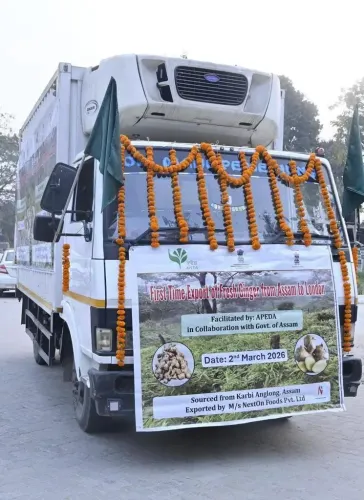
CM Himanta Flags Off Assam Agarwood to Dubai
Synopsis
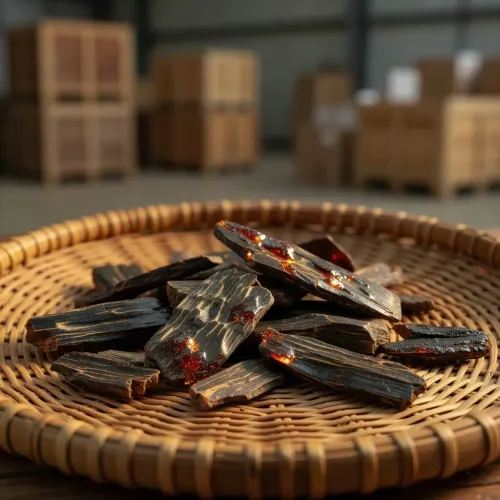
Assam CM Himanta Biswa Sarma flagged off 123 kg of Agarwood Chips to Dubai on October 26, extending the state's agricultural export drive beyond ginger, pineapples and lemons into one of the world's most premium forest commodities.
Key Takeaways
123 kg of Agarwood Chips flagged off to Dubai by Assam CM Himanta Biswa Sarma on October 26, 2026 .
Agarwood joins ginger, pumpkins, pineapples and lemons in Assam's growing non-traditional export portfolio.
Dubai serves as the entry and redistribution hub for Assam's produce into West Asian and international markets.
Assam has run horticulture and forest-produce export programmes since 2021 , targeting Gulf and Southeast Asian corridors.
Agarwood is one of the world's most expensive natural raw materials, giving high income potential even for small consignments.
The shipment is part of a broader state strategy to convert Assam's biodiversity into scalable export revenue.
Assam's export diversification story just added a fragrant new chapter. Assam Chief Minister Himanta Biswa Sarma on Monday, October 26 flagged off 123 kg of Agarwood Chips to Dubai, marking the latest in a series of non-traditional agricultural exports the state has pushed to global markets since 2021.
From jungle floors to Gulf shelves
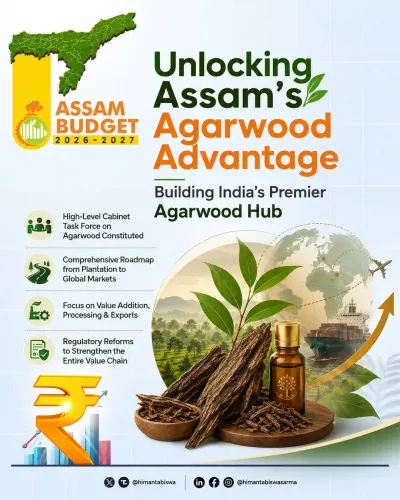
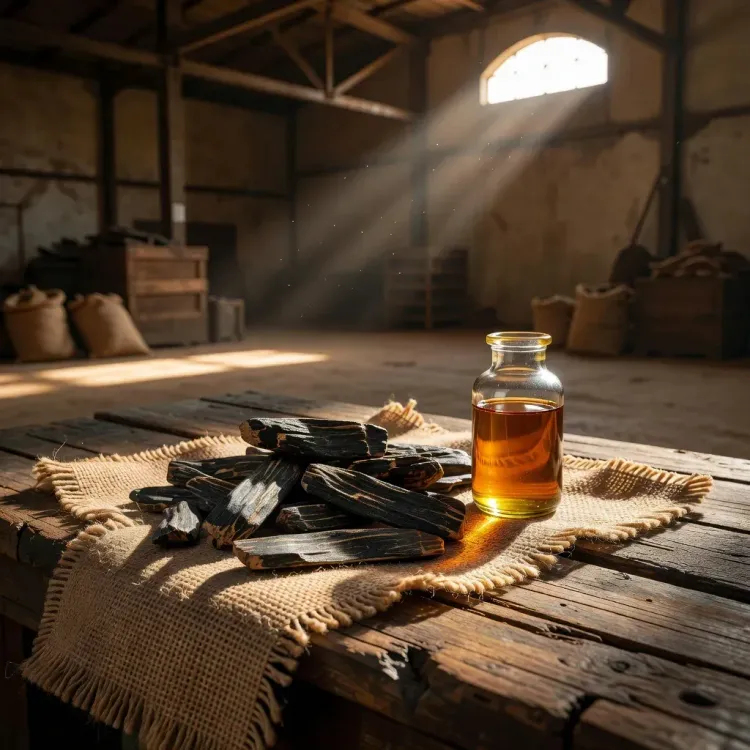
Agarwood — one of the world's most expensive natural raw materials, prized across the Middle East, Southeast Asia and luxury fragrance markets — grows natively in Assam's forests. The state has long held a comparative advantage in the crop, yet it remained largely outside formal export pipelines for decades. Today's shipment signals a deliberate policy push to change that.
Writing on X, Sarma framed it as part of a cumulative strategy: 'After ginger, pumpkins, pineapples, lemons, it's time for Assam's Agarwood to hit the world market.' The line is less a press release and more a ledger — each commodity a checkpoint in the state's export-readiness programme.
The corridor behind the consignment
Dubai is the strategic gateway here, not the final destination. The UAE hub serves as a primary entry and redistribution point for Indian agricultural shipments flowing into West Asia, and increasingly into European and East African markets beyond. Routing Agarwood through Dubai gives Assam's product access to some of the world's highest-spending perfume and oud markets with minimal logistical friction.
The Assam government has since 2021 run programmes to make horticulture and forest produce export-ready — from cold-chain improvements to buyer-seller linkages — targeting Gulf and Southeast Asian corridors. Agarwood's inclusion signals that the state is now moving up the value chain, from commodity crops to premium natural extracts.
What the Agarwood bet means for Northeast farmers
Agarwood cultivation and harvesting in Assam involves a dispersed community of farmers and forest-produce collectors for whom reliable export demand can be transformative. High global prices — agarwood oil can fetch thousands of dollars per kilogram on international markets — mean even small consignments carry significant income potential at the farm level.
The broader pattern is clear: Assam is systematically converting its biodiversity into export revenue. Ginger, pineapples, lemons, pumpkins — and now agarwood. Each shipment is also a proof-of-concept for logistics, phytosanitary compliance, and buyer relationships that future, larger consignments can scale on.
The fragrant resin of a northeastern forest is now bound for a Gulf skyline. If the supply chain holds, Assam's agarwood farmers may soon find their produce pricing into some of the world's most exclusive markets.
Point of View
From bulk commodities to premium forest produce commanding global luxury-market prices. For CM Sarma, each new export commodity is political capital as much as economic policy, demonstrating tangible outcomes from his 2021-onwards diversification agenda. The Dubai routing reflects a broader India-Gulf agricultural corridor that the central government has also been nurturing, meaning Assam's state-level push aligns neatly with national export-promotion frameworks. The key test ahead is whether single-consignment optics can be converted into consistent volume, robust certification infrastructure, and sustained farmer-level returns.
NationPress
26 Oct 2026
Frequently Asked Questions
What is Agarwood and why is it valuable?
Agarwood is a fragrant resinous heartwood produced by certain trees when infected by a specific mould. It is one of the world's most expensive natural raw materials, widely used in luxury perfumes, incense and traditional medicines across the Middle East and Asia, with high-grade oil fetching thousands of dollars per kilogram internationally.
How much Agarwood did Assam export to Dubai?
Assam Chief Minister Himanta Biswa Sarma flagged off 123 kg of Agarwood Chips to Dubai on October 26, 2026 .
Which other products has Assam exported recently?
Assam has recently exported ginger, pumpkins, pineapples and lemons as part of its agricultural export diversification drive, with agarwood being the latest addition to that list.
Why was Dubai chosen as the destination for Assam's Agarwood shipment?
Dubai is a major commercial hub and a primary entry point for Indian agricultural exports into West Asia, making it a strategic gateway for Assam's produce to reach Gulf markets and be redistributed further internationally.
What policies is the Assam government using to promote exports?
Since 2021, the Assam government has run programmes focused on making horticulture and forest produce export-ready, including cold-chain improvements, compliance support, and buyer-seller linkages targeting Gulf and Southeast Asian markets.