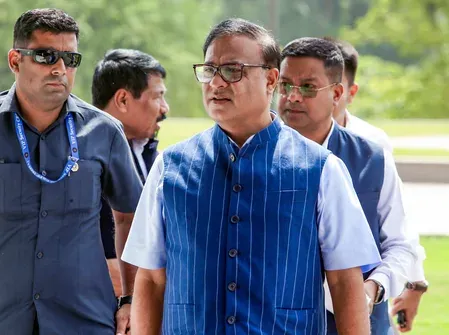
CM Himanta Flags Assam Products Finding Global Markets
Synopsis
Assam Chief Minister Himanta Biswa Sarma declared on 22 June 2026 that the state's unique products are finding global markets and carrying Assam's identity across continents, signalling continued push to expand exports of GI-tagged goods like tea and Muga silk under India's Act East Policy framework.
Key Takeaways
CM Himanta Biswa Sarma stated on 22 June 2026 that Assam's products are now reaching consumers across the world.
Assam has established export sectors in tea , Muga silk , and traditional handlooms, several carrying Geographical Indication tags.
The post aligns with India's Act East Policy (upgraded 2014 ), which positions northeastern states as gateways to ASEAN markets.
State-level export branding efforts have been under way since 2016 , including participation in international trade fairs and buyer-seller meets.
Key stakeholders include Assam 's tea planters, Muga silk weavers, and handloom producers whose incomes depend on international price realisation.
Next steps to watch include Assam delegations at ASEAN trade expos and release of state export figures by the Union commerce ministry.
Assam Chief Minister Himanta Biswa Sarma on Monday, 22 June 2026, underscored the state's growing international trade footprint, saying that products made in Assam are now reaching consumers across the world and carrying the state's identity with them. The Chief Minister expressed confidence that even more of Assam's finest offerings would find their way to global markets in the coming period.
Context
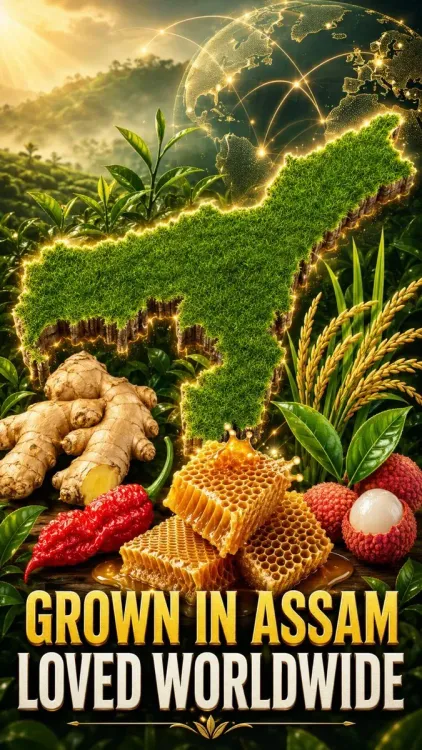
Posting on X, CM Sarma wrote: 'Made in Assam, enjoyed across the world. Assam's unique products are finding global markets and carrying the State's identity across continents. We look forward to taking even more of Assam's finest to the world.' The statement positions Assam not merely as a supplier to domestic markets but as a brand with continental reach — a framing that state leadership has cultivated consistently since the mid-2010s.
Assam's export identity rests on a cluster of distinctive products, most notably its tea, which accounts for a significant share of India's total tea exports, alongside Muga silk — the only naturally golden silk in the world — and a range of traditional handloom textiles. Several of these carry Geographical Indication tags, lending them legal protection and premium positioning in international markets.
Policy Backdrop
The post aligns closely with India's Act East Policy, upgraded in 2014 from the earlier Look East Policy, which explicitly positions northeastern states as gateways for trade and connectivity with ASEAN nations. Under this framework, Assam has been identified as a strategic corridor linking the Indian subcontinent to Southeast Asian supply chains.
State-level efforts since 2016 have focused on branding and exporting GI-tagged local products through participation in international trade fairs and structured buyer-seller meets. This approach reflects a broader national push to integrate the Northeast into global value chains rather than treating the region's output as captive to domestic demand alone.
CM Sarma, who has served as Chief Minister since 2021 and also convenes the North-East Democratic Alliance (NEDA), has repeatedly used trade and investment messaging to signal the region's economic ambitions on national and international platforms.
Stakeholders and Impact
The primary beneficiaries of expanded export channels are Assam's tea planters, Muga silk weavers, and handloom producers — communities whose livelihoods are directly tied to the prices and volumes commanded in external markets. A stronger global brand identity for 'Made in Assam' products can translate into better price realisation and more stable demand for these producers.
For the state government, successful export promotion reinforces a narrative of economic transformation in a region historically associated with insurgency and underdevelopment. It also strengthens the case for improved logistics infrastructure — roads, rail, and air connectivity — that would reduce the cost of moving goods from Assam to international ports.
What's Next
Observers will watch for concrete follow-through: participation by Assam delegations at upcoming ASEAN trade expos, release of state export data by the Union commerce ministry, or announcements of new buyer partnerships for GI-tagged products. The Chief Minister's statement sets a directional tone; the measure of its impact will lie in the trade numbers and market-access agreements that follow.
As India deepens its Act East engagement, Assam's ability to convert cultural distinctiveness into export revenue will be a key indicator of whether the Northeast's integration into global supply chains moves from aspiration to measurable outcome.
Point of View
He ties state identity to economic pride, a politically useful frame ahead of any trade or investment summits. The messaging also reinforces the strategic logic of the Act East Policy, lending Assam a gateway role that justifies infrastructure investment demands from the Centre. Whether the rhetoric translates into verifiable export growth will determine how durable this narrative proves.
NationPress
21 Sept 2026
Frequently Asked Questions
Which products from Assam are exported internationally?
Assam's primary export products include tea, Muga silk — the world's only naturally golden silk — and traditional handloom textiles, several of which carry Geographical Indication tags that give them legal protection and premium positioning in global markets.
What is the Act East Policy and how does it affect Assam?
India's Act East Policy, upgraded in 2014 from the earlier Look East Policy, aims to expand trade and connectivity with ASEAN nations. It positions northeastern states like Assam as strategic gateways, opening pathways for local products to enter Southeast Asian supply chains.
What did Assam CM Himanta Biswa Sarma say about exports?
On 22 June 2026, CM Sarma posted on X that Assam's unique products are 'finding global markets and carrying the State's identity across continents,' adding that he looks forward to taking 'even more of Assam's finest to the world.'
What is Muga silk and why is it significant for Assam?
Muga silk is a GI-tagged textile produced exclusively in Assam and is the only naturally golden-coloured silk in the world. It is a key part of Assam's export identity and commands premium pricing in international markets due to its rarity and cultural heritage.
How has Assam promoted its products in global markets?
Since 2016, Assam has pursued international branding through participation in trade fairs and buyer-seller meets, leveraging GI tags on products like tea and Muga silk to build a distinct 'Made in Assam' identity for export markets.