Mandaviya: Cabinet clears ₹1,857 cr Khelo India manufacturing scheme
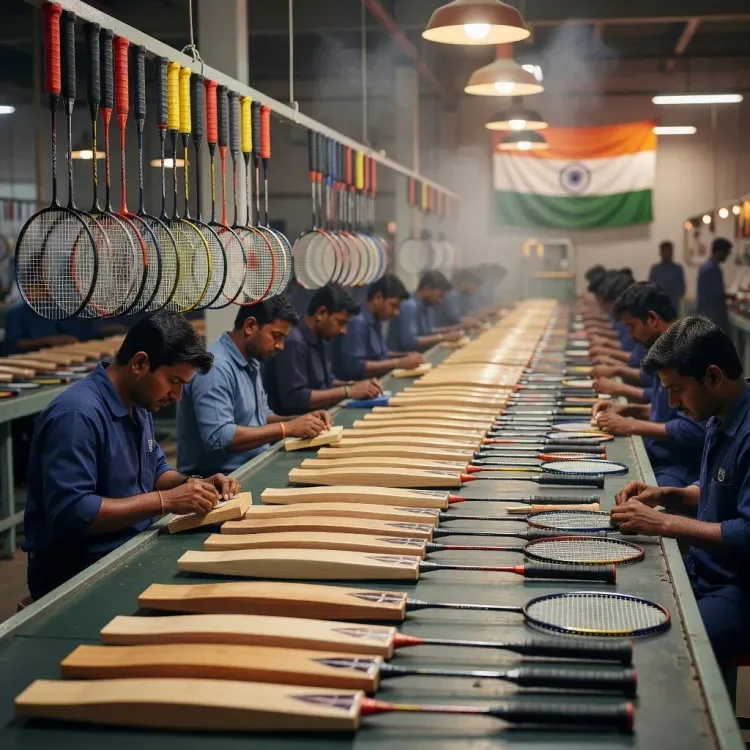
Synopsis
The Union Cabinet has approved the ₹1,856.67 crore Khelo India Sports Goods Manufacturing Scheme, linking India's sports development ambitions with domestic manufacturing self-reliance and job creation under the Atmanirbhar Bharat framework.
Key Takeaways
The Union Cabinet approved the Khelo India Sports Goods Manufacturing Scheme on 28 October 2026 .
The scheme carries an outlay of ₹1,856.67 crore , announced as a fulfilment of a Budget 2026-27 commitment.
The scheme targets increased investment, employment generation, and export competitiveness in India's sports goods sector.
It extends the logic of the Atmanirbhar Bharat Abhiyan (launched May 2020) and the Khelo India programme (launched 2017) into sports goods manufacturing.
MSME units and sports goods manufacturing clusters are among the primary intended beneficiaries.
Implementation details — including cluster selection and investment commitments — are yet to be announced.
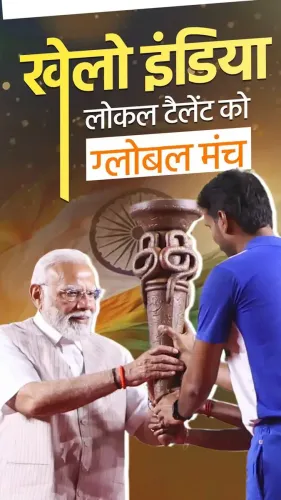
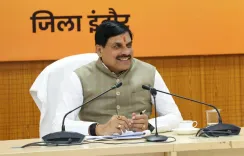
India's sports ambition just got a factory floor. On Wednesday, 28 October 2026, the Union Cabinet approved the 'Khelo India Sports Goods Manufacturing Scheme' with an outlay of ₹1,856.67 crore — a bet that the next time an Indian athlete wins on the world stage, the equipment they use might carry a 'Made in India' stamp as well. Union Minister for Labour, Employment, and Youth Affairs & Sports Mansukh Mandaviya announced the decision on X, framing it as a Budget 2026-27 commitment now moving from paper to ground.
Posting in Hindi, the minister wrote: 'Khelega Bharat, Banega Bharat!' ('India will play, India will build!') — capturing in five words the dual logic of the scheme: athletic ambition fused with industrial self-reliance. He added that not only India's athletes, but 'India-made sports goods will also raise the tricolour's honour across the world.'
What the ₹1,856.67 crore is meant to do
The scheme sits at the intersection of two long-running government priorities: the Khelo India programme, launched in 2017 to build India's grassroots sports ecosystem, and the Atmanirbhar Bharat Abhiyan, announced in May 2020, which has pushed domestic manufacturing across sector after sector. The new sports goods scheme extends that logic to an industry India has historically depended on imports for — a dependence the government now wants to break.
The stated goals are threefold: attract fresh investment into sports goods manufacturing, generate employment — particularly for MSME units and young workers — and build an export-competitive industry. The minister explicitly linked the approval to Prime Minister Narendra Modi's broader Atmanirbhar framework, thanking him personally in the post.
A pattern that runs deeper than one scheme
India's playbook here is familiar. Since 2020, Production Linked Incentive (PLI) schemes have been rolled out across more than a dozen manufacturing sectors — electronics, pharmaceuticals, textiles, food processing — to draw investment and claw back ground lost to imports. Sports goods manufacturing is now entering that same orbit.
The broader pattern reflects a conviction inside the government that sports and industry are not separate lanes. Successive budgets have sought to integrate sports equipment manufacturing into the formal economy, building domestic capacity so that India competes not only on the field but along the supply chain. The Jalandhar and Meerut clusters — India's traditional sports goods hubs — are the most natural beneficiaries to watch as the scheme's rollout details emerge.
What comes next for manufacturers and athletes
The Cabinet approval is the starting gun, not the finish line. Implementation will hinge on the selection of manufacturing clusters, the pace of investment commitments, and how effectively the scheme pulls in private capital. Export performance data — how much Indian-made sports equipment reaches international markets — will be the real scoreboard over the coming years.
For young athletes, the downstream promise is domestic-grade equipment becoming cheaper and more accessible as local supply scales up. For manufacturers, particularly small and medium units, the scheme offers a potential demand-and-incentive ladder they have not had before.
India has spent decades building athletes capable of standing on the world stage. Now it wants to make sure the stage equipment is built here too.
Point of View
Meaning its real test is whether it attracts credible private investment or remains a subsidy vehicle for existing MSME units. If the export numbers move, it validates the entire sports-meets-manufacturing doctrine; if they do not, the scheme risks becoming a footnote to a bigger Atmanirbhar narrative.
NationPress
28 Oct 2026
Frequently Asked Questions
What is the Khelo India Sports Goods Manufacturing Scheme?
It is a central government scheme approved by the Union Cabinet on 28 October 2026 with an outlay of ₹1,856.67 crore, designed to boost domestic manufacturing of sports goods, attract investment, create employment, and build India's export capacity in the sector.
How much money has the government allocated to the Khelo India Sports Goods Manufacturing Scheme?
The Union Cabinet has approved ₹1,856.67 crore for the scheme, as announced by Union Minister Mansukh Mandaviya on 28 October 2026.
What is the connection between Khelo India and Atmanirbhar Bharat?
The Khelo India programme, launched in 2017, focuses on sports development and athlete support, while Atmanirbhar Bharat, announced in 2020, promotes domestic manufacturing. The new scheme combines both goals — developing sports infrastructure while reducing India's dependence on imported sports equipment.
Who will benefit from the Khelo India Sports Goods Manufacturing Scheme?
The primary beneficiaries include sports goods manufacturers, MSME units, and young workers seeking employment in the sector, as well as Indian athletes who may gain access to domestically produced equipment.
What happens after the Cabinet approves the Khelo India Sports Goods Manufacturing Scheme?
The next steps involve announcing implementation details such as manufacturing cluster selection, investment commitments from private players, and the phased rollout of incentives. Export performance of Indian sports goods will serve as a key long-term metric.