Cabinet clears ₹36,441 cr Khelo India reboot for 2026–31
Synopsis
The Union Cabinet has approved the restructured Khelo India Scheme with a ₹36,441 crore outlay spanning FY 2026–27 to FY 2030–31, alongside a strengthened framework for National Sports Federations — the most ambitious multi-year sports funding commitment India has made.
Key Takeaways
The Union Cabinet approved the restructured Khelo India Scheme on 31 July 2026 .
The approved outlay is ₹36,441 crore covering FY 2026–27 to FY 2030–31 — a full five-year cycle.
A strengthened support framework for National Sports Federations (ANSF) was approved simultaneously.
The Khelo India programme was originally launched in 2017 to promote grassroots sports and talent identification.
The five-year funding window aligns with one complete Olympic cycle , supporting long-term athlete development.
A ₹36,441 crore bet on India's sporting future just cleared the highest table in government. The Union Cabinet, on Friday, 31 July 2026, approved the restructured Khelo India Scheme for the five-year cycle from FY 2026–27 to FY 2030–31 — the single largest multi-year outlay the programme has seen since its launch. Alongside it, a strengthened support framework for National Sports Federations (ANSF) also got the green light.
Union Petroleum Minister Hardeep Singh Puri welcomed the Cabinet decision on X, framing it in Hindi as more than a financial allocation: 'यह निर्णय केवल खेलों में निवेश नहीं, बल्कि भारत के युवाओं की प्रतिभा, सपनों और वैश्विक मंच पर तिरंगा लहराने के संकल्प में निवेश है' — 'This decision is not merely an investment in sports, but an investment in the talent, dreams, and resolve of India's youth to hoist the tricolour on the global stage.'
Khelo India at nine: from grassroots launch to ₹36,441 crore reboot
The Khelo India programme was born in 2017 with a clear mandate: rebuild a sports culture from the ground up — talent identification in schools, infrastructure in districts, stipends for athletes who would otherwise quit. Nine years on, the Cabinet has not just renewed it but dramatically scaled it. The five-year outlay approved this week dwarfs earlier tranches and signals a shift from pilot-scale intervention to a sustained, institutionalised sports economy.
The simultaneous approval of a strengthened framework for National Sports Federations is the structural complement to the grassroots spend. Federations govern individual disciplines — athletics, wrestling, boxing, shooting — and their administrative and technical capacity directly determines how raw talent converts into international medals. Linking federation support to this cycle ties the two ends of the pipeline together.
The medal-tally logic behind multi-year funding
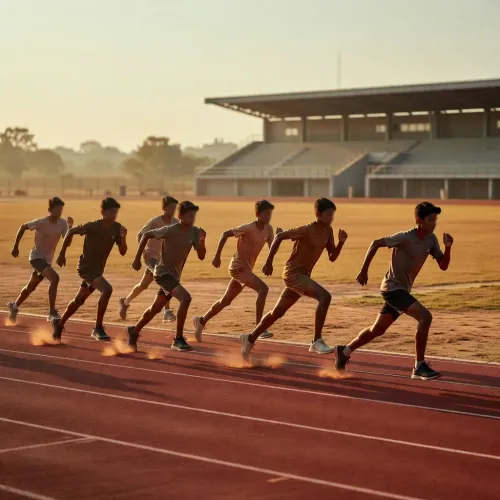
India's trajectory at the Olympics, Asian Games, and Commonwealth Games over the past decade has tracked, with a lag, the rise in sports spending. Multi-year funding commitments matter for a specific reason: elite athlete development cycles run four to eight years. A sprinter identified at sixteen needs uninterrupted coaching, competition exposure, and financial security through her early twenties to peak at a major Games. Annual budget uncertainty breaks that chain. A locked-in five-year envelope — FY 2026–27 through FY 2030–31 — covers exactly one full Olympic cycle and the run-up to the next.
The performance-linked support for federations adds accountability to the scale. States and federations will watch closely for the operational guidelines that translate this approval into actual fund flows — that is where the promise either holds or frays.
Point of View
441 crore Khelo India outlay is the clearest signal yet that the government views sports infrastructure as a strategic asset, not a welfare line item. Locking in five years of funding — aligned to the Olympic cycle — addresses the single biggest structural flaw in India's elite sports pipeline: the uncertainty that breaks athlete development mid-course. Pairing it with a strengthened federation framework introduces accountability alongside scale, which previous iterations lacked. The real test will be in the operational guidelines and the speed of fund disbursement to states — where past schemes have routinely stalled.
NationPress
15 Sept 2026
Frequently Asked Questions
What is the Khelo India Scheme?
The Khelo India Scheme is a central government programme launched in 2017 to revive grassroots sports culture in India through talent identification, infrastructure development, and financial support for young athletes.
How much money has been approved for Khelo India 2026–31?
The Union Cabinet approved an outlay of ₹36,441 crore for the restructured Khelo India Scheme covering FY 2026–27 to FY 2030–31.
What are National Sports Federations and why does the Cabinet decision matter for them?
National Sports Federations (ANSF) are recognised bodies that govern individual sports disciplines in India. The Cabinet simultaneously approved a strengthened support framework for these federations, linking institutional capacity to the broader Khelo India funding cycle.
Why does a five-year sports funding cycle matter for India's Olympic performance?
Elite athlete development takes four to eight years. A five-year locked-in funding envelope removes budget uncertainty, allowing coaches and athletes to plan long-term — directly improving India's chances at the Olympics and Asian Games.
Who approved the Khelo India Scheme renewal?
The Union Cabinet — the highest decision-making body of the Indian government — approved the restructured Khelo India Scheme on 31 July 2026.