Rajnath Singh hails ₹36,441 cr Khelo India revamp approved by Cabinet
Synopsis
The Union Cabinet has approved a revamped Khelo India Scheme with a record ₹36,441 crore outlay for 2026–31, building a full athlete pipeline from grassroots to elite level, with enhanced support for women athletes, para-athletes, and indigenous sports. Defence Minister Rajnath Singh hailed the move as a cornerstone of Viksit Bharat.
Key Takeaways
The Union Cabinet approved the revamped Khelo India Scheme on July 31, 2026 , with a historic outlay of ₹36,441 crore for 2026–27 to 2030–31 .
The scheme covers the full athlete journey — from grassroots and school-level discovery to world-class training and international competition.
National Sports Federations will receive enhanced government assistance under the revised framework.
Dedicated support for women athletes, para-athletes , and indigenous sports is explicitly built into the expanded scheme.
The Khelo India programme was originally launched in 2017 to create a structured, year-round sports ecosystem across India.
Defence Minister Rajnath Singh linked the decision to the Viksit Bharat vision of a developed India by 2047.
India's sports ambitions just got a five-year, ₹36,441 crore engine. The Union Cabinet, chaired by Prime Minister Narendra Modi, on Friday, July 31, 2026, approved a sweeping revamp of the Khelo India Scheme alongside enhanced funding for National Sports Federations — the single largest outlay for sports development in the country's history, covering the period 2026–27 to 2030–31. Union Defence Minister Rajnath Singh welcomed the decision, crediting the Prime Minister's sustained commitment to building a 'vibrant sports culture' in India.
What the revamped Khelo India Scheme covers
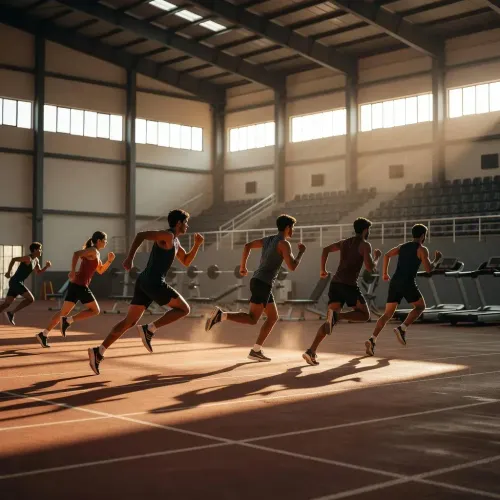
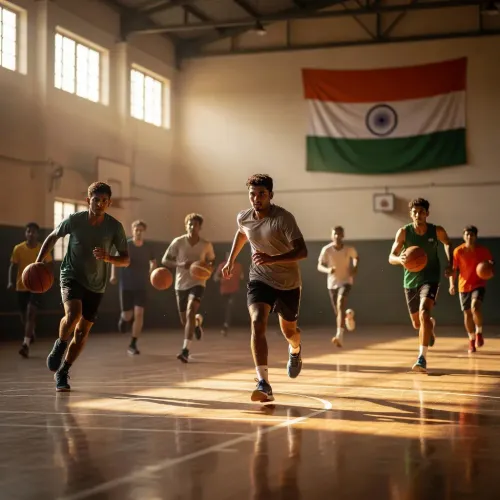
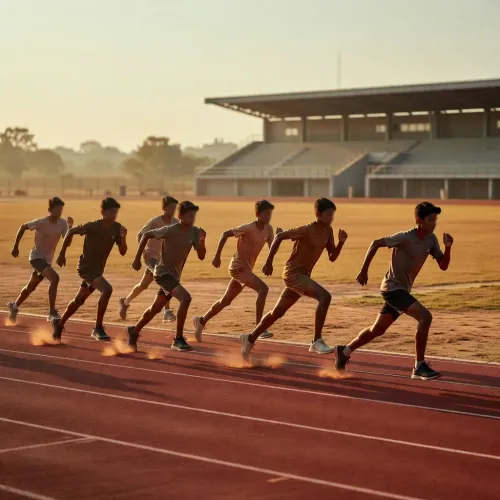
The expanded scheme is designed as an end-to-end sports pipeline — from a child kicking a ball in a village school to an athlete standing on an international podium. The Cabinet approval covers strengthened sports infrastructure, scientific coaching systems, dedicated support for women athletes and para-athletes, promotion of indigenous sports, and fitness initiatives aimed at ensuring, as Singh put it, that 'no talent remains undiscovered due to lack of opportunity.'
National Sports Federations, the backbone of discipline-specific athlete development, will receive enhanced assistance under the revised framework — a recognition that elite performance requires institutional muscle, not just individual grit.
Khelo India's journey from 2017 to this moment
The Khelo India programme was first launched in 2017 as a deliberate pivot away from sporadic, event-driven sports spending toward a structured, year-round ecosystem. Over nearly a decade, it seeded competitions at school and university levels and identified talent in districts that had rarely produced nationally competitive athletes. The 2026 revamp is the programme's most ambitious iteration yet — scaling the infrastructure, the science, and the financial commitment simultaneously.
The broader policy pattern is consistent: successive central budgets have incrementally raised sports outlays, but a single five-year block of this size signals a qualitative shift in intent. The explicit inclusion of para-athletes and indigenous sports also reflects a deliberate push toward a more inclusive definition of sporting excellence.
Singh's message and the Viksit Bharat frame
Singh positioned the Cabinet decision within the government's Viksit Bharat vision — the long-term roadmap for a developed India by 2047 — arguing that investing in young athletes, coaches, technology, and high-performance systems is as much about nation-building as it is about medals. 'This decision reflects the Government's commitment to youth empowerment, nation-building and the vision of Viksit Bharat,' he wrote.
The next pressure point is execution: detailed guidelines and state-level rollout from 2026–27 onwards will determine whether the historic outlay translates into a historic medal haul at the 2028 Los Angeles Olympics, the 2032 Brisbane Olympics, and the global competitions in between.
A generation of young Indians is now on the clock — and so is the government that just bet ₹36,441 crore on them.
Point of View
441 crore Khelo India revamp is the most concrete signal yet that the Modi government views sports infrastructure as a pillar of human capital development, not a peripheral budget line. By bundling grassroots discovery, elite coaching, para-athlete support, and indigenous sports into a single five-year block, the policy moves decisively away from event-driven spending toward a systemic approach. Rajnath Singh's framing of the decision within the Viksit Bharat arc also serves a political purpose — anchoring sports investment to the 2047 national vision, making future governments politically accountable to the outlay's outcomes. The real test arrives at the 2028 Los Angeles Olympics, where India's medal count will become the most visible report card on whether the money moved the needle.
NationPress
15 Sept 2026
Frequently Asked Questions
What is the Khelo India Scheme revamp 2026?
The revamped Khelo India Scheme, approved by the Union Cabinet on July 31, 2026, is a five-year sports development programme with a ₹36,441 crore outlay covering 2026–27 to 2030–31, designed to build a complete athlete pipeline from grassroots to elite international competition.
How much money has been allocated for Khelo India 2026–31?
The Union Cabinet has approved a historic outlay of ₹36,441 crore for the revamped Khelo India Scheme and enhanced assistance to National Sports Federations for the five-year period 2026–27 to 2030–31.
What does the revamped Khelo India Scheme include?
The scheme covers sports infrastructure development, scientific coaching, dedicated support for women athletes and para-athletes, promotion of indigenous sports, enhanced fitness initiatives, and increased funding for National Sports Federations.
When was Khelo India first launched?
The Khelo India programme was first launched in 2017 to create a structured, year-round sports ecosystem in India, building pathways for athletes from school and district level to national and international competitions.
What is Viksit Bharat and how does it relate to sports?
Viksit Bharat is the Indian government's long-term vision for a fully developed India by 2047. The government has framed sports investment, including the Khelo India revamp, as part of this vision — treating youth empowerment and athletic excellence as pillars of national development.