Cabinet clears revised Khelo India with ₹36,441 cr outlay

Synopsis
The Union Cabinet approved a revised Khelo India scheme on 31 July 2026, committing ₹36,441 crore over 2026-31 to create an Emerging Athletes category that expands the programme tenfold, establish a National Coach Accreditation Board, and strengthen support for National Sports Federations.
Key Takeaways
The Union Cabinet approved the revised Khelo India scheme on 31 July 2026 with a total outlay of ₹36,441 crore for 2026-27 to 2030-31 .
A new Emerging Khelo India Athletes (E-KIA) category will expand the athlete development programme by approximately ten times .
A National Coach Accreditation Board (NCAB) will be established to standardise coaching quality across sports disciplines.
The scheme includes strengthened financial support for National Sports Federations (NSFs) to improve training, international exposure, and competition infrastructure.
The revision is framed as a step toward making India a global sporting powerhouse and advancing the Viksit Bharat 2047 vision.
Khelo India was originally launched in 2017 ; this revision marks its most significant financial expansion to date.
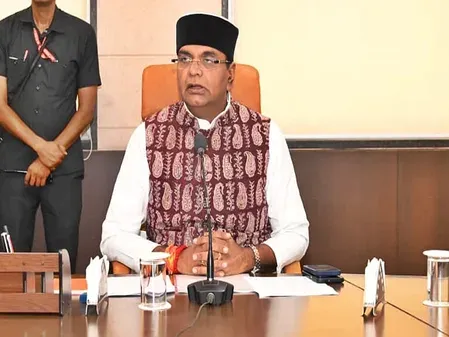
India's sports pipeline just got its biggest structural overhaul in years. Union Agriculture Minister Shivraj Singh Chouhan announced on Friday, 31 July 2026 that the Union Cabinet, under Prime Minister Narendra Modi, has approved a revised Khelo India scheme along with a strengthened support framework for National Sports Federations (NSFs) — backed by a total outlay of ₹36,441 crore for the period 2026-27 to 2030-31.
A tenfold leap for emerging athletes
The headline reform inside the revised scheme is the creation of a new 'Emerging Khelo India Athletes' (E-KIA) category. According to Chouhan's post, this single addition will expand the athlete development programme by approximately ten times — meaning thousands more young players will enter a structured, state-backed pathway to elite competition. That is not incremental; it is a generational scale-up.
Alongside the E-KIA category, the Cabinet has cleared the formation of a National Coach Accreditation Board (NCAB) — a body designed to standardise and certify coaching quality across disciplines. Better coaches, better athletes. The logic is direct.
Khelo India's journey from 2017 to a ₹36,441 crore mandate
Launched in 2017 as a central sector scheme, Khelo India was conceived to revive grassroots sports culture, identify raw talent early, and build the infrastructure to nurture it. In the years since, it has funded sports academies, annual multi-sport games at the school and university level, and direct annual scholarships for identified athletes. The current revision is the most financially significant expansion the programme has seen since inception.
The strengthened support for National Sports Federations is the other pillar. NSFs govern individual disciplines — from athletics to wrestling to badminton — and their capacity to fund international exposure, hire quality coaching staff, and run selection trials directly determines how many Indian athletes are competitive on the world stage. Plugging gaps in federation funding has been a long-standing demand from the sports community.
The 2047 scoreboard India is building toward
India's ambition to become a global sporting powerhouse — explicitly tied to the Viksit Bharat (Developed India) vision for 2047 — needs compounding investment, not one-off boosts. Successive governments have layered schemes like the Target Olympic Podium Scheme (TOPS) and Khelo India precisely because elite medal production takes a decade of pipeline work. A child identified under E-KIA in 2027 could be competing for India at the 2036 Olympics, for which India has also expressed hosting interest.
The NCAB and the five-year, five-phase funding horizon signal that this revision is designed for continuity — not a single election cycle. The real test will be in the rollout: how quickly the E-KIA roster is populated, how rigorously the NCAB certifies coaches, and whether fund utilisation figures reported to Parliament reflect athletes advancing through the pipeline rather than money stalling in bureaucratic queues.
India has been climbing the medal table at Commonwealth and Asian Games. The ₹36,441 crore bet is that the next leap happens at the Olympics — and it starts now.
Point of View
441 crore revision to Khelo India is the BJP government's clearest signal yet that sports is now a long-term state-building project, not a ceremonial portfolio. The E-KIA category's tenfold expansion of athlete intake directly addresses the perennial criticism that India's talent identification net is too narrow to produce consistent Olympic depth. The NCAB is a structural fix to a structural problem — India has long had athletes without certified coaches — and its success will hinge on whether it develops real teeth or becomes another credentialling body on paper. Taken together, the five-year, five-phase funding horizon suggests the government is trying to institutionalise sports investment beyond electoral cycles, though Parliament's scrutiny of annual utilisation reports will be the true accountability mechanism.
NationPress
15 Sept 2026
Frequently Asked Questions
What is the revised Khelo India scheme approved by the Cabinet in 2026?
The Union Cabinet approved a revised Khelo India scheme on 31 July 2026 with a total outlay of ₹36,441 crore covering 2026-27 to 2030-31. The revision introduces an Emerging Khelo India Athletes (E-KIA) category, a National Coach Accreditation Board, and strengthened support for National Sports Federations.
What is the E-KIA category under Khelo India?
The 'Emerging Khelo India Athletes' (E-KIA) is a new sub-category created under the revised Khelo India scheme to bring a much larger pool of young athletes into the structured development programme — expanding it by approximately ten times compared to the existing scale.
What is the National Coach Accreditation Board (NCAB)?
The National Coach Accreditation Board (NCAB) is a new body approved as part of the revised Khelo India scheme to standardise and certify the quality of coaches across sports disciplines in India, ensuring athletes have access to better-trained coaching staff.
How much money has the government allocated for Khelo India from 2026 to 2031?
The government has approved a total outlay of ₹36,441 crore for the revised Khelo India scheme and the strengthened support framework for National Sports Federations, covering the five-year period from 2026-27 to 2030-31.
When was Khelo India originally launched?
Khelo India was originally launched in 2017 as a central sector scheme to promote grassroots sports, identify young talent, and build sports infrastructure across India. The 2026 cabinet approval represents its largest financial expansion since inception.