CM Bhajan Lal Backs Revamped Khelo India Scheme

Synopsis
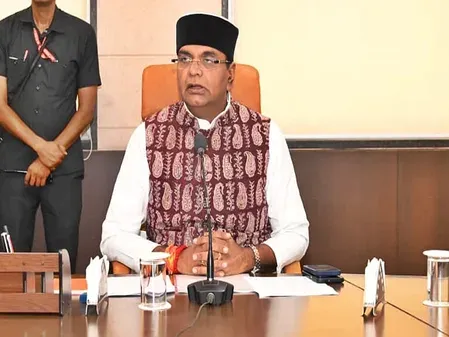
The Union Cabinet approved the Revamped Khelo India Scheme with a ₹36,441 crore outlay for 2026-31, introducing the E-KIAs athlete category and a National Coach Accreditation Board. Rajasthan CM Bhajan Lal Sharma praised the decision as a milestone for youth empowerment and sports culture.
Key Takeaways
The Union Cabinet approved the Revamped Khelo India Scheme on July 31, 2026 .
The scheme carries a budget of ₹36,441 crore covering 2026-27 to 2030-31 .
A new Emerging Khelo India Athletes (E-KIAs) category will target skill development for up-and-coming athletes.
The National Coach Accreditation Board (NCAB) will be established to standardise coaching quality across India.
National sports federations will receive enhanced financial and technical support under the revamped scheme.
Rajasthan CM Bhajan Lal Sharma welcomed the decision as beneficial for talented athletes in Rajasthan and across the country.
A ₹36,441 crore bet on India's sporting future cleared the Union Cabinet on Friday, July 31, 2026 — and Rajasthan Chief Minister Bhajan Lal Sharma wasted no time welcoming it as a landmark moment for young athletes across the country and the state.
Sharma hailed the Cabinet's approval of the Revamped Khelo India Scheme, calling it an 'atihinandaniya nirnay' (most commendable decision) under the leadership of Prime Minister Narendra Modi. The scheme covers the five-year period from 2026-27 to 2030-31 and introduces two significant structural additions: the Emerging Khelo India Athletes (E-KIAs) category for skill development, and the National Coach Accreditation Board (NCAB) to standardise and upgrade coaching quality nationwide.
From Grassroots Pitch to World Stage
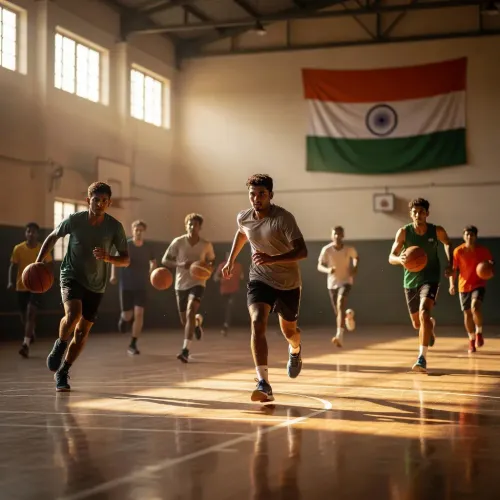
The original Khelo India programme, launched in 2017, set the template — identify talent early, fund infrastructure, and build a pipeline from district playgrounds to national podiums. The revamped version doubles down on that logic, adding dedicated support to national sports federations through both financial and technical channels. The E-KIAs category is designed to catch athletes in the development gap between raw talent and elite competition — a phase where promising careers have historically stalled for want of structured support.
For Rajasthan, a state that has produced athletes across wrestling, shooting, and athletics, the expanded central funding could translate into upgraded training facilities and more athletes accessing the Khelo India network of competitions and scholarships.
NCAB and the Coaching Quality Gap
The establishment of the National Coach Accreditation Board addresses a long-standing structural weakness in Indian sports: the uneven quality of coaching at the sub-elite level. By creating a formal accreditation framework, the scheme aims to professionalise the coaching ecosystem — ensuring that the athletes identified under E-KIAs and other categories are guided by certified, standardised expertise rather than informal mentorship alone.
Sharma specifically noted that these measures would help athletes from Rajasthan and across India access 'world-class facilities and international platforms' — a pointed signal that the state intends to position itself as an active participant in the scheme's rollout, not merely a passive beneficiary.
India's medal haul at the Olympics and Asian Games has grown steadily since Khelo India's first iteration — the next five years will test whether a budget nearly nine times the programme's original scale can translate ambition into hardware on the global stage.
Point of View
Scaling up a programme that has already reshaped India's grassroots talent pipeline since 2017. The addition of the E-KIAs category and NCAB signals a shift from mere infrastructure spending toward systemic human-capital development — coaching quality and mid-tier athlete support being the two areas where India's sports ecosystem has most visibly lagged. Bhajan Lal Sharma's public endorsement is also a political signal: BJP-governed states are expected to align closely with the scheme's rollout, and Rajasthan's chief minister is staking a claim for the state's share of the expanded pie. Whether the ₹36,441 crore translates into Olympic medals by the 2028 Los Angeles Games will be the sharpest test of this policy bet.
NationPress
15 Sept 2026
Frequently Asked Questions
What is the Revamped Khelo India Scheme?
The Revamped Khelo India Scheme is a central government sports development programme approved by the Union Cabinet on July 31, 2026, with a budget of ₹36,441 crore for the period 2026-27 to 2030-31. It builds on the original Khelo India programme launched in 2017 and adds new structures for athlete development and coach accreditation.
What is the budget of the Revamped Khelo India Scheme?
The revamped scheme has been allocated ₹36,441 crore for a five-year period spanning 2026-27 to 2030-31.
What is the E-KIA category under Khelo India?
'Emerging Khelo India Athletes' (E-KIAs) is a newly introduced category under the revamped scheme designed to support athletes in the skill-development phase — bridging the gap between raw grassroots talent and elite competition readiness.
What is the National Coach Accreditation Board (NCAB)?
The National Coach Accreditation Board is a new body to be established under the Revamped Khelo India Scheme to standardise and improve coaching quality across India, ensuring athletes receive certified, professional guidance.
How does the Revamped Khelo India Scheme benefit Rajasthan?
Rajasthan athletes stand to gain access to expanded central funding for training facilities, scholarships, and international competition exposure. Chief Minister Bhajan Lal Sharma has specifically highlighted that the scheme will help Rajasthan's talented athletes access world-class facilities and international platforms.