HP Govt Nets ₹400 Cr Cash in Hotel Joint Venture Deal
Synopsis
The Himachal Pradesh government has secured approximately ₹400 crore in cash and a minimum ₹50 crore private investment commitment through a hotel joint venture deal, the Chief Minister's Office announced on 30 October 2026.
Key Takeaways
The Himachal Pradesh government has received approximately ₹400 crore in cash from a hotel joint venture transaction.
A minimum investment commitment of ₹50 crore in fees and hotel property has been secured from the private partner.
The deal is structured as a joint venture company (JVC) that holds the hotel land, property, associated assets, and rights.
The Chief Minister's Office of Himachal Pradesh disclosed the financial details on 30 October 2026 .
The identity of the specific hotel property and private investor has not been officially disclosed.
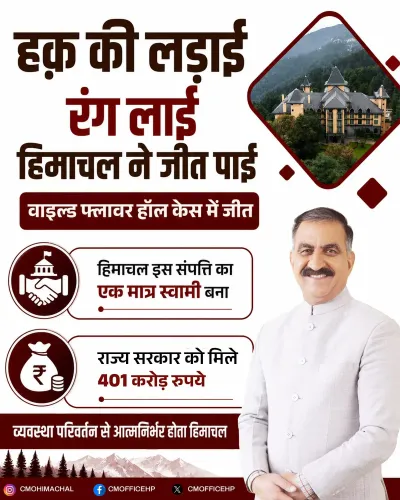
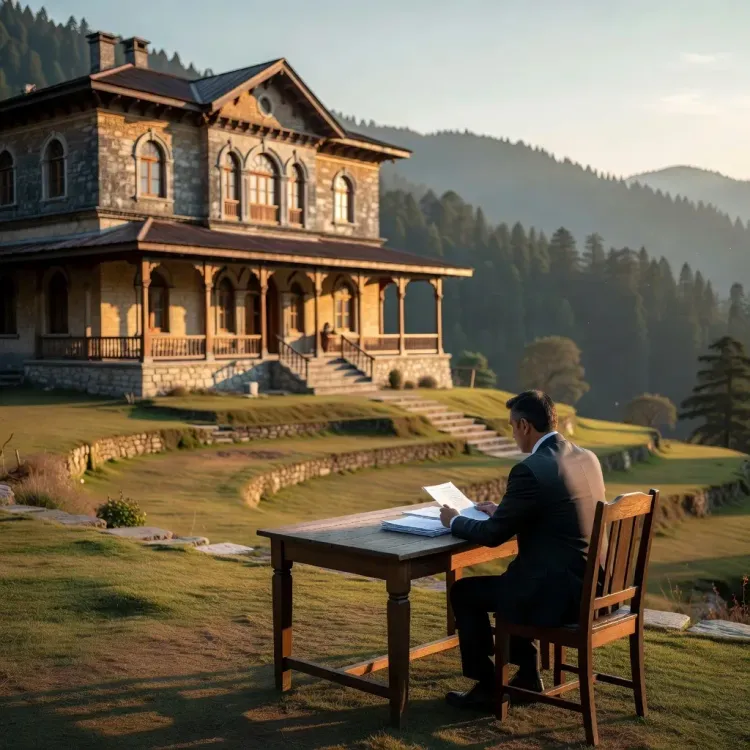
A hotel asset deal structured as a joint venture is putting nearly ₹400 crore in cash directly into the Himachal Pradesh state treasury — and locking in a minimum private investment commitment of ₹50 crore in fees and hotel property upgrades. The Chief Minister's Office of Himachal Pradesh disclosed the broad financial contours of the transaction on Friday, 30 October 2026, in a post on X.
The CMO's post, in Hindi, states that 'a commitment of minimum ₹50 crore in fees and hotel property investment has also been ensured' and that 'the state government has received approximately ₹400 crore in cash.' It further notes that the hotel's land and property, the joint venture company, and all associated assets and rights are central to the arrangement — though the post was cut off mid-sentence, leaving the full legal structure partially outlined.
Cash in Hand: What ₹400 Crore Means for HP's Finances
For a hill state that relies heavily on central transfers and has historically faced fiscal stress, a lump-sum infusion of close to ₹400 crore in non-tax revenue is significant. Himachal Pradesh has previously used public-private partnership models for its tourism assets — hotels, resorts, and heritage properties — to attract capital while retaining some ownership stake. This deal appears to follow that template: the state does not exit entirely but brings in a private partner through a joint venture company (JVC) structure.
The JVC framework is a common instrument in Indian state-level asset monetisation. Under such arrangements, land and existing infrastructure typically remain in the public domain or under a shared holding entity, while the private partner funds operations, upgrades, and expansion. The ₹50 crore minimum investment commitment is a floor guarantee — it ensures the private partner cannot simply sit on the asset without deploying capital.
The Broader Pattern of State Hotel Monetisation
Indian states have periodically turned to their hospitality portfolios when looking to raise non-tax revenue without full privatisation. The joint venture route threads a political needle: it generates upfront cash and attracts private management expertise while allowing the government to argue it has not 'sold' public property. Himachal Pradesh, with its considerable stock of government-owned tourism infrastructure — built over decades by entities like the Himachal Pradesh Tourism Development Corporation (HPTDC) — sits on assets that are often underleveraged.
The identity of the specific hotel property and the private partner involved in this transaction has not been disclosed in the CMO's post, and those details remain unverified. What is confirmed: cash has changed hands, a minimum investment threshold has been set, and the joint venture company holds the operative rights to the hotel land, property, and associated assets.
The next milestone to watch is the finalisation and public disclosure of the joint venture agreement — and whether the investment commitment translates into visible development on the ground.
Point of View
A fiscally constrained hill state, landing close to ₹400 crore in non-tax revenue through a hospitality asset deal is a meaningful near-term fix — but it also reflects a wider pattern of Indian states turning to asset monetisation when conventional revenue streams fall short. The joint venture structure, rather than outright privatisation, signals political caution: the government retains a stake and avoids the 'selling public property' charge. The real test of this deal will be whether the ₹50 crore investment floor translates into genuine hotel upgrades and sustained tourism revenue — or merely satisfies a contractual checkbox.
NationPress
30 Oct 2026
Frequently Asked Questions
How much cash did Himachal Pradesh receive from the hotel deal?
The Himachal Pradesh government received approximately ₹400 crore in cash as part of the hotel joint venture transaction, according to the Chief Minister's Office.
What is the minimum investment commitment in the HP hotel joint venture?
A minimum investment of ₹50 crore in fees and hotel property has been committed by the private partner as part of the joint venture arrangement.
What is a joint venture company in the context of a state hotel deal?
A joint venture company (JVC) is a shared entity formed between the state government and a private partner to co-own and operate a hotel asset, with both parties holding rights over the land, property, and associated assets.
Which hotel property is involved in the Himachal Pradesh joint venture deal?
The specific hotel property has not been officially identified in the CMO's announcement, and those details remain unverified.
Why do Indian state governments use joint ventures for hotel assets?
Joint ventures allow state governments to raise non-tax revenue and attract private capital for upgrades without fully transferring ownership of public property, which can be politically sensitive.