HP to Get 100 Cr Units Power Worth ₹600 Cr Annually from Project
Synopsis
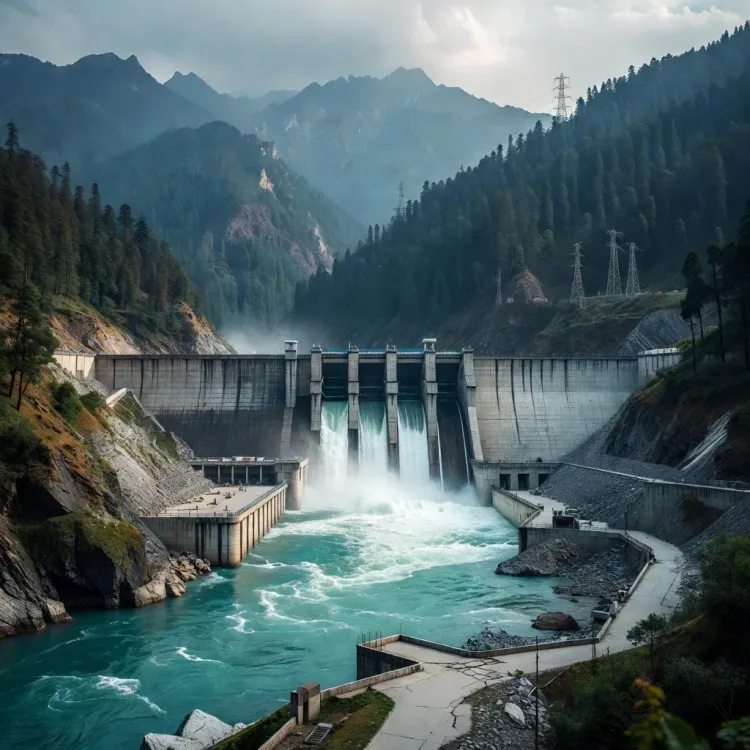
The Chief Minister's Office of Himachal Pradesh announced that on completion of a project under development, the state will receive 100 crore units of electricity annually, valued at approximately ₹600 crore per year — a significant boost to the state's energy revenue under its hydroelectric royalty framework.
Key Takeaways
The Chief Minister's Office of Himachal Pradesh announced the state will receive 100 crore units of electricity per year on project completion.
The estimated annual value of this power allocation is approximately ₹600 crore .
Himachal Pradesh receives free-power royalty shares — typically 12–18 per cent of generation — from hydro projects on its rivers under state policy.
The power share can be monetised or used by the state utility to reduce open-market power purchase costs.
Project commissioning milestones will determine when the state begins realising this annual benefit.
The Chief Minister's Office of Himachal Pradesh announced on Tuesday, 16 June 2026 that the state will receive an annual power allocation of 100 crore units of electricity worth approximately ₹600 crore once an infrastructure project under development reaches completion.
Context
The official CMO post states: 'परियोजना के पूर्ण होने पर हिमाचल प्रदेश को प्रतिवर्ष 100 करोड़ यूनिट बिजली की हिस्सेदारी मिलेगी, जिसका अनुमानित मूल्य लगभग 600 करोड़ रुपये प्रतिवर्ष होगा।' — translated: 'On completion of the project, Himachal Pradesh will receive a share of 100 crore units of electricity per year, with an estimated value of approximately ₹600 crore per year.'
The announcement underscores the state government's focus on securing long-term energy revenue from infrastructure development, a recurring priority for Himachal Pradesh given its geography and river resources.
Policy Backdrop
Himachal Pradesh has historically benefited from free-power royalty arrangements tied to hydroelectric projects developed on its rivers — including the Sutlej, Beas, and Ravi. Under the Himachal Pradesh Hydro Power Policy, the state is entitled to a royalty share — typically between 12 and 18 per cent of generation — from projects above a threshold installed capacity.
Such free-power allocations form a core pillar of India's federal framework for river-basin states, allowing Himalayan states to monetise their natural endowments without bearing full project development costs. The power received is either used directly by the state utility or sold to offset power purchase expenditure.
Stakeholders and Impact
The primary beneficiary is the Himachal Pradesh state power utility, which stands to receive a stable, recurring energy asset valued at roughly ₹600 crore annually upon project commissioning. This revenue stream could meaningfully reduce the state's dependence on expensive power procurement from the open market.
For project developers, the arrangement reflects standard royalty obligations embedded in power development agreements with the state government. Consumers in Himachal Pradesh could indirectly benefit if the additional supply helps stabilise tariffs or reduces fiscal pressure on the state exchequer.
What's Next
The realisation of the ₹600 crore annual benefit hinges entirely on project commissioning milestones. Observers will watch for official announcements on construction progress, scheduled completion timelines, and how the state plans to deploy or monetise the 100 crore units of electricity once they begin flowing.
As Himachal Pradesh continues to position its hydroelectric endowment as a fiscal asset, the free-power share from this project is expected to feature prominently in future state power budgets and annual energy planning exercises.
Point of View
The state utility, and voters — that the government is actively tracking and publicising the financial returns from infrastructure development. Framing a future power allocation in rupee terms (₹600 crore annually) rather than just technical units is a political communication choice that converts an engineering milestone into a fiscal dividend story. This fits a broader pattern among Himalayan state governments of positioning hydro royalties as a sovereign revenue stream to justify large infrastructure commitments. The key question that remains unanswered — the identity and completion timeline of the specific project — will determine whether this figure translates into near-term budgetary relief or remains a long-horizon promise.
NationPress
18 Sept 2026
Frequently Asked Questions
How much electricity will Himachal Pradesh get from the project annually?
According to the Chief Minister's Office of Himachal Pradesh, the state will receive 100 crore units of electricity per year once the project is completed, with an estimated value of approximately ₹600 crore annually .
What is Himachal Pradesh's free power royalty policy for hydro projects?
Under the Himachal Pradesh Hydro Power Policy , the state is entitled to a free-power royalty share — typically between 12 and 18 per cent of total generation — from hydroelectric projects above a threshold capacity developed on its rivers.
How does Himachal Pradesh use its free power share from hydro projects?
The free-power allocation received by Himachal Pradesh is either consumed directly by the state power utility or sold in the market, helping offset power purchase costs and supporting state revenues.
Which rivers in Himachal Pradesh support hydroelectric projects?
Himachal Pradesh has significant hydroelectric capacity developed on rivers including the Sutlej , Beas , and Ravi , which collectively make the state one of India's major hydropower-producing regions.
When will Himachal Pradesh start receiving the 100 crore units of electricity?
The CMO announcement does not specify a completion date for the project. The 100 crore units per year benefit will begin only after the project is commissioned, making future milestone announcements the key trigger to watch.