HP CM Office Flags Unfair Cost-Sharing in Hydro Project
Synopsis
The Chief Minister's Office of Himachal Pradesh has formally dissented from the cost-sharing arrangement in a multi-state water project, arguing it is unjust that the state must bear full power-generation costs while downstream states receive central government grants for water benefits.
Key Takeaways
The Chief Minister's Office of Himachal Pradesh publicly registered formal disagreement with a multi-state hydro project's cost-sharing arrangement on 16 June 2026 .
The state's objection centres on a perceived inequity: downstream states receiving water benefits are being given central government grants , while Himachal Pradesh must bear the full cost of power generation from the same water.
Himachal Pradesh is a major upstream hydroelectric host state whose rivers feed projects serving multiple states across northern India.
The National Hydroelectric Power Policy, 2008 governs central assistance norms but has long been criticised by hill states for leaving disproportionate costs with host states.
Similar cost-allocation disputes have been raised by other Himalayan states in national water-resource forums, indicating a systemic federal governance issue.
The Centre has not publicly responded; formal inter-governmental negotiations or a National Water Resources Council session is the expected next step.
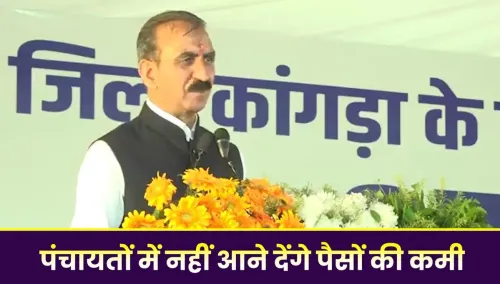
The Chief Minister's Office of Himachal Pradesh voiced formal disagreement on Tuesday, 16 June 2026, over the cost-sharing arrangement in a multi-state water and power project, asserting that the current framework places an undue financial burden on the host state while downstream beneficiary states receive central grants.
Context
The CMO's statement, posted on X, quoted the government's position directly: 'जिन राज्यों को इस परियोजना से पानी मिलेगा, उन्हें केंद्र सरकार अनुदान दे रही है, लेकिन जिस पानी से बिजली का उत्पादन होगा, उसका पूरा खर्च राज्य सरकारें वहन करें, यह उचित नहीं है।' In English: 'The states that will receive water from this project are being given grants by the central government, but it is not fair that the state governments alone should bear the entire cost of the water used for power generation.'
Himachal Pradesh has formally registered its dissent — 'हमने इस व्यवस्था पर असहमति जताई' ('we have expressed disagreement with this arrangement') — signalling that the dispute has moved beyond informal objection to an official position.
Policy Backdrop
India's framework for multipurpose river projects has historically drawn on the National Hydroelectric Power Policy, 2008, which set out central assistance norms for hydro schemes while leaving substantial construction and rehabilitation costs with host states. Critics from hill states have long argued this creates a structural imbalance: downstream plains states gain subsidised irrigation and drinking water, while upstream states absorb the costs of submergence, displacement, and power-house infrastructure.
Himachal Pradesh, endowed with some of the country's most significant hydroelectric potential, has repeatedly found itself at the centre of such federal cost disputes. The state's rivers feed projects that serve multiple beneficiaries across northern India, yet the revenue and grant flows do not always reflect that contribution proportionally.
Stakeholders and Impact
The immediate stakeholders are the upstream host state — Himachal Pradesh — and the downstream states that stand to receive water supply benefits, which, according to the CMO, are already receiving central grants for their share of the project. The hydroelectric sector is also directly affected: if power-generation costs remain entirely with the state, it could dampen the financial viability of future hydro investments and slow capacity addition.
Broader federal dynamics are at play as well. Similar positions have been articulated by other Himalayan and hill states in national water-resource forums, suggesting that Himachal Pradesh's objection is part of a wider pattern of upstream-state grievances rather than an isolated dispute. A resolution — or the absence of one — could set a precedent for how India structures cost-sharing in upcoming multipurpose schemes.
What's Next
The Government of India has not publicly responded to the dissent as of the time of this report. The next likely flashpoint will be formal inter-governmental negotiations or a meeting of the National Water Resources Council, where revised funding norms for ongoing hydro and irrigation schemes could be taken up. Himachal Pradesh's decision to go public with its disagreement adds political weight to what has so far been a bureaucratic and technical discussion, and increases pressure on the Centre to revisit the grant-versus-cost allocation formula before the project advances further.
Point of View
Converting a technical cost-allocation disagreement into a visible federal grievance. By framing the arrangement as structurally unjust — grants for water recipients, full costs for the power host — the CMO is appealing to a well-established hill-state narrative of upstream sacrifice for downstream gain. This positions Himachal Pradesh alongside other Himalayan states that have long sought a rebalancing of India's river-basin governance framework. If the Centre does not engage substantively, the dispute could harden into a broader coalition demand for reforming hydro project financing norms nationwide.
NationPress
16 Sept 2026
Frequently Asked Questions
Why is Himachal Pradesh objecting to the hydro project cost-sharing arrangement?
Himachal Pradesh objects because the central government is providing grants to states that will receive water from the project, but the state hosting the power-generation infrastructure must bear the entire cost of producing that electricity — an arrangement the CMO has called unfair.
What is the role of the central government in multipurpose hydro projects in India?
The central government provides grants, clearances, and policy frameworks under instruments such as the National Hydroelectric Power Policy, 2008, but cost-sharing for construction and power generation has often been left substantially with host states, creating recurring disputes.
Which project is Himachal Pradesh objecting to?
The specific project has not been named in the official statement; the CMO's post outlines the principle of disagreement without identifying the scheme by name.
Has Himachal Pradesh raised such objections before?
Yes. As a major upstream hydroelectric state, Himachal Pradesh has historically flagged cost-burden concerns in multipurpose river projects. Other hill states have raised similar issues in forums such as the National Water Resources Council.
What could happen next in this dispute?
The most likely next steps are formal inter-governmental talks or a National Water Resources Council session where revised funding norms could be discussed. The public nature of the dissent increases pressure on the Centre to respond.