HP CM Office: MoU with Partner States, Centre Coming Soon

Synopsis
The Chief Minister's Office of Himachal Pradesh announced on 14 July 2026 that an MoU between partner states and the Government of India for an infrastructure project is imminent, with the state committed to implementation while protecting local residents' rights.
Key Takeaways
The Chief Minister's Office of Himachal Pradesh announced on 14 July 2026 that an MoU is expected to be signed shortly between partner states and the Government of India .
The state government declared full commitment to the project's implementation.
The announcement explicitly includes a safeguard clause for the rights and interests of the people of Himachal Pradesh .
The specific project name and partner states were not disclosed in the post.
Himachal Pradesh has a long history of participating in multi-state infrastructure MoUs, particularly for Himalayan river-basin projects.
Formal MoU signing will likely be followed by release of environmental and rehabilitation plans.
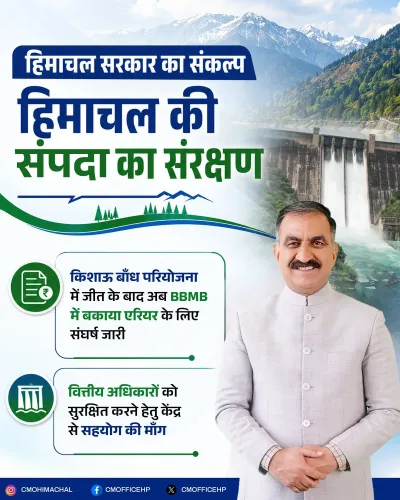
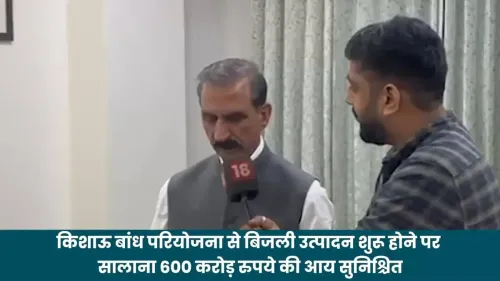
The Chief Minister's Office of Himachal Pradesh announced on Tuesday, 14 July 2026 that a Memorandum of Understanding between partner states and the Government of India is expected to be signed shortly for an infrastructure project, reaffirming the state government's full commitment to its implementation while safeguarding the rights and interests of the people of Himachal Pradesh.
Context
The official post, shared by the Chief Minister's Office, stated in Hindi: 'साझेदार राज्यों और भारत सरकार के मध्य शीघ्र ही समझौता ज्ञापन (एमओयू) पर हस्ताक्षर होने की संभावना है' — meaning, 'A Memorandum of Understanding between partner states and the Government of India is likely to be signed soon.' The statement added that the state government is 'fully committed to the implementation of this project while ensuring the protection of the rights and interests of the people of the state.'
While the post does not name the specific project or the partner states involved, it signals an active phase of inter-governmental coordination. The language used — emphasising both commitment to the project and protection of local rights — reflects the dual mandate that state governments in Himachal Pradesh typically navigate in large infrastructure undertakings.
Policy Backdrop
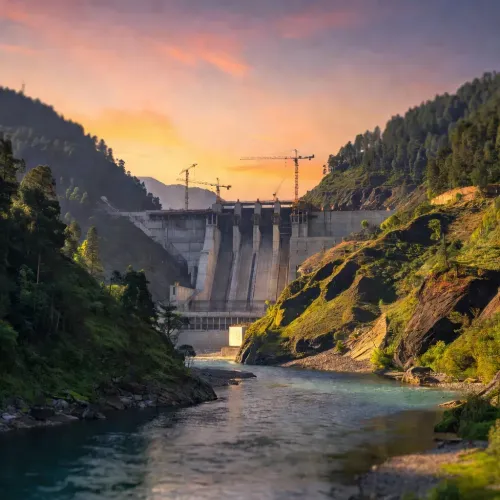
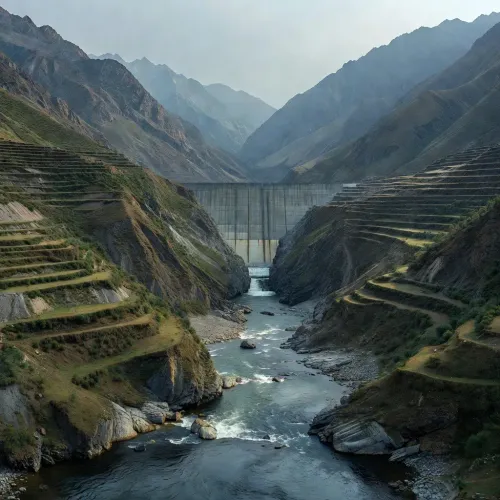
Indian states routinely enter into MoUs with the Centre and neighbouring states to advance multi-state infrastructure initiatives, particularly those involving Himalayan river basins — covering hydropower generation, water-sharing arrangements, and dam construction. These agreements operate under the framework of cooperative federalism, seeking to align state-level interests with national development priorities.
Himachal Pradesh has historically been a significant participant in such arrangements, given its geography and the density of river systems flowing through the state. Projects of this nature typically require environmental clearances, rehabilitation plans for project-affected communities, and inter-ministerial approvals before formal MoU signing. The imminent signing indicated in this post suggests those preliminary processes are in an advanced stage.
Stakeholders and Impact
The communities most directly affected by such infrastructure projects in Himachal Pradesh are local residents living in project-adjacent areas, including those who may face displacement or changes to land and water access. The CM Office's explicit mention of 'rights and interests of the people' signals that these concerns are part of the ongoing negotiation framework with the Centre.
Broader stakeholders include the Government of India as the coordinating authority, partner state governments whose cooperation is required for the project's execution, and environmental bodies that oversee Himalayan ecosystem impacts. The MoU, once signed, is expected to formalise responsibilities, timelines, and safeguard mechanisms across these parties.
What's Next
The formal signing of the MoU between Himachal Pradesh, the partner states, and the Government of India is the immediate milestone to watch. Following the signing, project-specific details — including environmental impact assessments, rehabilitation and resettlement plans, and financial allocations — are expected to be placed in the public domain.
The state government's framing of this development as a commitment balanced with rights protection suggests that stakeholder consultations and community engagement processes will be central to the implementation roadmap. How the state navigates that balance will define the political and administrative trajectory of the project in the months ahead.
Point of View
A recurring flashpoint in Himalayan development projects. The dual emphasis on 'full commitment' and 'protection of people's interests' is a standard but strategically important formulation that gives the state government political cover on both the development and the rights-protection fronts. This pattern of announcements ahead of formal MoU signings is consistent with how state governments in India manage public expectations during the final stages of inter-governmental negotiations. The absence of project specifics leaves the announcement open-ended, suggesting the final contours of the agreement may still be under negotiation.
NationPress
13 Oct 2026
Frequently Asked Questions
What MoU is Himachal Pradesh planning to sign with the Government of India?
The Chief Minister's Office of Himachal Pradesh announced on 14 July 2026 that an MoU between partner states and the Government of India for an infrastructure project is expected to be signed soon, though the specific project name and partner states were not disclosed in the official post.
What does an MoU between states and the Centre mean for a project?
A Memorandum of Understanding (MoU) between partner states and the Government of India formalises the roles, responsibilities, timelines, and financial arrangements for a shared infrastructure project, providing a legal and administrative framework for its implementation under cooperative federalism.
How does Himachal Pradesh protect local rights in infrastructure projects?
The state government has stated it is committed to ensuring the protection of the rights and interests of the people of Himachal Pradesh as part of the project implementation process, which typically involves community consultations, rehabilitation plans, and environmental safeguards.
What kinds of infrastructure projects involve multi-state MoUs in Himachal Pradesh?
Himachal Pradesh commonly participates in multi-state MoUs for Himalayan river-basin infrastructure such as hydropower plants, dams, and water-sharing arrangements, given the state's geography and the cross-boundary nature of its river systems.
When will the Himachal Pradesh infrastructure MoU be signed?
The Chief Minister's Office described the signing as imminent as of 14 July 2026, but no specific date was announced. The formal signing is the next major milestone, after which project-specific details are expected to be made public.