CM Office HP: Kishau Dam talks held under Amit Shah
Synopsis
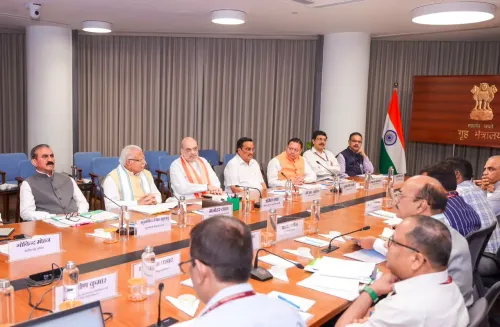
The Himachal Pradesh CMO announced on 16 June 2026 that Union Home Minister Amit Shah chaired a meeting to discuss the Kishau Dam Project on the Tons River, which has been pending since its 2018 national-importance designation. The multipurpose hydropower and irrigation project involves both Himachal Pradesh and Uttarakhand.
Key Takeaways
The Kishau Dam Project on the Tons River has been pending since 2018 , when it was designated a project of national importance.
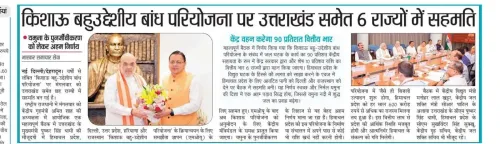
Union Home Minister Amit Shah chaired a meeting on 16 June 2026 where various issues linked to the project were discussed in detail.
The project spans both Himachal Pradesh and Uttarakhand , making inter-state coordination a central challenge.
Key sticking points for such Himalayan projects typically include funding, environmental clearances, and rehabilitation of affected communities.
The Home Minister's direct chairmanship signals the Centre is treating the long-pending project as a priority infrastructure matter.
Follow-up decisions on cost-sharing, land acquisition, or a high-level empowered committee are the key outcomes to watch.
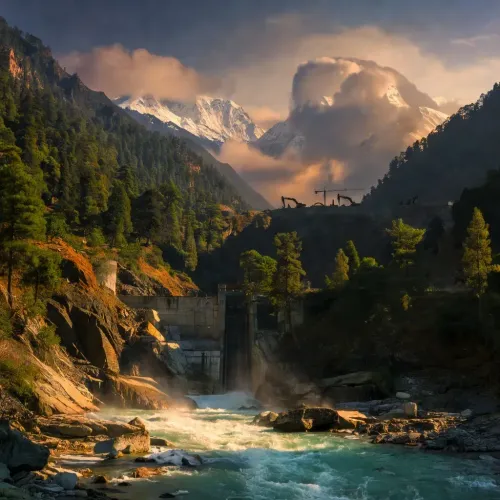
The Chief Minister's Office of Himachal Pradesh announced on Tuesday, 16 June 2026 that a high-level meeting chaired by Union Home Minister Amit Shah took up the long-pending Kishau Dam Project, which has been stalled since being designated a national-importance scheme in 2018. The meeting examined various issues linked to the multipurpose hydropower and irrigation project on the Tons River, which straddles the border between Himachal Pradesh and Uttarakhand.
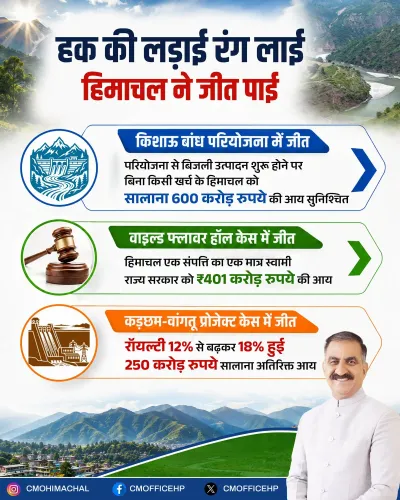
The CMO post stated: 'वर्ष 2018 से राष्ट्रीय महत्व की किशाऊ बांध परियोजना लंबित थी।' ('The Kishau Dam Project, of national importance, has been pending since 2018.') It added that the meeting chaired by Amit Shah saw detailed discussions on the various issues associated with the project.
Context
The Kishau Dam Project was accorded national project status around 2018, a designation that typically unlocks central funding and expedited clearances. Despite this status, the project remained in limbo for nearly eight years, caught between overlapping central-state jurisdictions, environmental and forest clearances, and unresolved inter-state coordination between Himachal Pradesh and Uttarakhand.
Both hill states share the Tons River basin and have stakes in the project's water-sharing, power allocation, and land acquisition arrangements. Such multi-stakeholder complexity is a recurring feature of large Himalayan dam projects across the region.
Policy Backdrop
The Union Home Ministry periodically chairs inter-state coordination meetings on infrastructure projects where disputes or procedural bottlenecks cut across state boundaries. Amit Shah's direct chairmanship of the 16 June 2026 meeting signals that the Centre is treating the Kishau impasse as a priority requiring top-level political intervention rather than routine bureaucratic resolution.
This development fits a broader national pattern: India has renewed its push for pumped-storage and multipurpose hydro schemes as part of its clean-energy transition targets, making stalled Himalayan projects strategically significant. Rehabilitation concerns and forest-clearance timelines have historically been the sharpest friction points for projects of this scale.
Stakeholders and Impact
Hill communities in both Himachal Pradesh and Uttarakhand stand to gain from the irrigation and drinking-water components of the project, while hydropower capacity would feed into the northern grid. Downstream farmers dependent on the Tons and its tributaries are also closely watching water-release and storage provisions.
Private and public hydropower developers who have been in planning limbo since 2018 would benefit from a clear timeline on cost-sharing and land acquisition. Rehabilitation of project-affected families remains a sensitive issue that any forward movement will need to address explicitly.
What's Next
Observers will watch for follow-up decisions on revised cost-sharing formulas between the Centre and the two states, a concrete land-acquisition timeline, or the constitution of a high-level empowered committee to drive execution. Any reference to the Kishau Dam Project in the next Union Budget or a NITI Aayog infrastructure review would confirm that the 16 June meeting produced actionable outcomes.
For Himachal Pradesh, unlocking this project would mark a significant infrastructure win — and the CMO's decision to publicly flag the Home Minister's intervention suggests the state government is keen to demonstrate momentum on a scheme its constituents have awaited for nearly a decade.
Point of View
Publicly flagging this meeting is as much about demonstrating state-level advocacy to voters as it is about actual project progress. The broader arc here is India's push to revive Himalayan multipurpose hydro projects as renewable energy anchors, and the Centre appears to be using the Home Ministry's inter-state arbitration role to break logjams that sectoral ministries have failed to resolve. Whether this meeting translates into binding timelines or remains a consultative exercise will be the real test.
NationPress
15 Sept 2026
Frequently Asked Questions
What is the Kishau Dam Project?
The Kishau Dam Project is a multipurpose hydropower and irrigation scheme on the Tons River, involving both Himachal Pradesh and Uttarakhand. It was designated a project of national importance around 2018.
Why has the Kishau Dam Project been pending since 2018?
The project has faced delays due to overlapping central-state jurisdictions, environmental and forest clearances, unresolved inter-state issues between Himachal Pradesh and Uttarakhand, and funding disputes.
What happened at Amit Shah's meeting on 16 June 2026?
Union Home Minister Amit Shah chaired a meeting on 16 June 2026 where various issues related to the long-pending Kishau Dam Project were discussed in detail, according to the Himachal Pradesh CMO.
Which states are involved in the Kishau Dam Project?
Himachal Pradesh and Uttarakhand are the two states involved, as the project is located on the Tons River which flows through both states.
What are the benefits of the Kishau Dam Project?
The project is expected to generate hydropower for the northern grid and provide irrigation and drinking water benefits to communities in Himachal Pradesh and Uttarakhand, as well as water supply for downstream farmers.