PM Modi Inaugurates ET-IVF Lab, Bovine Research Centre in Banaskantha
Synopsis
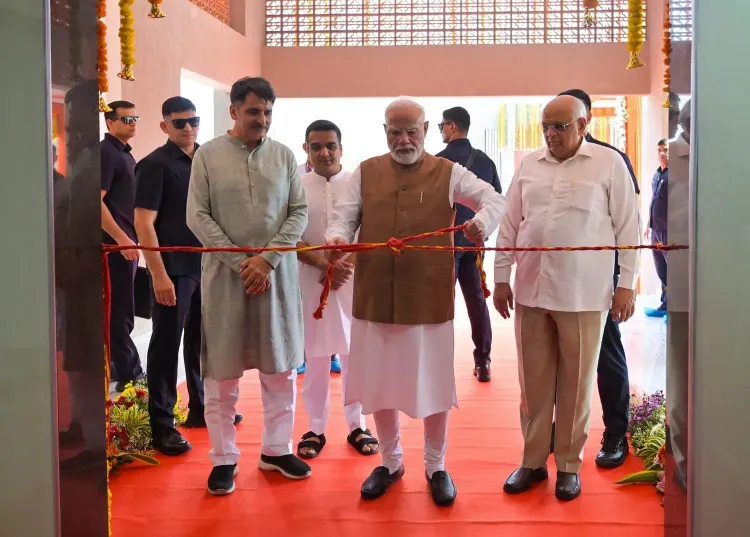
Prime Minister Modi inaugurated an ET-IVF Laboratory and Bharat Bovine Breeding and Research Centre at Bhildi, Banaskantha on 30 October 2026, advancing indigenous bovine breed improvement and dairy sector modernisation under the Rashtriya Gokul Mission.
Key Takeaways
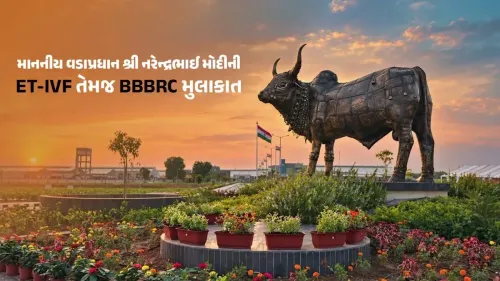
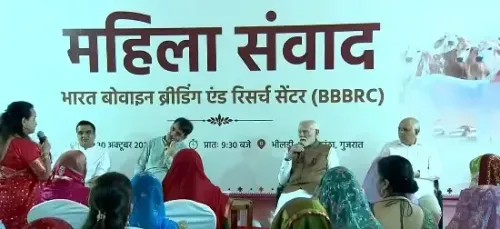
PM Narendra Modi inaugurated the ET-IVF Laboratory and Bharat Bovine Breeding and Research Centre at Bhildi, Banaskantha on 30 October 2026 .
The ET-IVF facility deploys embryo transfer and in-vitro fertilisation technology to accelerate multiplication of genetically superior bovine stock.
The Bharat Bovine Breeding and Research Centre focuses on genetic improvement of indigenous bovine breeds to raise milk productivity.
Both facilities align with the Rashtriya Gokul Mission , launched in 2014 , to conserve and develop indigenous breeds via modern biotechnology.
Union Jal Shakti Minister C.
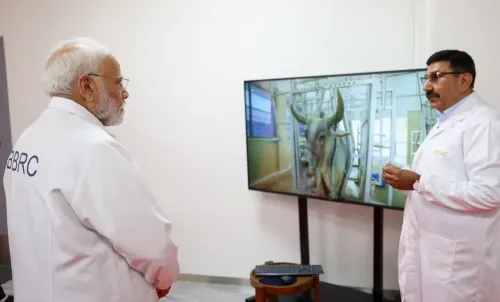
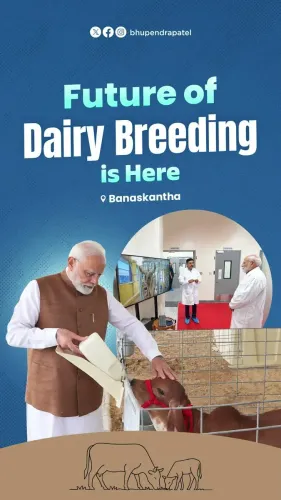
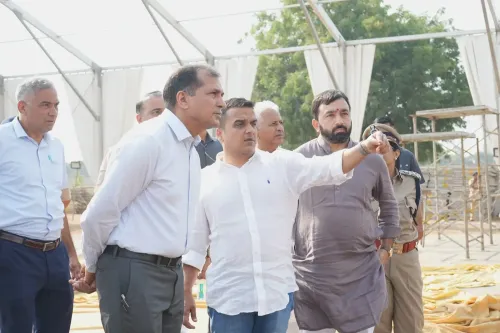
Paatil shared highlights of the event, including the PM's inspection of a cattle farm.
Gujarat's Banaskantha district is a major dairy economy hub, making it a strategic launchpad for national livestock modernisation efforts.
A district that built India's dairy revolution just got a glimpse of its next chapter. Prime Minister Narendra Modi on Friday, 30 October 2026, inaugurated an ET-IVF Laboratory and the Bharat Bovine Breeding and Research Centre at Bhildi in Banaskantha, Gujarat — bringing cutting-edge reproductive biotechnology directly to one of the country's most productive livestock belts. Union Jal Shakti Minister C. R. Paatil shared the developments from the event on X, noting that the Prime Minister also toured a cattle farm to inspect modern initiatives under way in the animal husbandry sector.
What opened at Bhildi — and why it matters
The ET-IVF Laboratory brings embryo transfer and in-vitro fertilisation technology to cattle breeding — techniques that dramatically accelerate the multiplication of genetically superior bovine stock. Rather than waiting years for a prized cow to produce offspring naturally, ET-IVF allows multiple embryos from elite donors to be implanted into surrogate mothers simultaneously, compressing a decade of breed improvement into a fraction of that time.
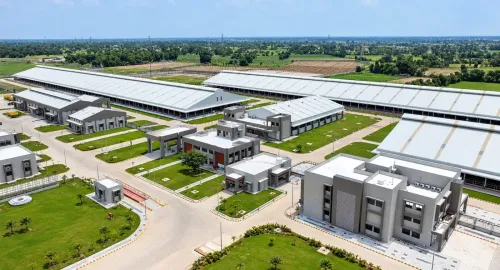
The Bharat Bovine Breeding and Research Centre sits alongside it as the scientific anchor — a dedicated facility for the genetic improvement of indigenous bovine breeds. Together, the two institutions are designed to raise milk productivity, protect native breeds from genetic dilution, and funnel better-quality animals back into the hands of dairy farmers and livestock breeders across the region.
Banaskantha's dairy backbone — and the Rashtriya Gokul Mission
Banaskantha is no ordinary backdrop for this inauguration. The district sits at the heart of northern Gujarat's agricultural economy, with dairy cooperatives woven into the livelihoods of tens of thousands of rural families. Choosing Bhildi for flagship bovine infrastructure is a deliberate signal: the government is doubling down on a region that has already proved it can scale dairy production.
The policy roots run deep. The Rashtriya Gokul Mission, launched in 2014, was precisely designed to conserve and develop indigenous bovine breeds through modern breeding technologies. The Bhildi facilities represent that mission's evolution from policy paperwork into physical infrastructure. Gujarat has long served as a model for central-state collaboration on livestock development — what gets built here tends to travel.
PM Modi's cattle-farm inspection — modernisation in the field
The Prime Minister did not stop at a ribbon-cutting. His visit to an operational cattle farm alongside the inauguration was a deliberate show-and-tell: seeing the animals, the protocols, and the on-ground realities of how modern animal husbandry actually functions at the district level. It is the kind of ground-level signal that frames the broader political message — 'Kisaan Kalyan Se Rashtra Kalyan' (from farmer welfare to national welfare) — as lived policy rather than slogan.
Minister Paatil's post carried the hashtag #KisanKalyanSeRashtraKalyan, tying the inauguration explicitly to the government's wider farm-welfare narrative ahead of what analysts expect will be an intensified push on rural economy themes.
The next test: replicability beyond Gujarat
The real measure of Bhildi's significance will be whether similar ET-IVF centres follow in other states — and whether the technology translates into measurable gains in milk yields and breed quality within the next two years. Gujarat may be the demonstration site; the country is the intended audience.
Point of View
Not just in laboratories. The choice of Gujarat, already a proven dairy-cooperative model, minimises execution risk while generating a replicable template. The political dividend is equally clear: welfare-linked infrastructure in rural Gujarat reinforces the BJP's agrarian credibility at a time when farm-income narratives carry significant electoral weight.
NationPress
31 Oct 2026
Frequently Asked Questions
What is the ET-IVF Laboratory inaugurated at Bhildi?
The ET-IVF Laboratory at Bhildi, Banaskantha is a facility that uses embryo transfer and in-vitro fertilisation technology to breed genetically superior cattle faster than natural reproduction allows, helping improve milk productivity across the dairy sector.
What is the Bharat Bovine Breeding and Research Centre?
The Bharat Bovine Breeding and Research Centre is a dedicated research facility at Bhildi focused on the genetic improvement and conservation of indigenous bovine breeds in India.
What is the Rashtriya Gokul Mission?
The Rashtriya Gokul Mission is a central government scheme launched in 2014 to conserve and develop indigenous bovine breeds using modern breeding technologies, supporting rural dairy farmers and improving cattle genetics nationally.
Why is Banaskantha significant for animal husbandry in India?
Banaskantha in northern Gujarat is one of India's most important livestock and dairy districts, home to a strong network of dairy cooperatives that support tens of thousands of rural families, making it a natural hub for modern cattle-breeding infrastructure.
Who inaugurated the bovine research centre at Bhildi?
Prime Minister Narendra Modi inaugurated both the ET-IVF Laboratory and the Bharat Bovine Breeding and Research Centre at Bhildi, Banaskantha, Gujarat on 30 October 2026.