PM Modi to inaugurate ₹325-crore cattle breeding centre in Gujarat on Oct 30
Synopsis
A ₹325-crore cattle breeding centre in Gujarat, backed by Banas Dairy and the Rashtriya Gokul Mission, is set to go live when PM Modi inaugurates it on 30 October. Targeting 25,000 superior embryos a year via OPU-IVF technology, it could multiply elite calf births from one to several per cow annually — a potential game-changer for India's indigenous breed productivity and the rural women who power 70% of its dairy sector.
Key Takeaways
PM Narendra Modi will inaugurate the Bharat Bovine Breeding and Research Centre (BBBRC) at Bhildi, Banaskantha, Gujarat on 30 October 2026 .
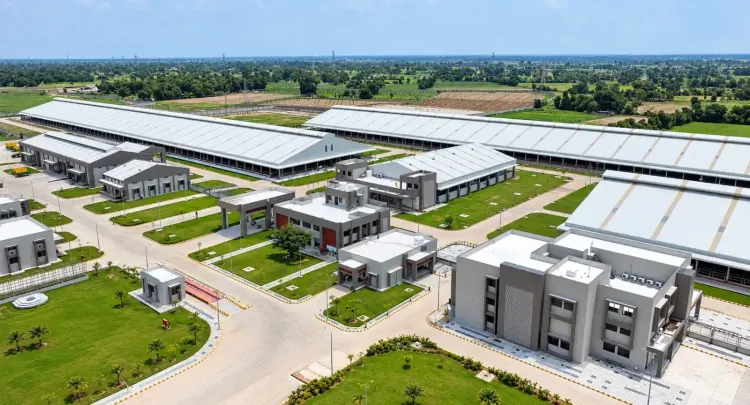
The facility cost ₹325 crore , spans 127 acres , and was developed by Banas Dairy with NDDB guidance under the Rashtriya Gokul Mission .
It targets 25,000 superior embryos annually using OPU-IVF and embryo transfer technologies.
Breeds covered include Kankrej, Gir, Sahiwal, Tharparkar (cattle) and Mehsani, Banni, Jaffarabadi, Murrah (buffalo).
The initiative is expected to benefit small farmers and rural women, who contribute around 70% of dairy sector labour, by improving yields and reducing production costs.
The BBBRC is also intended to promote indigenous Indian breeds in international markets .
Prime Minister Narendra Modi is set to inaugurate a ₹325-crore cattle breeding and research facility at Bhildi in Banaskantha district, Gujarat, on 30 October 2026. The Bharat Bovine Breeding and Research Centre (BBBRC), spread across 127 acres, aims to produce 25,000 superior embryos annually to improve indigenous cattle breeds and boost milk production across the country.
About the Facility
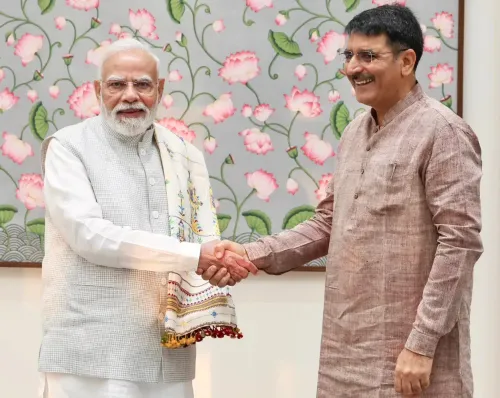
The BBBRC has been developed by Banas Dairy, a farmers' cooperative, with technical guidance from the National Dairy Development Board (NDDB) and funding support under the Centre's Rashtriya Gokul Mission. It is one of five major development projects of Banas Dairy that Modi will inaugurate, dedicate to the public, or lay foundation stones for during his visit to the region.
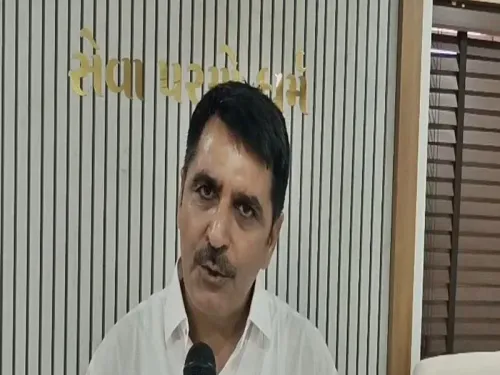
The centre will deploy advanced reproductive technologies including ovum pick-up and in-vitro fertilisation (OPU-IVF) and embryo transfer to accelerate the breeding of high-quality livestock. State Assembly Speaker and Banas Dairy Chairman Shankar Chaudhary explained the technological advantage: 'Normally, a cow of a superior breed gives birth to only one calf in a year. However, with the help of this new technology, several calves can be obtained from an elite cow within a single year.'
Breeds in Focus
The facility will concentrate on indigenous cattle breeds — Kankrej, Gir, Sahiwal, and Tharparkar — as well as buffalo breeds including Mehsani, Banni, Jaffarabadi, and Murrah. The centre's stated philosophy, as articulated by Chaudhary, is to promote 'fewer animals, but better-quality animals and more milk' — a direct response to the twin pressures of shrinking fodder-growing areas and rising rearing costs that small livestock farmers face.
Disease-free bulls of superior breeds, quality semen, and embryos will be made available to farmers at affordable rates. Higher milk-fat content is expected to improve farm-gate returns, though outcomes will ultimately depend on animal management and the pace of technology adoption.
Who Stands to Benefit
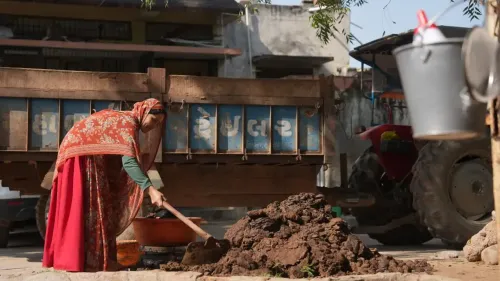
The initiative is expected to directly benefit small livestock farmers and rural women, who, according to Banas Dairy, contribute approximately 70% of the labour in the dairy sector. By improving the genetic potential of successive generations of cattle, the centre aims to raise milk yields while simultaneously reducing per-litre production costs — a critical lever for rural household incomes in Gujarat and beyond.
Notably, indigenous cows and buffaloes are also valued internationally for their heat tolerance and relatively lower feed requirements per unit of milk output. The centre is accordingly expected to serve as a platform for promoting Indian cattle breeds in export markets.
Broader Policy Context
The BBBRC is a flagship outcome of the Rashtriya Gokul Mission, the Centre's programme to conserve and develop indigenous bovine breeds. This comes amid sustained policy emphasis on doubling farmer incomes through allied sectors — dairy being among the highest-impact. India is already the world's largest milk producer, yet average per-animal productivity of indigenous breeds remains well below global benchmarks, making scientific breeding interventions like this one central to long-term sector competitiveness.
With Modi's inauguration on 30 October, the centre is expected to begin operations and set a replicable model for other cooperative dairy networks across the country.
Point of View
Not for lack of government schemes but for lack of last-mile technology delivery. OPU-IVF at cooperative scale is genuinely novel, but the bottleneck has always been farmer adoption and veterinary infrastructure at the village level, neither of which a single centre in Banaskantha can resolve alone. The 25,000-embryo target is ambitious; whether those embryos translate into measurable herd improvement across Gujarat — let alone nationally — will depend on a distribution and monitoring architecture that the announcement has not yet detailed.
NationPress
27 Oct 2026
Frequently Asked Questions
What is the Bharat Bovine Breeding and Research Centre in Gujarat?
The Bharat Bovine Breeding and Research Centre (BBBRC) is a ₹325-crore cattle breeding and research facility built on 127 acres at Bhildi in Banaskantha, Gujarat. Developed by Banas Dairy with NDDB guidance and Rashtriya Gokul Mission support, it uses OPU-IVF and embryo transfer technologies to produce 25,000 superior embryos a year and improve indigenous breed productivity.
When will PM Modi inaugurate the cattle breeding centre?
PM Narendra Modi is scheduled to inaugurate the BBBRC on 30 October 2026 during a visit to Gujarat. The centre is one of five Banas Dairy projects he will inaugurate, dedicate, or lay foundation stones for on that day.
Which cattle and buffalo breeds will the BBBRC focus on?
The centre will focus on indigenous cattle breeds — Kankrej, Gir, Sahiwal, and Tharparkar — and buffalo breeds including Mehsani, Banni, Jaffarabadi, and Murrah. These breeds are valued for heat tolerance and milk quality, and the centre aims to strengthen their genetic potential for higher yields.
How does the OPU-IVF technology at the centre improve cattle breeding?
Ovum pick-up and in-vitro fertilisation (OPU-IVF) allows multiple embryos to be obtained from a single elite cow within one year, compared to just one natural calf per year under conventional breeding. These embryos can then be transferred to surrogate cows, significantly accelerating the spread of superior genetic traits across a herd.
Who will benefit from the Bhildi cattle breeding centre?
Small livestock farmers and rural women are the primary intended beneficiaries. According to Banas Dairy, women contribute approximately 70% of dairy sector labour, and improved animal genetics are expected to raise milk yields and reduce production costs, directly improving rural household incomes.