NITI Aayog's Prof. Das: Science and innovation now core pillars of New India's growth
Synopsis
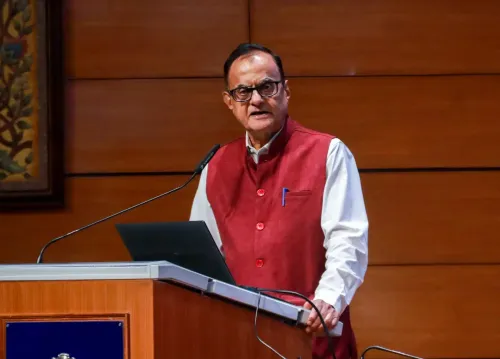
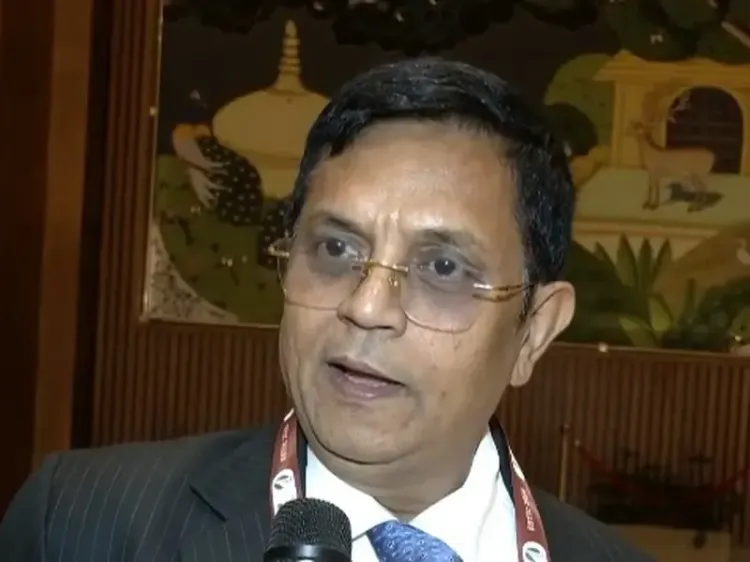
NITI Aayog member Prof. Gobardhan Das used the eve of ESTIC 2026 to argue that science and innovation — not just education — are now the backbone of a modern India, pointing to the Covid-19 vaccine supply to over 150 countries as the clearest proof of what the country can deliver when it organises its scientific capabilities.
Key Takeaways
NITI Aayog member Prof.
Gobardhan Das declared science, technology and innovation the primary drivers of India's national progress on 27 October 2026 .
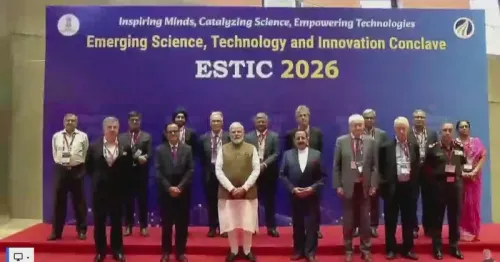
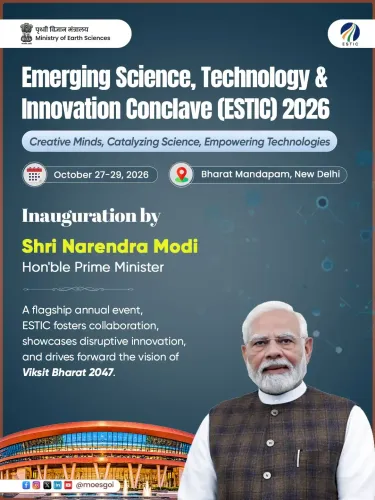
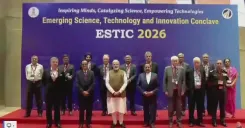
His remarks were made ahead of ESTIC 2026 , a national conclave in New Delhi aimed at connecting India's research and innovation ecosystem.
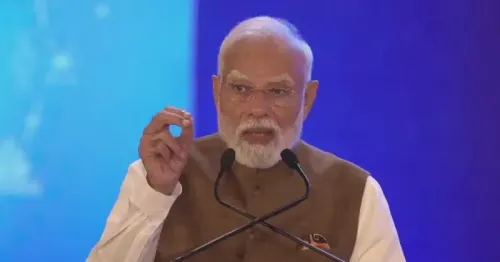
Das credited Prime Minister Narendra Modi with placing science and development at the centre of national policy.
He cited India's Covid-19 pandemic response — supplying vaccines to more than 150 countries , many free of cost — as evidence of the country's scientific capability.
Das called for greater collaboration and knowledge-sharing across regions to accelerate India's innovation momentum.
NITI Aayog member Prof. Gobardhan Das on Tuesday, 27 October 2026 declared that science, technology and innovation have become the primary drivers of national progress, asserting that India is well-positioned to emerge as a global leader in these fields. His remarks came ahead of ESTIC 2026, a national conclave in New Delhi designed to unite the country's scientific and technological communities.
ESTIC 2026 as a Collaboration Platform
Prof. Das described the conference as a critical bridge connecting researchers, innovators and institutions from across India. He stressed that significant scientific work is already under way in different regions of the country, and that structured collaboration and knowledge-sharing are essential to accelerate the pace of innovation at scale.
'This kind of conclave provides an opportunity to collaborate, cooperate, interact with one another and share a platform. That is why this conclave is very important,' he said.
What Prof. Das Said About Leadership and Science
Prof. Das drew a direct line between political leadership and scientific momentum, crediting Prime Minister Narendra Modi with putting science and innovation at the heart of national policy. 'Previously, we used to say that education is the backbone of a country. In fact, right now, education and innovation are the backbone of a country,' he said.
He added: 'I think Prime Minister Modi has science, development and innovation in his heart, and that is what is driving the country.' According to Prof. Das, this top-down commitment has been a decisive factor in India's growing scientific stature.
India's Covid-19 Vaccine Drive as a Proof Point
Highlighting concrete evidence of India's scientific capability, Prof. Das pointed to the country's performance during the Covid-19 pandemic. India not only developed multiple vaccines domestically but also supplied them to more than 150 countries, many of them free of cost — a feat he said demonstrated the country's ability to contribute solutions to global challenges.
'We were the ones who produced not just one or two vaccines, but also supplied vaccines to more than 150 countries, and that too free of cost. That is India's capability,' he noted.
The Vision of New India in Science and Technology
Prof. Das contextualised his remarks within the broader 'New India' framework, arguing that advances in science and technology now occupy a central role in the country's development narrative. He said various breakthroughs are happening in different corners of the country and that the present moment calls for organising and amplifying those efforts through platforms such as ESTIC.
'India has the capability to lead the world,' he said. 'I think various things are happening in different corners of the country, and this is the time to organise them.'
What Comes Next
ESTIC 2026 is expected to produce actionable recommendations on cross-institutional research partnerships and technology transfer mechanisms. The conclave arrives at a moment when India is also scaling up its semiconductor mission, expanding its space economy and targeting a larger share of global R&D investment — underlining the policy urgency behind Prof. Das's call for coordinated scientific action.
Point of View
Which limits their analytical depth — the more significant question ESTIC 2026 should address is why India's R&D spending as a share of GDP has remained stubbornly below 1%, even as peer economies like South Korea and China invest two to three times more. The Covid-19 vaccine achievement was real and substantial, but it was also partly a function of existing pharmaceutical manufacturing infrastructure rather than pure frontier research. For science and innovation to genuinely become the backbone of a New India, the conversation needs to move from celebratory to structural: public R&D funding, university-industry linkages, and patent commercialisation rates are the metrics that will determine whether this era of ambition translates into durable scientific leadership.
NationPress
27 Oct 2026
Frequently Asked Questions
What did NITI Aayog member Prof. Gobardhan Das say about India's science and innovation?
Prof. Gobardhan Das said that science, technology and innovation have become the primary drivers of India's national progress, replacing the older notion that education alone is the backbone of a country. He made the remarks ahead of ESTIC 2026 in New Delhi on 27 October 2026.
Why did Prof. Das cite India's Covid-19 vaccine response?
Prof. Das used India's pandemic-era vaccine effort as concrete evidence of the country's scientific and manufacturing capability, noting that India supplied vaccines to more than 150 countries, many of them free of cost. He argued this demonstrated India's capacity to contribute solutions to global challenges, not just domestic ones.
What is the 'New India' vision Prof. Das referred to?
Prof. Das used the 'New India' framework to argue that science and technology now occupy a central role in the country's development story, moving beyond infrastructure and welfare-led growth. He said India has the capability to lead the world and that conclaves like ESTIC are essential for organising that potential.
Who is Prof. Gobardhan Das?
Prof. Gobardhan Das is a member of NITI Aayog, the Indian government's principal policy think tank. He was speaking ahead of ESTIC 2026 in New Delhi, where he outlined his assessment of India's growing scientific stature and the role of political leadership in driving innovation.