CM Rekha Gupta: Only the People Decide Who Rules
Synopsis
Delhi Chief Minister Rekha Gupta declared on X that no individual can seat or remove a leader in a democracy — only the people hold that power. The pointed Hindi statement invokes constitutional popular sovereignty amid Delhi's charged political climate.
Key Takeaways
Rekha Gupta , BJP Chief Minister of Delhi , posted a Hindi statement on 27 October 2026 asserting that ultimate political authority rests with voters.
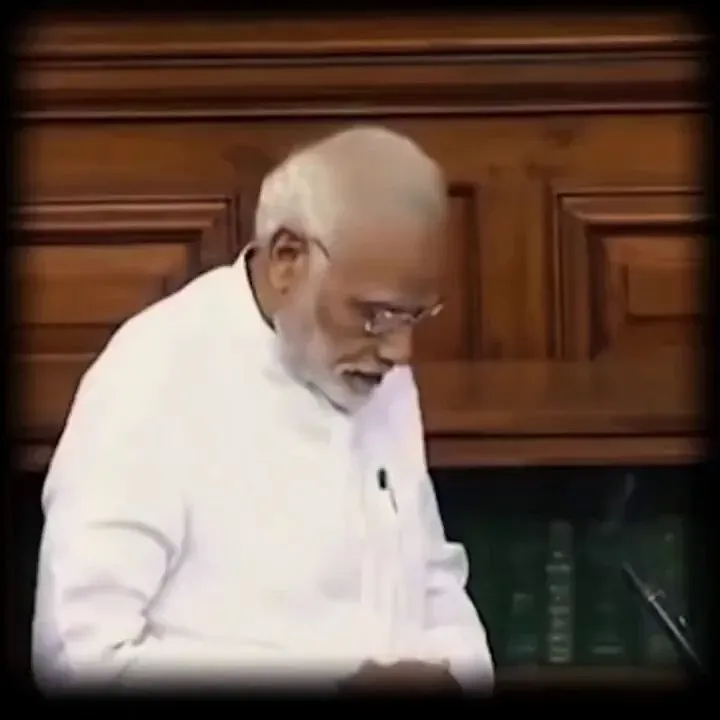
She stated: 'Neither can anyone seat someone in power, nor can anyone remove them — the final decision belongs solely to the people.' The post was accompanied by a video and made no reference to any named individual or party.
Indian political leaders across party lines periodically invoke popular sovereignty language during periods of political contestation.
The post carries no new policy announcement; its significance is political and rhetorical.
In a democracy, no leader installs another and none can dislodge one — only the voter holds that power. Delhi Chief Minister Rekha Gupta made that point with striking directness on Tuesday, 27 October 2026, posting a sharp assertion of popular sovereignty that cut through the noise of political jockeying in the capital.
Gupta's statement in Hindi reads: 'न यहां कोई किसी को बैठा सकता है और न ही कोई किसी को हटा सकता है।' — 'Neither can anyone here seat someone in power, nor can anyone remove them. In a democracy, the final decision belongs solely and exclusively to the people of this country. The people are supreme.'
A Constitutional Principle, Wielded as a Political Sword
The words themselves are unimpeachable — drawn straight from the grammar of constitutional democracy. But in Indian politics, invoking popular sovereignty is rarely a civics lecture. It is almost always a message: that backroom deals, defections, and pressure campaigns are ultimately futile against the arithmetic of the ballot box.
Indian political leaders across the spectrum have returned to this formulation during moments of acute contestation — when alliances shift, when rivals claim mandates they were not given, or when the question of legitimacy hangs in the air. Gupta's framing places the electorate above any individual actor, any party machinery, any coalition arithmetic.
Delhi's Political Temperature in Late October 2026
Gupta — a BJP leader and the current occupant of the Chief Minister's chair in New Delhi — delivered this statement via video post on X, lending it a deliberate, direct-to-voter quality. The choice of Hindi, the medium, and the brevity together signal a message aimed at a broad public audience rather than a legislative chamber or a press conference room.
The post carries no named target. That absence is its sharpest edge: it invites every listener to fill in the blank themselves.
Democracies are not run by those who shout the loudest about who deserves power — they are run, in the end, by the quiet act of a citizen marking a ballot. Gupta's words are a reminder that in India, the electorate has the last word, and it always will.
Point of View
She simultaneously claims the moral high ground and delegitimises rivals without naming them. Such statements tend to surface when incumbents sense pressure on their mandate, and their vagueness is a feature, not a bug: a broad message that every political opponent must answer. Whether it presages a larger political confrontation in Delhi will depend on what follows in the legislative arena and from rival camps.
NationPress
27 Oct 2026
Frequently Asked Questions
What did Delhi CM Rekha Gupta say in her latest post?
Rekha Gupta posted in Hindi that no one can install or remove a leader in a democracy — only the people hold that power, and the people are supreme.
Why did Rekha Gupta post about democracy and the people being supreme?
The post appears to be a political statement asserting popular sovereignty, likely directed at rivals challenging her position, though she did not name any individual or party.
What does 'Janta hi sarvopari hai' mean?
The Hindi phrase janta hi sarvopari hai means 'the people are supreme' — a foundational democratic principle that Indian politicians invoke during moments of political contestation.
Is Rekha Gupta facing political pressure in Delhi?
The research does not confirm a specific trigger for the post; however, the language of popular sovereignty is typically deployed during periods of heightened political competition or challenges to an incumbent's legitimacy.