Dr. Jitendra Singh pens op-ed on tech-driven Viksit Bharat

Synopsis
Union Science and Technology Minister Dr. Jitendra Singh published an op-ed in Dainik Jagran on October 27, 2026, making the case for technology-led development and spotlighting ESTIC2026 as a key milestone in India's journey toward Viksit Bharat.
Key Takeaways
Jitendra Singh published an op-ed titled 'तकनीक आधारित विकास को गति' in Dainik Jagran on October 27, 2026 .
The article frames science, technology and innovation as the primary drivers of India's development journey. #ESTIC2026 — a national science and technology event — is highlighted as a significant policy milestone.
Singh holds independent charge of the Ministry of Science and Technology and the Ministry of Earth Sciences , plus MoS roles in the PMO.
Publishing in a major Hindi-language daily signals a deliberate effort to mainstream the tech-led growth narrative beyond specialist audiences.
The op-ed fits within a long policy lineage running from STIP 2013 through NEP 2020 to the current Viksit Bharat ambition.
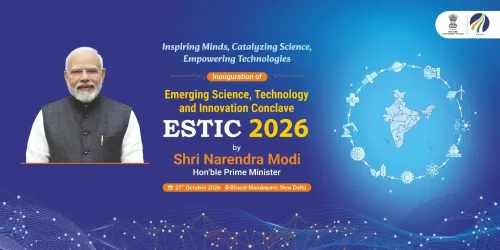
India's push toward technology-led development has found a fresh articulation in print — Union Science and Technology Minister Dr. Jitendra Singh published an op-ed in Dainik Jagran on Tuesday, October 27, 2026, laying out the case for science, technology and innovation as the primary engines of the country's growth journey, while highlighting the significance of #ESTIC2026.
The article, titled 'तकनीक आधारित विकास को गति' ('Accelerating Technology-Based Development'), argues for giving fresh momentum to India's development trajectory through science, technology and innovation. Dr. Singh simultaneously flagged the importance of ESTIC2026 — a national-level science and technology conclave — as a milestone event in that journey.
Why ESTIC2026 is drawing attention now
ESTIC2026, referenced prominently in the op-ed, is positioned as a high-stakes convergence point for India's scientific and innovation community. While full agenda details are still awaited, the Minister's decision to dedicate an editorial column to it signals that the government views the event as more than ceremonial — it is being framed as a policy-shaping moment for the country's technology roadmap.
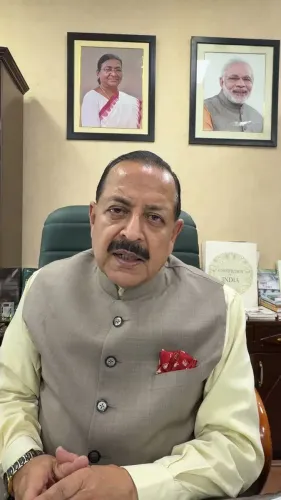
Dr. Singh holds independent charge of both the Ministry of Science and Technology and the Ministry of Earth Sciences, in addition to his role in the Prime Minister's Office. His public framing of an event through a national Hindi-language daily is a deliberate outreach to a wide, vernacular readership — a signal that this agenda is not just for technocrats but for the broader citizenry.
India's long march toward R&D-led growth
The op-ed lands within a well-established policy arc. India's Science, Technology and Innovation Policy (STIP) 2013 first set out a structured framework to strengthen the national innovation ecosystem and scale up R&D investment. The National Education Policy 2020 deepened that commitment by weaving technology and innovation into the fabric of higher education and research. What has evolved over successive governments is a growing consensus: that India's path to developed-country status — the 'Viksit Bharat' ambition — runs squarely through indigenous technological capability, digital infrastructure and a vibrant startup-to-deep-science pipeline.
Publishing in Dainik Jagran, one of the largest-circulation Hindi dailies in northern and central India, rather than a niche policy journal, underscores a deliberate democratisation of the science-and-growth message — taking it beyond seminar rooms and into breakfast tables across the Hindi heartland.
What the scientific community will be watching
For researchers, innovators and policymakers, the key signals to track will emerge from ESTIC2026 itself — particularly any announcements around R&D funding targets, new institutional frameworks, or technology mission priorities. An op-ed by a Cabinet minister is often the opening note of a larger policy symphony; the crescendo typically arrives in budget allocations and formal scheme launches that follow.
If ESTIC2026 delivers actionable commitments on increasing India's gross expenditure on R&D — a metric that has long trailed comparable economies — the event could mark a genuine inflection point, not merely another milestone to commemorate.
Point of View
Likely as a precursor to concrete policy or funding announcements. Within a longer arc — from STIP 2013 to NEP 2020 and now toward a self-reliant tech economy — this op-ed reads as the government's attempt to own the 'technology = development' equation as an electoral as much as a policy proposition.
NationPress
27 Oct 2026
Frequently Asked Questions
What is ESTIC2026 and why is it important?
ESTIC2026 is a national-level science, technology and innovation conclave that the government has positioned as a key milestone in India's technology-driven development roadmap. Union Minister Dr. Jitendra Singh has highlighted its significance in a recent op-ed, signalling that it may be followed by major policy or funding announcements.
What did Dr. Jitendra Singh write in Dainik Jagran on October 27?
Dr. Singh published an op-ed titled 'Accelerating Technology-Based Development' arguing that science, technology and innovation must drive India's growth journey, and emphasising the importance of ESTIC2026 in that context.
What ministries does Dr. Jitendra Singh currently head?
Dr. Jitendra Singh holds independent charge of the Ministry of Science and Technology and the Ministry of Earth Sciences, and also serves as Minister of State in the Prime Minister's Office and in the Ministry of Personnel, Public Grievances and Pensions.
What is India's Viksit Bharat goal and how does technology fit in?
Viksit Bharat is India's ambition to attain developed-country status, with indigenous technological capability, digital infrastructure and R&D investment identified as central drivers — a thread running from the Science, Technology and Innovation Policy 2013 through the National Education Policy 2020 to present-day initiatives.
Why did the Minister publish in a Hindi newspaper rather than an English platform?
Dainik Jagran has one of the largest circulations in northern and central India, reaching a vast vernacular readership. Publishing there extends the technology-and-development message well beyond specialist or English-speaking audiences, aligning the science agenda with a broader public narrative.