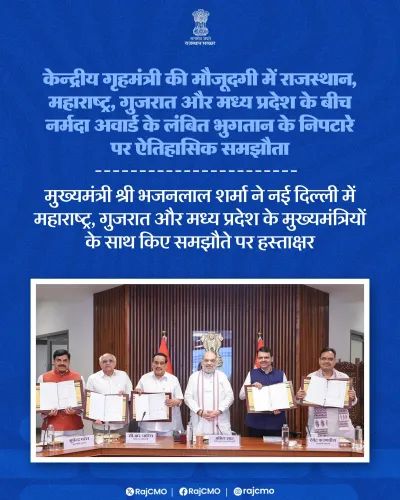
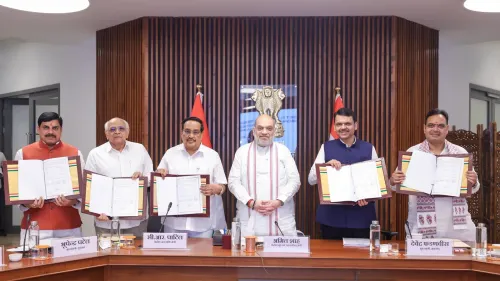
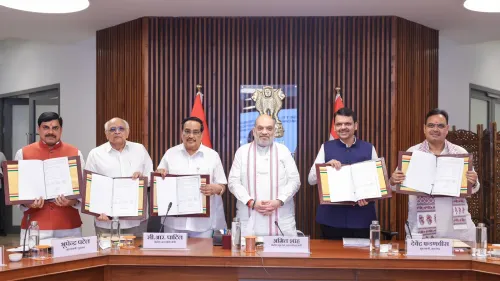
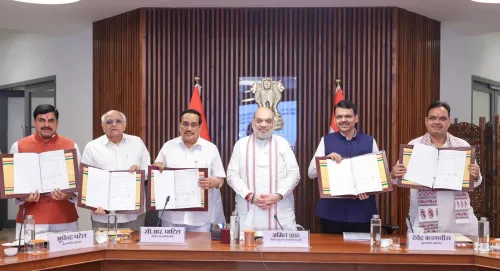
CM Bhupendra Patel Joins 15th RCNCA Meet in New Delhi
Synopsis
Chief Minister Bhupendra Patel joined the 15th RCNCA meeting in New Delhi on 27 October 2026, chaired by Union Jal Shakti Minister C.R. Patil. All four Narmada basin states — Gujarat, Rajasthan, Madhya Pradesh and Maharashtra — ratified a Memorandum of Agreement from July 2026 and committed to resolving long-pending Narmada issues through dialogue.
Key Takeaways
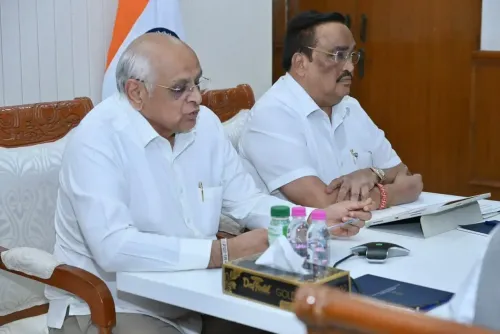
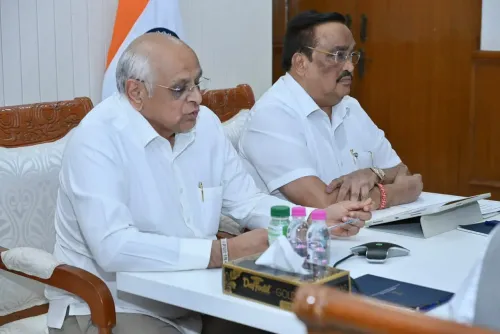
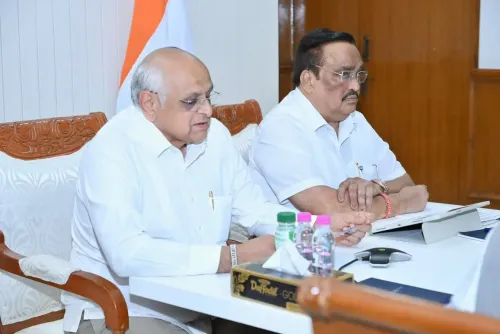
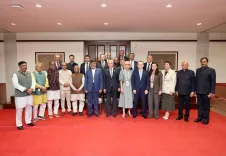
Gujarat CM Bhupendra Patel attended the 15th RCNCA meeting in New Delhi on 27 October 2026 in person.
The meeting was chaired by Union Jal Shakti Minister C.R.
Patil ; CMs of Rajasthan, Madhya Pradesh and Maharashtra joined via video conference.
All four Narmada basin states formally ratified the Memorandum of Agreement that was signed at the previous RCNCA session in July 2026 .
The Narmada Control Authority was constituted in 1980 to implement the 1979 Narmada Water Disputes Tribunal award governing water allocation among the four states.
The Sardar Sarovar Project is the primary Narmada infrastructure serving Gujarat's irrigation, drinking water, and hydropower needs.
The meeting adopted a 'positive approach' to resolving remaining long-pending Narmada issues through future dialogue and inter-state cooperation.
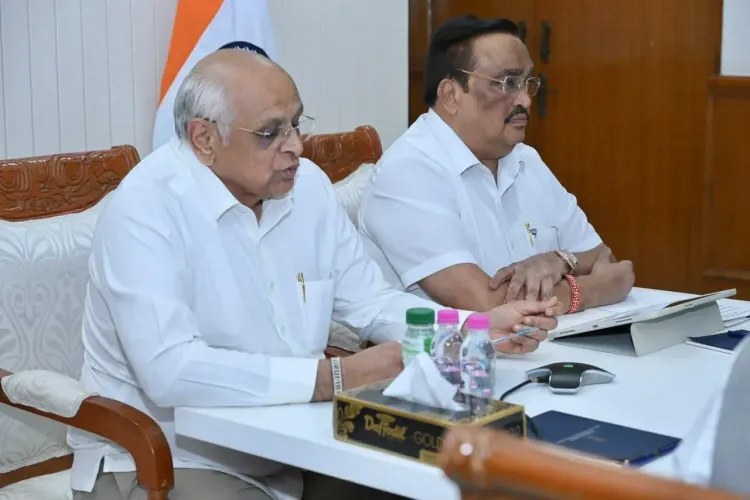
Four states, one river, and decades of unresolved questions — the 15th meeting of the Review Committee of the Narmada Control Authority (RCNCA) in New Delhi on 27 October 2026 brought those threads together in one room. The Chief Minister's Office of Gujarat confirmed that Chief Minister Bhupendra Patel participated in the high-level session chaired by Union Jal Shakti Minister C.R. Patil, with the CMs of the three co-basin states joining via video conference.
Four States, One Table: How the Meeting Was Structured
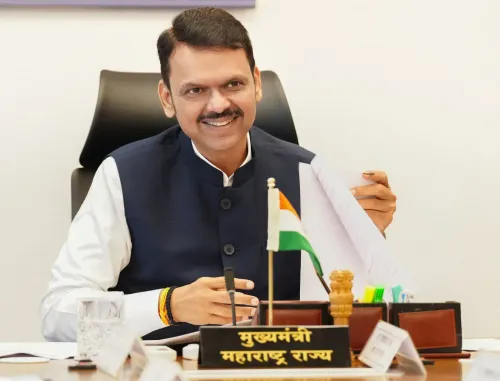
The session brought together all four states bound by the 1979 Narmada Water Disputes Tribunal award — Gujarat, Rajasthan, Madhya Pradesh and Maharashtra. While Bhupendra Patel attended in person in New Delhi, the chief ministers of the remaining three states connected through video conference, underscoring both the logistical scale and the political weight the Centre has attached to this coordination exercise.
The Narmada Control Authority, constituted in 1980 to oversee compliance with that Tribunal award, convenes the RCNCA periodically to keep inter-state water sharing and project implementation on track. The Sardar Sarovar Project — Gujarat's single most consequential piece of water infrastructure for irrigation, drinking water, and hydropower — sits at the centre of what is decided in these rooms.
The July-26 MoA Gets the Green Light
The most concrete outcome of the meeting was the formal ratification of a Memorandum of Agreement (MoA) that had been signed at the previous RCNCA session in July 2026. All four participating states endorsed that agreement at Tuesday's meeting, converting an earlier commitment into binding inter-state consensus. The CMO post described this as 'an important step toward strengthening mutual understanding, agreement and coordination for resolving long-pending Narmada issues.'
Exactly which pending questions the MoA addresses has not been officially detailed, but the RCNCA framework typically covers water allocation monitoring, project works timelines, and joint operational protocols — the granular machinery that determines how much water actually reaches a farmer's field in Kutch or Saurashtra.
Gujarat's Farmers and the Cooperative Federalism Argument
The CMO framed the meeting explicitly in the language of cooperative federalism, attributing momentum to the leadership of Prime Minister Narendra Modi and the guidance of Union Home and Cooperation Minister Amit Shah. The post described Narmada as 'the lifeline of prosperity for farmers of all four states, public welfare and regional development.'
That framing is not merely rhetorical. The Narmada's waters irrigate vast tracts of farmland across western and central India, and Gujarat has historically been the most downstream and therefore the most dependent of the four states. Any improvement in inter-state coordination — or any unresolved dispute — eventually lands on the margins of Gujarat's agricultural economy.
Tuesday's meeting closed with what the CMO called a 'positive approach' to resolving remaining Narmada issues through dialogue, mutual understanding and cooperation in the future. The MoA ratification is a step; the harder work of implementing it begins now.
Point of View
Which is most dependent on downstream flows from the Sardar Sarovar Project, converting inter-state goodwill into a signed, ratified agreement is a meaningful procedural advance. The framing around 'cooperative federalism' under PM Modi and Amit Shah also telegraphs that the BJP-governed states see this as a template for resolving other inter-state river disputes without adversarial litigation. The real test will be whether the MoA's implementation timelines hold, or whether pending questions drift back onto the docket of the 16th meeting.
NationPress
27 Oct 2026
Frequently Asked Questions
What is the RCNCA and why does it matter?
The Review Committee of the Narmada Control Authority (RCNCA) is the apex inter-state body that oversees implementation of the 1979 Narmada Water Disputes Tribunal award. It periodically reviews water allocation, project works and coordination among Gujarat, Madhya Pradesh, Maharashtra and Rajasthan — the four states that share Narmada waters.
What was decided at the 15th RCNCA meeting on 27 October 2026?
The four Narmada basin states formally ratified a Memorandum of Agreement that had been drafted at the previous RCNCA session in July 2026. The meeting also adopted a positive approach toward resolving other long-pending Narmada-related issues through future dialogue and cooperation.
Who chaired the 15th RCNCA meeting?
Union Jal Shakti Minister C.R. Patil chaired the meeting in New Delhi. Gujarat CM Bhupendra Patel attended in person, while the chief ministers of Rajasthan, Madhya Pradesh and Maharashtra joined via video conference.
What is the Sardar Sarovar Project and its connection to this meeting?
The Sardar Sarovar Project is Gujarat's flagship Narmada river multipurpose project providing irrigation, drinking water and hydropower. It is the primary beneficiary for Gujarat of the inter-state Narmada water-sharing arrangement overseen by the Narmada Control Authority.
When was the Narmada Control Authority set up?
The Narmada Control Authority was constituted in 1980, following the Narmada Water Disputes Tribunal's final award in 1979, to monitor compliance with water allocations and coordinate project implementation among the four basin states.