Jal Shakti Minister Paatil hails Narmada consensus meet
Synopsis
Union Jal Shakti Minister C. R. Paatil on 7 July 2026 hailed a landmark New Delhi meeting chaired by Home Minister Amit Shah, where chief ministers of Maharashtra, Rajasthan, Madhya Pradesh, and Gujarat reached consensus on long-pending Narmada Project issues, calling it a triumph of cooperative federalism.
Key Takeaways
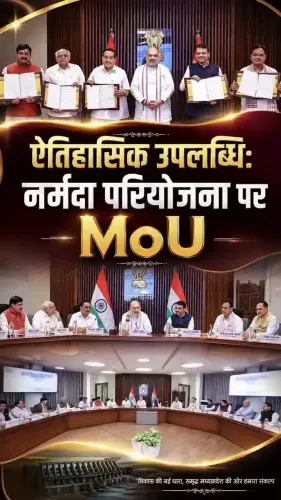
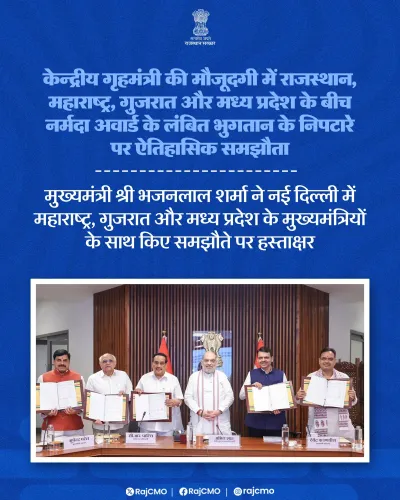
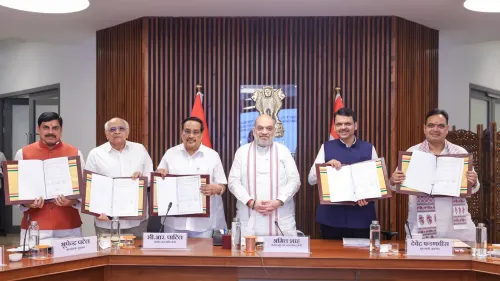
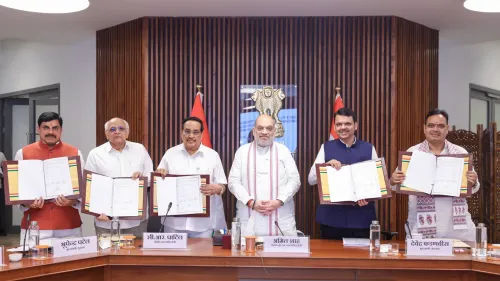
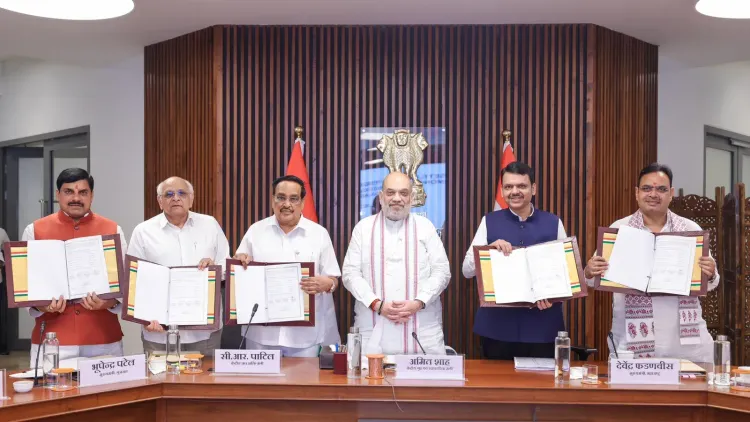
A high-level meeting on long-pending Narmada Project issues was held in New Delhi on 7 July 2026 , chaired by Union Home Minister Amit Shah .
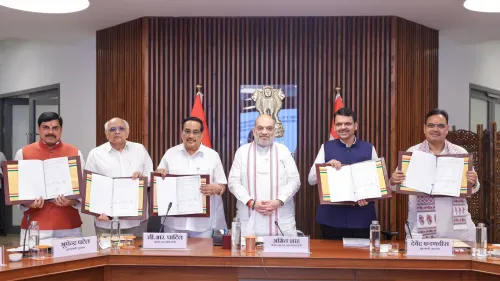
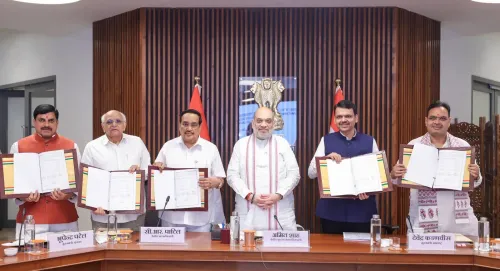
Chief ministers of all four riparian states — Devendra Fadnavis (Maharashtra), Bhajanlal Sharma (Rajasthan), Mohan Yadav (Madhya Pradesh), and Bhupendra Patel (Gujarat) — participated.
Union Jal Shakti Minister C.
Paatil described the outcome as a 'historic achievement' and an example of cooperative federalism.
The Narmada Water Disputes Tribunal issued its final water-sharing award in 1979 ; the Narmada Control Authority has overseen implementation since 1980 .
The Narmada Control Authority is expected to hold follow-up meetings to convert the political consensus into concrete project milestones.
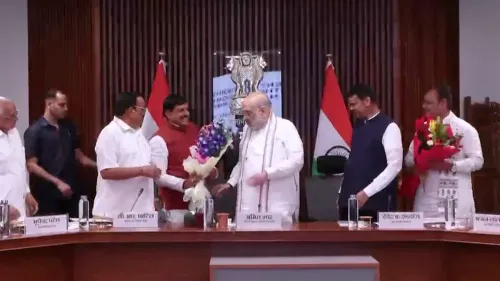
Union Jal Shakti Minister C. R. Paatil on Tuesday, 7 July 2026 welcomed a significant inter-state agreement on long-pending issues related to the Narmada Project, reached at a high-level meeting held in New Delhi under the chairmanship of Union Home Minister Amit Shah. The meeting brought together the chief ministers of all four riparian states — Maharashtra, Rajasthan, Madhya Pradesh, and Gujarat — to resolve disputes that have remained unresolved for years.
Context
Paatil, posting on X in Hindi, described the development as an 'aitihāsik upalabdhi' (historic achievement) and credited Prime Minister Narendra Modi's 'visionary leadership' for making the consensus possible. He expressed gratitude to PM Modi, Home Minister Shah, and the leadership of all participating states for what he called a landmark agreement. The four chief ministers present were Devendra Fadnavis of Maharashtra, Bhajanlal Sharma of Rajasthan, Mohan Yadav of Madhya Pradesh, and Bhupendra Patel of Gujarat.
Paatil described the gathering of all riparian states on a single platform as a 'sahkāri saṃghavād kī sashakt bhāvanā kā prerak udāharaṇ' — 'an inspiring example of the robust spirit of cooperative federalism.' The meeting was chaired by Amit Shah in his capacity as Union Home Minister, whose ministry oversees inter-state disputes.
Policy Backdrop
The Narmada Project — anchored by the Sardar Sarovar Dam — is one of India's most complex multipurpose river valley schemes, involving water sharing, canal construction, and rehabilitation of displaced communities across four states. The Narmada Water Disputes Tribunal delivered its final award in 1979, allocating water shares among Madhya Pradesh, Gujarat, Maharashtra, and Rajasthan. The Narmada Control Authority, constituted in 1980, was tasked with overseeing implementation and resolving disputes arising from that award.
Despite these institutional frameworks, several issues have remained contested for decades. Project benefits and submergence costs are unevenly distributed across states, making political-level intervention repeatedly necessary. The July 2026 meeting represents the latest in a series of high-level efforts by the central government to break long-standing deadlocks through direct political engagement rather than prolonged litigation.
Stakeholders and Impact
Gujarat is the most downstream and most dependent of the four states, relying on Narmada waters for both irrigation and drinking water supply to large parts of the state including the Saurashtra and Kutch regions. Madhya Pradesh, which contributes the largest share of the river's catchment area, has historically borne the heaviest burden of reservoir-related submergence and displacement of communities.
Farmers across all four riparian states — particularly those dependent on Narmada-fed canals for kharif and rabi crops — stand to benefit if the consensus translates into concrete project milestones such as canal network completion or revised rehabilitation packages. The political alignment of all four states under BJP-led governments at both the centre and state levels has been widely noted as a facilitating factor for such consensus-building exercises.
What's Next
The Narmada Control Authority is expected to convene follow-up meetings to translate the July 2026 political consensus into actionable project timelines and administrative orders. Observers will watch for any subsequent parliamentary statements or budgetary allocations that reference the specific provisions agreed upon at the New Delhi meeting.
The success of this inter-state dialogue model — if it leads to measurable on-ground progress — could serve as a template for resolving other long-pending inter-state river disputes in India, where similar combinations of tribunal awards, unresolved implementation gaps, and political complexity have stalled projects for years.
Point of View
The government has elevated the exercise to the level of political arbitration, lending it the weight needed to overcome entrenched state-level resistance. If the consensus produces verifiable on-ground outcomes, it will strengthen the Modi government's cooperative federalism narrative ahead of state election cycles. The risk, however, is that without binding timelines and independent oversight, this meeting joins a long list of high-profile Narmada summits whose resolutions have faded into administrative inertia.
NationPress
6 Oct 2026
Frequently Asked Questions
What was decided at the Narmada Project meeting on 7 July 2026?
A consensus was reached on long-pending issues related to the Narmada Project at a New Delhi meeting chaired by Union Home Minister Amit Shah on 7 July 2026, attended by the chief ministers of Maharashtra, Rajasthan, Madhya Pradesh, and Gujarat. The specific terms of the agreement have not been officially detailed yet.
Who chaired the Narmada inter-state meeting in New Delhi?
Union Home Minister Amit Shah chaired the meeting. Prime Minister Narendra Modi's leadership was also credited by participants for making the consensus possible.
Which states are part of the Narmada Project water-sharing agreement?
The four riparian states are Madhya Pradesh, Gujarat, Maharashtra, and Rajasthan. Their water shares were originally allocated by the Narmada Water Disputes Tribunal in its 1979 final award.
What is the Narmada Control Authority?
The Narmada Control Authority is a statutory body constituted in 1980 to oversee the implementation of the Narmada Water Disputes Tribunal's award and resolve disputes arising from the Narmada Project across the four riparian states.
What did C. R. Paatil say about the Narmada agreement?
Union Jal Shakti Minister C. R. Paatil called the agreement a 'historic achievement' and praised it as an inspiring example of cooperative federalism, expressing gratitude to PM Modi, Home Minister Shah, and the leadership of all four participating states.