Banas Dairy targets 200 Bio-CNG plants, eyes ₹875 crore annual returns for farmers
Synopsis
Banas Dairy is turning cattle dung into a ₹875 crore annual income stream for farmers — and a cheaper fuel for motorists at ₹75–80 per kg versus ₹92 for conventional CNG. With PM Modi set to inaugurate five projects on 30 October and a Japan-India initiative targeting 1,000 plants nationally, Gujarat's Banaskantha model is moving from a local experiment to a potential national blueprint for circular rural economies.
Key Takeaways
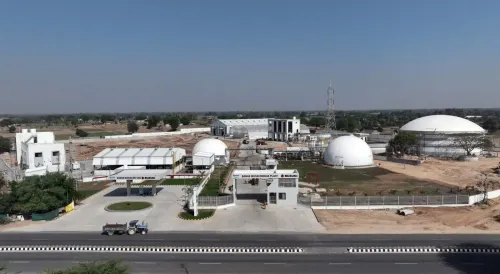
Banas Dairy 's four Bio-CNG plants in Banaskantha, Gujarat process 340 tonnes of cattle dung daily.
Expansion to 200 plants is projected to generate ₹875 crore in annual income for livestock rearers and 1,168 lakh kg of biogas per year.
Farmers are paid approximately ₹1 per kg of dung; payments are credited fortnightly with milk bills.
Bio-CNG is sold at ₹75–80 per kg , compared to conventional CNG at roughly ₹92 per kg in Gujarat.
PM Narendra Modi is scheduled to inaugurate five Banas Dairy projects on 30 October 2026 .
India and Japan have launched the Japan-India Co-operative Biogas Initiative targeting 1,000 biogas plants nationally, modelled on Banaskantha.
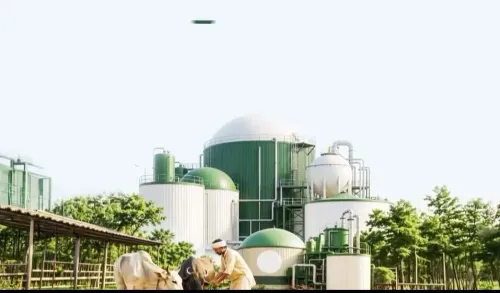
Banas Dairy's four Bio-CNG plants in Gujarat's Banaskantha district are currently processing 340 tonnes of cattle dung every day, with the cooperative planning to scale the network to around 200 plants — a move projected to deliver ₹875 crore in direct annual income to livestock-rearing families and produce cleaner fuel for motorists across the region.
PM Modi Set to Inaugurate Key Projects on 30 October
Prime Minister Narendra Modi is scheduled to inaugurate and lay foundation stones for five major Banas Dairy development projects on 30 October 2026, underscoring the national visibility the initiative has gained. The event is expected to accelerate the cooperative's clean-energy ambitions in the state.
How the Model Works
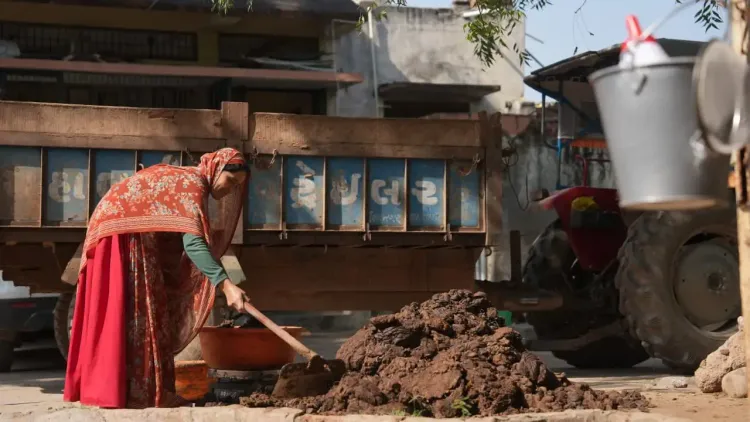
Cattle dung — long treated as agricultural waste — is weighed at farmers' premises and purchased at approximately ₹1 per kg. Payments are credited directly to bank accounts every fortnight alongside regular milk bills, making it a seamless addition to existing dairy income streams.
The compressed biogas produced at the plants is sold to motorists at ₹75–80 per kg, a significant discount to the prevailing conventional CNG price of approximately ₹92 per kg in Gujarat. A useful by-product — solid and liquid organic fertiliser marketed under the 'Bhumi Amrut' brand — is distributed to farmers through local dairy cooperatives to support soil health.
The initiative also captures methane that would otherwise escape into the atmosphere from dung decomposing in the open, giving it a direct emissions-reduction dimension. Notably, Banas Dairy reportedly turned down an offer to export cattle dung to Dubai, opting to use the resource domestically.
Scale and Background
Banaskantha has approximately 28 lakh livestock, of which 24 lakh are associated with Banas Dairy. The district generates an estimated 24,000 tonnes of cattle dung daily, making it a substantial feedstock base. The dairy began purchasing dung in February 2020 from Dama village in Deesa, and on 25 August 2020, the country's first commercial-scale compressed biogas (CBG) outlet was inaugurated.
Three further plants were subsequently established at Agthala, Bhukhala, and Vinchhivada under a tripartite agreement with Suzuki Motor Corporation and the National Dairy Development Board (NDDB). With two additional plants planned at Tharad and Radhanpur, total daily processing capacity is expected to rise to 515 metric tonnes. At full 200-plant scale, the network is projected to generate 1,168 lakh kg of compressed biogas annually.
What Leaders and Officials Said
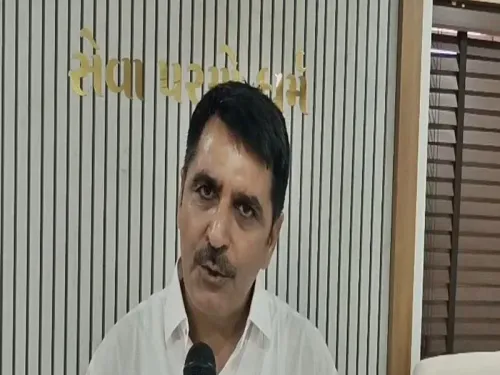
State Assembly Speaker and Banas Dairy chairman Shankar Chaudhary said the organisation's objective goes beyond milk procurement. 'Through this initiative, India's remote villages will lead the global green revolution towards net-zero carbon emissions,' he said. Chaudhary added that the project, aligned with the Prime Minister's vision of an 'Atmanirbhar Bharat', would bring additional income to livestock rearers, improve village cleanliness, provide affordable vehicle fuel, supply organic fertiliser, and create local employment.
India-Japan Biogas Partnership
The Banaskantha model has attracted international interest. Building on this template, India and Japan have jointly launched the Japan-India Co-operative Biogas Initiative, which aims to establish 1,000 biogas plants across the country. This cross-border collaboration signals that what began in a Gujarat district is increasingly being seen as a scalable national and global blueprint.
With PM Modi's inauguration event days away and a Japan-India partnership already in place, the next phase of expansion at Banas Dairy will be a closely watched test of whether this circular-economy model can be replicated at national scale.
Point of View
And routes that value directly to the farmer rather than through subsidy pipelines. Yet the leap from four operational plants to 200 is not just a capital question; it is a replication question, and India's infrastructure programmes have historically struggled to replicate pilot successes at scale without diluting quality or payment timelines. The ₹875 crore annual income projection hinges on steady dung procurement and biogas offtake — both subject to price volatility and logistics gaps in remote areas. The Japan partnership adds credibility, but the real accountability test will come once PM Modi's October 30 inauguration spotlight fades and the next 196 plants have to be built without fanfare.
NationPress
27 Oct 2026
Frequently Asked Questions
What is the Banas Dairy Bio-CNG initiative?
It is a programme by Banas Dairy in Gujarat's Banaskantha district that converts cattle dung into compressed biogas, organic fertiliser, and direct income for livestock-rearing families. Four plants are currently operational, processing 340 tonnes of dung daily, with expansion to around 200 plants planned.
How much income will livestock rearers earn from the expanded network?
The proposed expansion to around 200 plants is estimated to provide livestock rearers with direct financial returns of ₹875 crore per year. Currently, farmers are paid approximately ₹1 per kg of cattle dung, with payments credited fortnightly alongside their milk bills.
How does Bio-CNG from Banas Dairy compare in price to conventional CNG?
Bio-CNG produced at Banas Dairy plants is sold to motorists at ₹75–80 per kg, compared to the prevailing conventional CNG price of approximately ₹92 per kg in Gujarat — making it roughly 15–18% cheaper.
When is PM Modi scheduled to inaugurate Banas Dairy projects?
Prime Minister Narendra Modi is scheduled to inaugurate and lay foundation stones for five major Banas Dairy development projects on 30 October 2026.
What is the Japan-India Co-operative Biogas Initiative?
It is a bilateral programme launched by India and Japan, modelled on the Banaskantha Bio-CNG template, that aims to establish 1,000 biogas plants across India. The initiative reflects international recognition of the Banas Dairy circular-economy model as scalable beyond Gujarat.