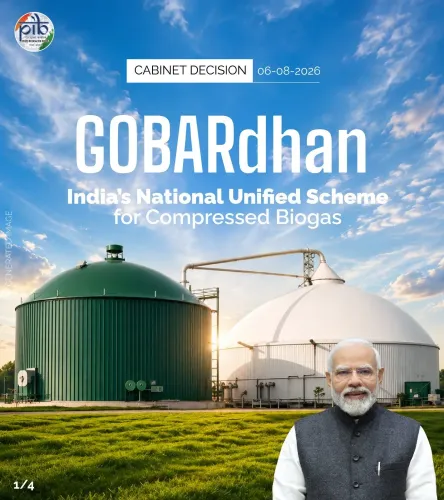
Kishan Reddy Backs Rs 23,731 Cr GOBARdhan CBG Cabinet Nod
Synopsis
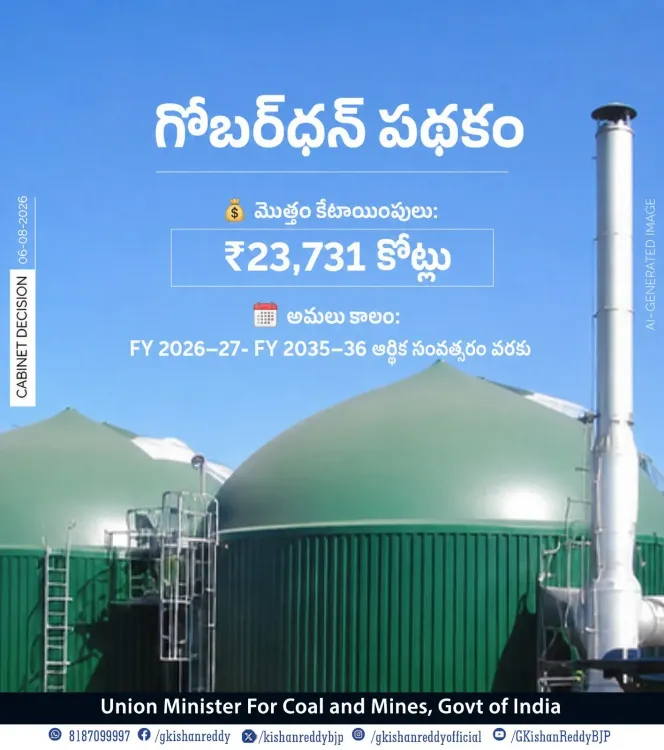
The Cabinet chaired by PM Modi has approved the GOBARdhan National Integrated Scheme with a Rs 23,731 crore outlay, aiming to convert agricultural and municipal bio-waste into Compressed Biogas and raise domestic CBG production nearly ten-fold, boosting rural incomes and energy security.
Key Takeaways
The Cabinet, chaired by PM Narendra Modi , approved the GOBARdhan National Integrated Scheme for Compressed Biogas development.
The scheme carries an outlay of ₹23,731 crore and targets a ten-fold increase in domestic CBG production.
Agricultural waste, cattle dung, and municipal wet waste will be converted into biogas and bio-fertiliser.
Farmers and rural entrepreneurs are the primary intended beneficiaries, gaining additional income from waste streams.
GOBARdhan was originally launched in April 2018 under the Swachh Bharat Mission (Gramin); this approval scales it into a full national programme.
The scheme links India's energy security goals with circular-economy and Swachh Bharat objectives.
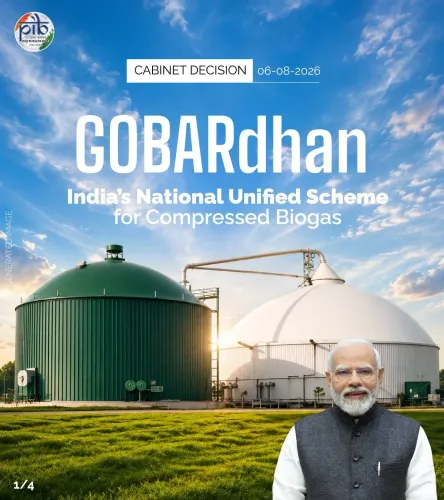
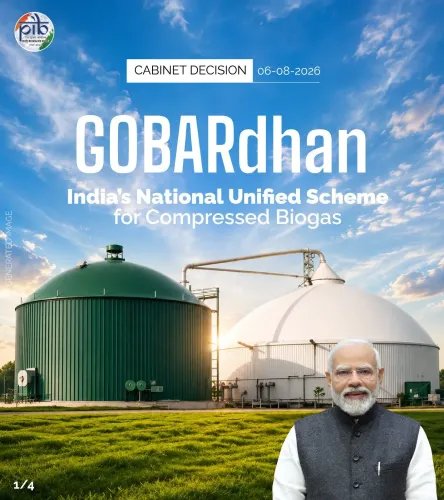
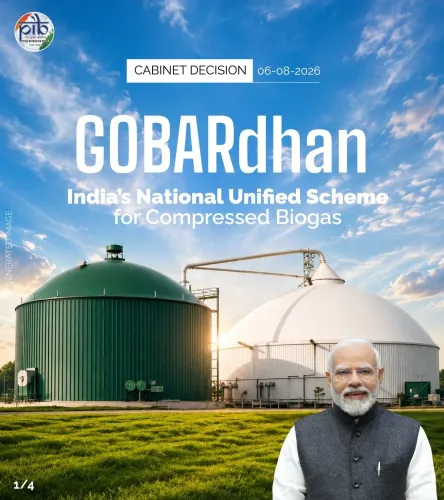
Cow dung, crop stubble, and wet garbage are about to become fuel — and a Cabinet decision worth ₹23,731 crore is the engine behind that transformation. Union Coal and Mines Minister G. Kishan Reddy on Thursday, August 6, 2026, announced that the Cabinet, chaired by Prime Minister Narendra Modi, has approved the GOBARdhan National Integrated Scheme for the development of Compressed Biogas (CBG) across India.
What Cabinet Cleared — and What It Promises
The approved scheme carries an outlay of ₹23,731 crore and targets a near ten-fold increase in domestic CBG production. Under the plan, agricultural residue, cattle dung, municipal wet waste, and other bio-waste will be converted into usable biogas — a direct attack on two stubborn problems: energy import dependence and open waste burning. The minister described the scheme as a vehicle for delivering 'additional income to farmers and rural entrepreneurs.'
GOBARdhan's Roots in Swachh Bharat
GOBARdhan — an acronym for Galvanizing Organic Bio-Agro Resources Dhan — was first launched in April 2018 under the Swachh Bharat Mission (Gramin), initially seeding community biogas plants from organic waste. This latest Cabinet decision scales that foundation into a national integrated programme, now explicitly anchored to energy security targets and the broader National Bioenergy Programme. The scheme sits at the intersection of India's circular-economy ambitions and its push to raise natural gas's share in the primary energy mix.
Farmers and Rural Entrepreneurs as the Intended Winners
The policy design is deliberate: waste that currently costs farmers money to dispose of — or tempts them to burn it in fields — becomes a revenue stream. Rural entrepreneurs gain an investable, government-backed CBG plant ecosystem. If the ten-fold production target is met, India would simultaneously reduce costly LNG imports and blunt the seasonal stubble-burning crisis that chokes northern cities every winter. The dual dividend — rural income plus urban air quality — is the scheme's clearest political and economic pitch.
The real test now shifts to implementation: state-wise fund allocation, speed of new plant commissioning, and whether official monitoring can keep pace with the ambition. A ten-fold production leap is a bold number — and bold numbers demand bold follow-through.
Point of View
If achieved, would materially shift India's gas import calculus and reduce the stubble-burning crisis that has long defied regulatory solutions. The rural income angle also gives the BJP a tangible economic promise to carry into agrarian constituencies. The critical variable is implementation fidelity: large outlay schemes in India's energy sector have historically struggled with plant commissioning delays and state-level absorption capacity.
NationPress
21 Sept 2026
Frequently Asked Questions
What is the GOBARdhan scheme approved by Cabinet?
The GOBARdhan National Integrated Scheme is a government programme approved with an outlay of ₹23,731 crore to convert agricultural waste, cattle dung, and municipal wet waste into Compressed Biogas (CBG) and bio-fertiliser, targeting a ten-fold increase in domestic CBG production.
What does GOBARdhan stand for?
GOBARdhan stands for Galvanizing Organic Bio-Agro Resources Dhan. It was first launched in April 2018 under the Swachh Bharat Mission (Gramin) to support community biogas plants from organic waste.
How will the GOBARdhan scheme benefit farmers?
Farmers will be able to convert agricultural residue and cattle dung — waste they currently pay to dispose of or burn — into biogas, earning additional income. Rural entrepreneurs can also invest in CBG plants backed by the scheme's funding.
What is Compressed Biogas (CBG) and why does it matter for India?
CBG is purified biogas compressed for use as a fuel, comparable to CNG. Scaling up domestic CBG production reduces India's dependence on imported liquefied natural gas and provides a cleaner alternative to stubble burning.
Who announced the GOBARdhan Cabinet approval?
Union Coal and Mines Minister G. Kishan Reddy announced the Cabinet approval on August 6, 2026, noting that the decision was taken under the chairmanship of Prime Minister Narendra Modi.