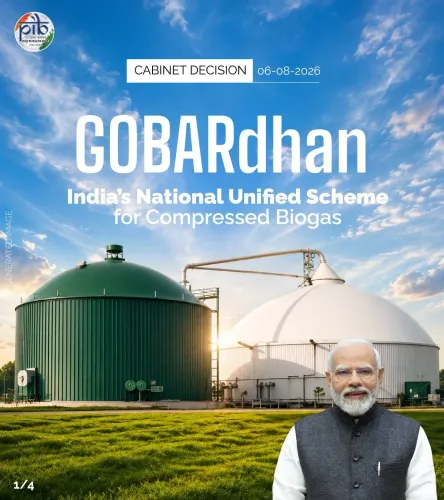
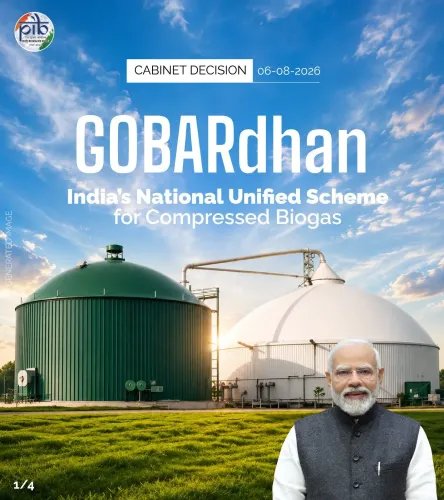
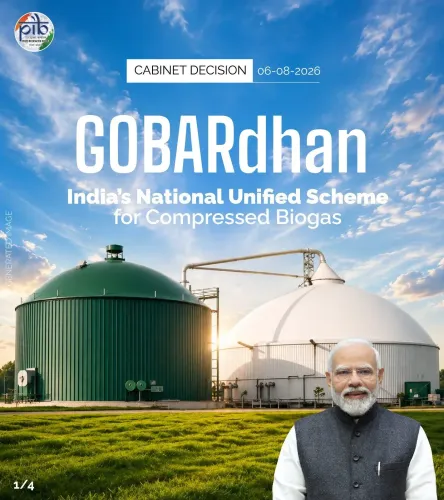
Puri: Cabinet clears ₹23,731 cr GOBARdhan biogas scheme
Synopsis
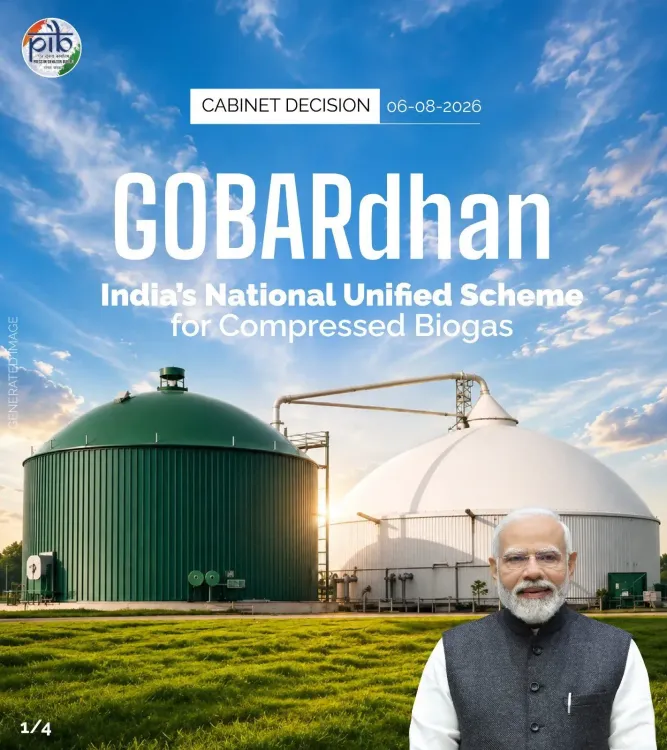
The Union Cabinet has approved the GOBARdhan National Circular Bioenergy Scheme with a ₹23,731 crore outlay, aiming for nearly 10x growth in Compressed Biogas production by converting agricultural residue, cattle dung, and municipal waste into clean fuel — confirmed by Petroleum Minister Hardeep Singh Puri.
Key Takeaways
The Union Cabinet approved the GOBARdhan National Circular Bioenergy Scheme on 6 August 2026 with a total outlay of ₹23,731 crore .
The scheme targets nearly 10x growth in domestic Compressed Biogas (CBG) production using agricultural residue, cattle dung, press mud, and municipal organic waste.
Support mechanisms include assured demand, stable pricing, capital assistance, pipeline infrastructure access, and credit support to attract private investment.
The scheme builds on the SATAT initiative (2018) and the original GOBAR-DHAN programme (2018-19 Budget) , significantly scaling both ambition and funding.
Beneficiaries include farmers, rural entrepreneurs, and private investors , linking rural income generation to national energy security.
The scheme advances the Atmanirbhar Bharat vision by reducing dependence on fossil fuel imports through domestic biomass conversion.
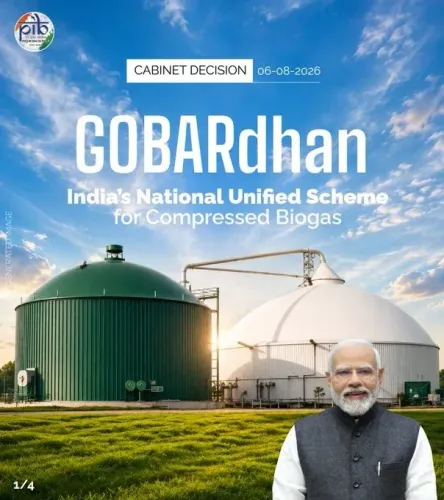
Cattle dung, crop stubble, and city garbage are about to become fuel — and a Cabinet decision announced on Thursday, 6 August 2026 is the formal starting gun. Union Petroleum Minister Hardeep Singh Puri confirmed that the Union Cabinet, under Prime Minister Narendra Modi, has approved the GOBARdhan National Circular Bioenergy Scheme with a total outlay of ₹23,731 crore, positioning Compressed Biogas (CBG) as a central pillar of India's clean energy architecture.
What GOBARdhan promises — and how it plans to deliver
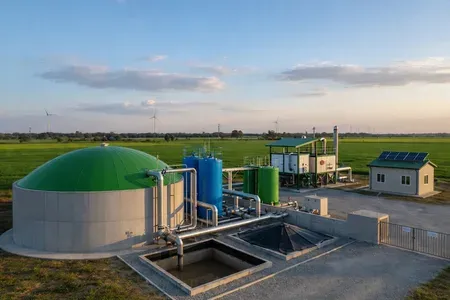
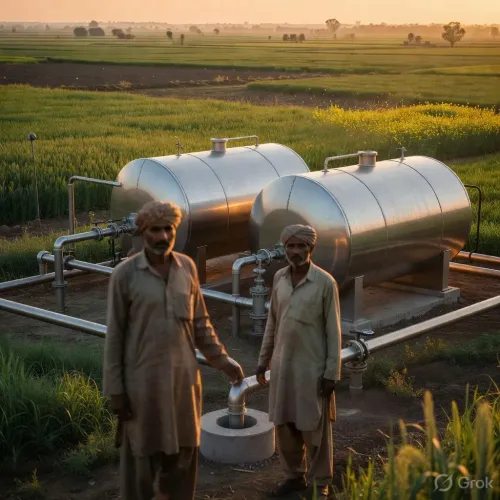
The scheme targets a nearly 10x increase in domestic CBG production by channelling agricultural residue, cattle dung, press mud, municipal organic waste, and other biomass into clean fuel and organic manure. The supply chain logic is deliberate: farmers and rural entrepreneurs feed the raw material end, while private investment is drawn in through assured demand, stable pricing, capital assistance, and credit support. Pipeline infrastructure integration is also part of the design, ensuring produced gas can reach existing distribution networks rather than sitting stranded at plant level.
Puri framed the approval as advancing 'waste-to-wealth initiatives and the vision of an Atmanirbhar Bharat' — self-reliant India. The scheme explicitly links rural income generation to national energy security, a pairing that has defined the Modi government's bioenergy pitch since the SATAT scheme of 2018, which set a target of 5,000 CBG plants under the Ministry of Petroleum and Natural Gas.
From GOBAR-DHAN 2018 to a ₹23,731 crore national scheme
The GOBARdhan lineage traces back to the 2018-19 Union Budget, when the government first announced a programme to convert cattle dung and farm waste into biogas and bio-fertilisers as part of rural development outreach. That early initiative was modest in ambition and funding. The 2026 Cabinet approval is a structural upgrade — transforming a rural welfare scheme into a scaled industrial bioenergy programme with capital architecture, pricing guarantees, and pipeline access built in from the start.
India's broader clean energy push since 2014 has layered initiative upon initiative — the Swachh Bharat Mission, biofuel blending mandates, and the Atmanirbhar Bharat campaign launched in 2020 — each adding a strand to the same argument: that domestic biomass, managed well, can reduce fossil fuel imports and create rural livelihoods simultaneously. GOBARdhan is now the most heavily capitalised bet on that argument yet.
What investors and farmers will be watching
The scheme's credibility will be tested on two fronts: private capital mobilisation and farmer participation in biomass supply chains. Assured demand and stable pricing provisions are designed to de-risk long-gestation CBG plant investments — a recurring obstacle that stalled the SATAT rollout at scale. Progress on integrating new CBG plants with India's existing gas pipeline grid will be the clearest early signal of whether the scheme's industrial ambition matches its financial commitment.
A circular bioeconomy at the scale GOBARdhan envisions would mean India's agricultural waste belt — from Punjab's paddy stubble to Maharashtra's press mud — becomes feedstock, not a liability. That is either a genuine structural shift or an ambitious projection. The ₹23,731 crore outlay is the government's wager that it is the former.
Point of View
Infrastructure-backed industrial programme. For the Petroleum Ministry, championing a scheme that converts waste into gas is also a hedge: it diversifies India's energy mix while insulating the ministry's portfolio from the long-term decline of fossil fuel dependence. The 10x CBG production target and the pipeline integration clause signal that the government wants CBG treated as a mainstream grid fuel, not a niche rural supplement. Whether private capital follows at the scale required will be the real test of whether this Cabinet decision translates into megawatts and manure — or remains an ambitious number on a press release.
NationPress
20 Sept 2026
Frequently Asked Questions
What is the GOBARdhan National Circular Bioenergy Scheme?
GOBARdhan is a Cabinet-approved scheme with a ₹23,731 crore outlay that converts agricultural residue, cattle dung, press mud, and municipal organic waste into Compressed Biogas (CBG), organic manure, and economic value. It aims to create a circular bioeconomy while strengthening India's energy security.
What is the CBG production target under GOBARdhan?
The scheme targets nearly 10x growth in domestic Compressed Biogas production by scaling up biomass conversion infrastructure across rural and urban waste streams.
How does GOBARdhan benefit farmers?
Farmers can supply agricultural residue and cattle dung as feedstock to CBG plants, creating a new income stream. The scheme also produces organic manure as a by-product, which can reduce input costs for farming.
What is the difference between the old GOBAR-DHAN and the new GOBARdhan scheme?
The original GOBAR-DHAN initiative was announced in the 2018-19 Union Budget as a rural biogas programme. The 2026 GOBARdhan National Circular Bioenergy Scheme is a structural upgrade with a ₹23,731 crore outlay, pipeline integration, assured demand, and stable pricing to attract large-scale private investment.
What is Atmanirbhar Bharat's connection to the GOBARdhan scheme?
Atmanirbhar Bharat is the government's self-reliance campaign launched in 2020 . GOBARdhan directly advances it by replacing imported fossil fuels with domestically produced Compressed Biogas, reducing India's energy import bill.